No products in the cart.

Balancing Efficiency and Resilience in Business | Career Outlook

This article explores the critical balance between efficiency and resilience in business, analyzing strategies to achieve both without compromise.

Efficiency Versus Resilience: The Core Conflict
In today’s fast-paced business environment, companies face a daunting challenge: balancing operational efficiency with resilience. Efficiency often translates to lower costs and higher productivity, essential for survival in competitive markets. However, a sole focus on efficiency can make organizations vulnerable to disruptions. This tension is evident across various sectors, from airlines to healthcare, where operational hiccups can lead to significant financial and reputational damage.
Studies have shown that the airline industry exemplifies this conflict. Airlines strive to maximize resource utilization while minimizing delays, leading to tight schedules with little room for error. Yet, when disruptions occur, such as weather-related cancellations, the lack of buffers can exacerbate the situation, resulting in frustrated passengers and lost revenue.
This dilemma is not confined to airlines. Businesses in various sectors grapple with similar issues. For instance, supply chain managers must balance inventory costs against the risks of stockouts, while healthcare providers aim to optimize patient flow without sacrificing care quality. The challenge is clear: how can organizations design systems that are both efficient and resilient?
Redefining Performance Metrics
To navigate the conflict between efficiency and resilience, organizations can adopt several strategies. One effective approach is to redefine performance metrics to focus on what truly matters to customers. Traditional metrics often incentivize behaviors that can undermine service quality. For example, the U.S. Department of Transportation’s on-time performance metric for airlines can lead to schedule padding, where airlines extend flight times to improve their reported punctuality. This practice does not enhance reliability for passengers, who may still experience delays.
Organizations should prioritize metrics that reflect customer experiences. By measuring outcomes that matter to passengers, such as the percentage of travelers who reach their final destinations on time, airlines can better align their operations with customer needs. This shift not only enhances customer satisfaction but also encourages airlines to create more resilient scheduling practices.
By avoiding a one-size-fits-all mentality, businesses can tailor their operations to meet specific demands while maintaining resilience.
Strategic Buffers and Flexibility
Another strategy involves deploying buffers strategically. In industries such as healthcare, where tight scheduling can lead to delays and cancellations, organizations can benefit from building in time buffers. This approach allows for unexpected complications without derailing the entire schedule. By avoiding a one-size-fits-all mentality, businesses can tailor their operations to meet specific demands while maintaining resilience.
Leveraging Technology for Resilience
You may also like
 Entrepreneurship & Business
Nscale Hires Meta’s Justin Osofsky to Be COO Ahead of IPO
Nscale has appointed Justin Osofsky as COO, leveraging his extensive experience from Meta to enhance operational efficiency ahead of its IPO. This strategic hiring reflects…
Read More →Technology plays a crucial role in bridging the gap between efficiency and resilience. Organizations can leverage data analytics and predictive modeling to anticipate disruptions and respond proactively. For instance, airlines can use predictive analytics to adjust schedules based on weather forecasts and historical data, allowing them to allocate resources more effectively.
Furthermore, technology enables companies to enhance communication and coordination across their operations. In supply chain management, for example, real-time tracking systems can provide visibility into inventory levels and shipment statuses, enabling businesses to respond quickly to potential disruptions. This proactive approach not only improves efficiency but also enhances resilience by minimizing the impact of unforeseen events.

Balancing Perspectives: Efficiency vs. Resilience
Despite the clear benefits of balancing efficiency and resilience, there are ongoing debates about the best approaches to achieve this goal. Some industry experts argue that prioritizing resilience can lead to increased costs and reduced competitiveness. They contend that organizations should focus primarily on efficiency to maximize profitability. This perspective often stems from traditional business models that prioritize short-term gains over long-term sustainability.
Conversely, advocates for resilience argue that the long-term benefits far outweigh the initial costs. They point to case studies where companies that invest in resilience strategies have emerged stronger after disruptions. For instance, during the COVID-19 pandemic, businesses that had previously integrated resilience into their operations were better positioned to adapt to sudden changes in demand and supply chain disruptions.
In supply chain management, for example, real-time tracking systems can provide visibility into inventory levels and shipment statuses, enabling businesses to respond quickly to potential disruptions.

This debate highlights the need for organizations to carefully consider their unique contexts and operational challenges. While some may benefit from a strict focus on efficiency, others may find that investing in resilience ultimately leads to greater stability and success in the long run.
Preparing for the Future: Skills and Adaptability
For young professionals entering the workforce, understanding the balance between efficiency and resilience is crucial. As businesses continue to evolve, employers will seek individuals who can navigate complex operational challenges. Skills in data analysis, adaptability, and strategic thinking will be highly valued.
You may also like
 Entrepreneurship & Business
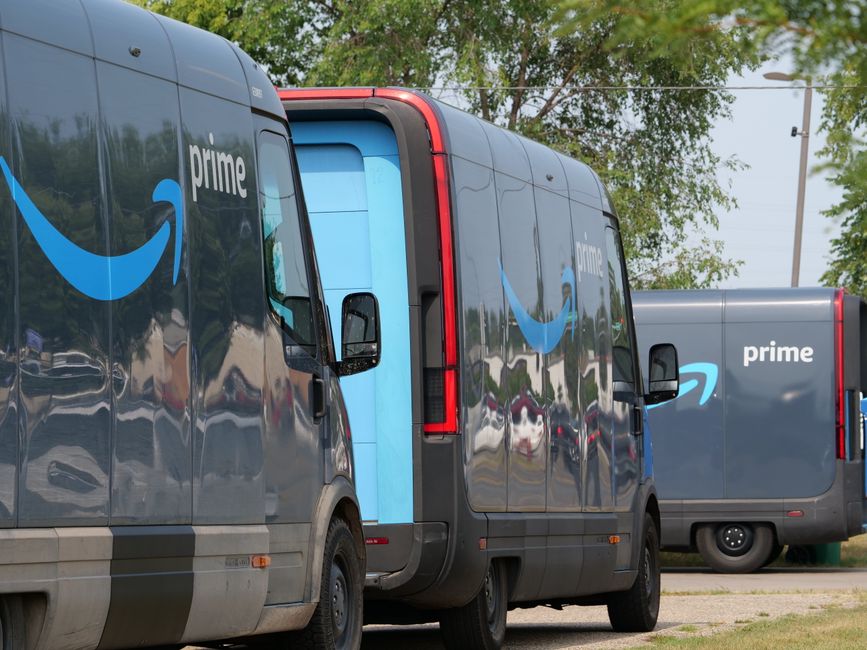
Amazon Launches Ultra-Fast Delivery in 120+ Indian Cities
Amazon has expanded its ultra-fast delivery service, Amazon Now, to over 120 cities in India, doubling its reach in just two weeks. This growth signifies…
Read More →Furthermore, professionals who can contribute to building resilient systems will be in high demand. This includes roles in supply chain management, operations, and customer service, where the ability to respond effectively to disruptions can significantly impact organizational success. Embracing a mindset that values both efficiency and resilience will be essential for career advancement in the future.