No products in the cart.

Industrial Policy Confronts AI Labor Revolution

Industrial policy must be reengineered to meet the AI workforce’s emerging demands. The pattern is unmistakable: between 40% and 50% of U.S....

We argue that without a radical shift toward lifelong learning and non-linear workforce planning, AI-driven disruption will widen inequality.
Industrial policy must be reengineered to meet the AI workforce’s emerging demands. The pattern is unmistakable: between 40% and 50% of U.S. jobs will be reshaped by artificial intelligence within the next two to three years, a velocity that outpaces the traditional, linear approaches that have guided policy for decades. This asymmetry creates a temporal gap between the speed of technological diffusion and the capacity of public institutions to fund, certify, and disseminate the requisite skill sets. When policy lags, the market compensates with ad-hoc training programs that lack coordination, scale, and equity, leaving a widening swath of workers exposed to displacement.
We see the flaw in linear workforce planning not as a temporary misstep but as a structural asymmetry amplified by AI. As Mark Marone, PhD, observes,

“AI-driven role changes require proactive, nonlinear approaches to workforce planning and leadership development.”
“AI-driven role changes require proactive, nonlinear approaches to workforce planning and leadership development.”
The quote underscores a trajectory where roles evolve in fluid loops rather than straight lines, demanding policy instruments that can pivot, iterate, and integrate feedback from both employers and employees in real time. Our analysis therefore rejects the notion that incremental budget increases to existing vocational schools will suffice; instead, we call for an adaptive governance model that embeds continuous skill mapping into the policy cycle.
You may also like
 Industry & Global Trends
Mergers Reshape Automation Careers at Schneider Electric
Schneider Electric's aggressive investments in automation are reshaping the industry landscape in Europe. This shift is set to create significant job opportunities for automation engineers…
Read More →To operationalize this vision, we introduce the AI Workforce Adaptation Index (AWAI), a metric that aggregates three dimensions: the rate of AI-induced task reallocation, the elasticity of existing skill inventories, and the robustness of lifelong-learning pathways. An AWAI score above 70 signals a critical need for policy intervention, prompting targeted subsidies for reskilling programs that align with emerging occupational clusters. By quantifying adaptation pressure, the index offers legislators a data-driven lever to allocate resources where the mismatch between demand and supply is most acute.
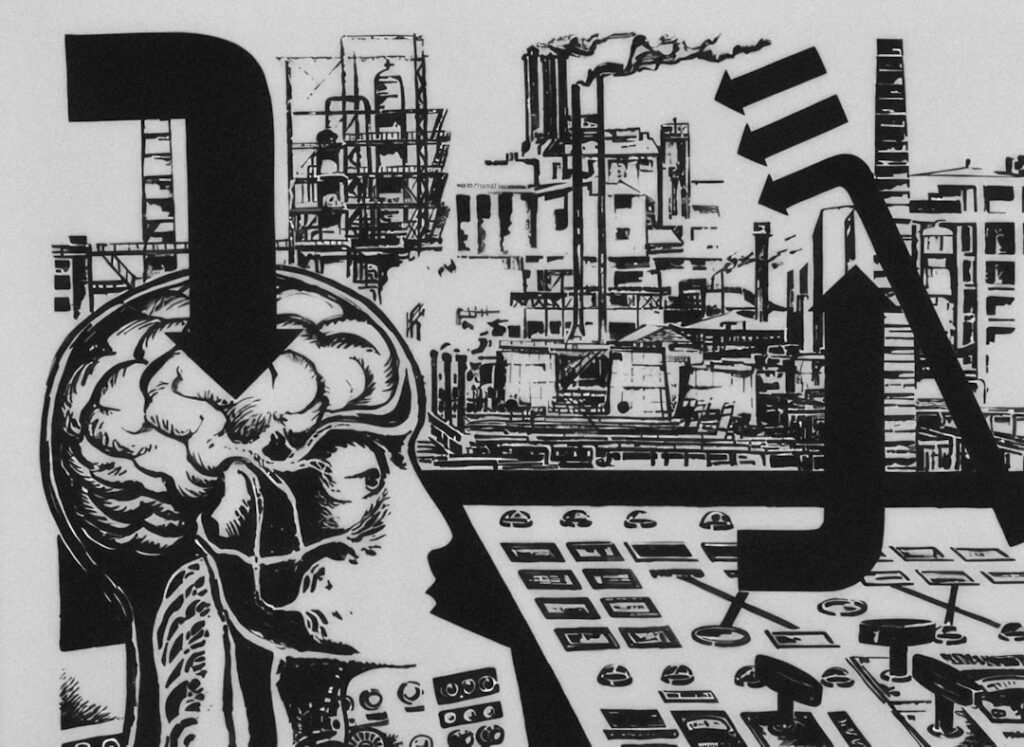
Collaboration between government, industry, and educational institutions must become the default architecture of policy design. The Jobs for the Future (JFF) initiative has set an ambitious target: 75 million people facing barriers to economic advancement will secure quality jobs by 2033. Achieving this goal requires a coordinated framework that aligns public funding with private sector training pipelines, ensuring that the supply of up-skilled workers matches the demand generated by AI-enhanced enterprises. Such partnership models must also embed social protection mechanisms, because the same AI systems that generate new roles simultaneously displace incumbents in legacy sectors.
Skill gaps are already evident in the labor market. One in ten job postings now requires new skills that were not listed a year ago, a statistic that signals a rapid diffusion of AI-related competencies across industries. This churn creates a dual pressure: workers must acquire novel capabilities while employers scramble to define the contours of emerging roles. The policy response must therefore prioritize universal access to micro-credentialing platforms, portable certifications, and employer-backed apprenticeships that can be scaled nationally without sacrificing relevance.
The stakes extend beyond individual career trajectories; they define the socioeconomic fabric of the next decade. When industrial policy fails to internalize the dynamics of AI-driven change, the benefits of productivity gains accrue to a narrow elite, while the broader workforce experiences heightened precarity. Conversely, a policy regime that embraces nonlinear planning, leverages the AI Workforce Adaptation Index, and institutionalizes lifelong learning will distribute the upside of AI more evenly, preserving social cohesion and fostering inclusive growth.
Achieving this goal requires a coordinated framework that aligns public funding with private sector training pipelines, ensuring that the supply of up-skilled workers matches the demand generated by AI-enhanced enterprises.
Looking ahead, professionals should monitor the evolution of the AI Workforce Adaptation Index and advocate for its integration into legislative budgeting cycles. By aligning personal development plans with the index’s signals, workers can anticipate emerging skill demands, while policymakers can calibrate interventions before displacement reaches critical mass. The future of work will be defined not by the speed of AI itself, but by the agility of the policies that shape its human counterpart.
Key Structural Insights
You may also like
 Industry & Global Trends
Sensex Surges 473 Points as Softer US Jobs Data Boosts Indian Market
The Indian stock market experienced a notable boost as the Sensex surged by 473 points and the Nifty gained 134 points, driven by softer-than-expected US…
Read More →- The AI Workforce Adaptation Index (AWAI) is a metric that aggregates three dimensions: the rate of AI-induced task reallocation, the elasticity of existing skill inventories, and the robustness of lifelong-learning pathways.
- An AWAI score above 70 signals a critical need for policy intervention, prompting targeted subsidies for reskilling programs that align with emerging occupational clusters.
- Collaboration between government, industry, and educational institutions must become the default architecture of policy design.
- The policy response must prioritize universal access to micro-credentialing platforms, portable certifications, and employer-backed apprenticeships that can be scaled nationally without sacrificing relevance.