No products in the cart.

CBSE Mandates Three‑Language Curriculum for Class 9 Starting 2026‑27 Academic Year
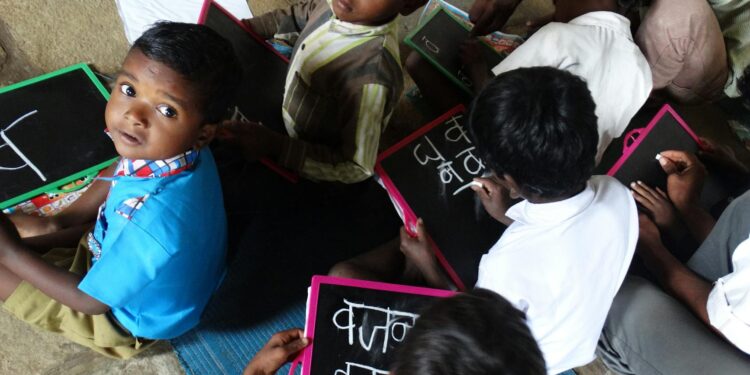
The rule aligns the board’s language structure with the National Education Policy 2020 and the 2023 National Curriculum Framework.

CBSE issued a circular on May 15, 2026 requiring all Class 9 students in its network to study three languages. The rule aligns the board’s language structure with the National Education Policy 2020 and the 2023 National Curriculum Framework.
The Central Board of Secondary Education (CBSE) released an official circular on May 15, 2026 announcing that, from the 2026‑27 academic session, every Class 9 student in a CBSE‑affiliated school must enroll in three language subjects [1]. The directive applies nationwide to the more than 21,000 schools under the board’s jurisdiction, covering both urban and rural institutions across India [1].
The policy involves the CBSE as the governing authority, Class 9 learners enrolled in its schools, and the teaching staff responsible for language instruction [1]. Educationists, including career counsellor Keshav Agarwal, have been quoted in media reports describing the change as part of the board’s effort to implement the National Education Policy 2020 and the National Curriculum Framework for School Education 2023 [2]. The rule stipulates that at least two of the three languages must be native Indian languages, while a foreign language may be taken only if the other two are native, or as an optional fourth language [1].
Policy Details and Alignment with National Framework
The three‑language requirement mirrors the “three‑language formula” recommended in the National Education Policy 2020, which emphasizes multilingual proficiency and cultural integration [2]. Under the new rule, students must select two Indian languages—typically Hindi, a regional language, or Sanskrit—and may add a foreign language such as French, Spanish, or Mandarin only after fulfilling the native language condition [1]. The policy does not introduce a separate board examination for the third language; assessment will continue to be integrated into the existing internal evaluation system [1].
CBSE’s circular links the language mandate to the 2023 National Curriculum Framework, which calls for “greater emphasis on mother‑tongue instruction and balanced multilingual exposure” in secondary education [2]. The board’s documentation notes that the change aims to “strengthen linguistic diversity, improve cognitive development, and better prepare students for higher education and employment” in line with national objectives [2].
The board’s documentation notes that the change aims to “strengthen linguistic diversity, improve cognitive development, and better prepare students for higher education and employment” in line with national objectives [2].
Implementation guidelines require schools to adjust timetables, recruit qualified language teachers, and update curriculum materials by March 2026 to meet the July 1 start date for the 2026‑27 session [1]. CBSE has offered a transition support package, including sample syllabus outlines and teacher‑training webinars, to assist schools in meeting the new requirements [2].
You may also like
 News
NewsFood Prices Surge Amid Heatwaves and El Niño Impact
World food prices surged in September 2026, reaching their highest level in nearly four years due to extreme weather conditions and rising agricultural input costs.…
Read More →Implementation Requirements for Schools
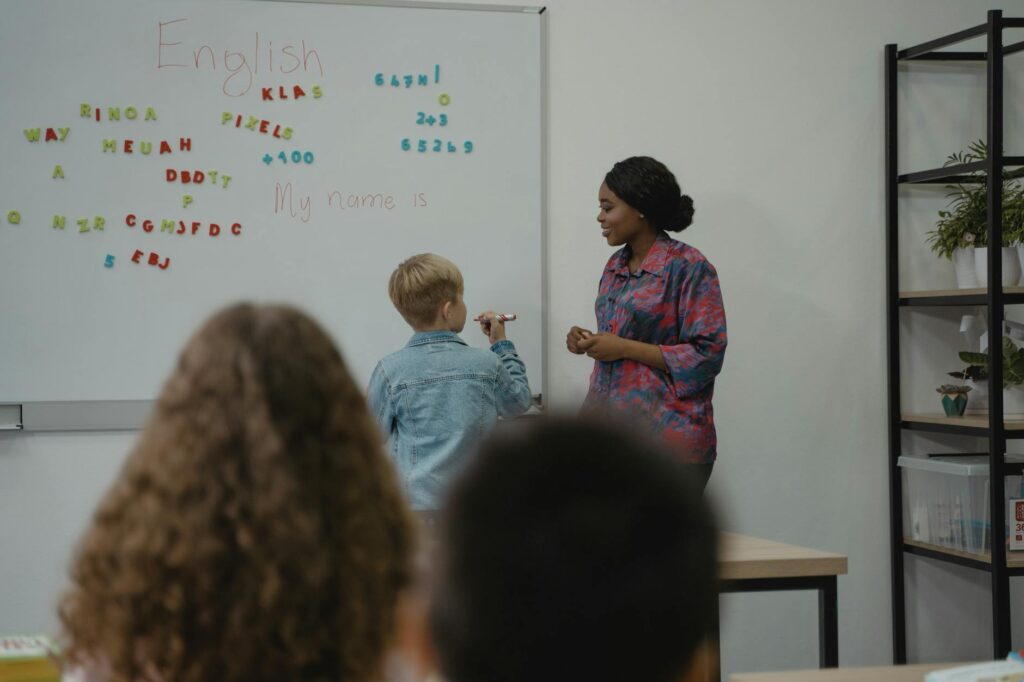
All CBSE‑affiliated schools must submit revised language‑subject timetables to the board by the end of June 2026, confirming compliance with the three‑language structure [1]. Schools lacking sufficient staff for the additional language are instructed to seek temporary deputation of teachers from nearby CBSE institutions or to employ part‑time language specialists, as permitted under the board’s emergency staffing provisions [1].
Curriculum resources, including textbooks and digital learning modules, must be aligned with the revised syllabus by the start of the academic year. CBSE has authorized its publishing partner, NCERT, to release updated language textbooks for the 2026‑27 session, with distribution to schools scheduled for May 2026 [1]. Schools are also required to conduct internal assessments for the third language, reporting results to CBSE through the standard academic performance portal [1].
The board has established a monitoring mechanism that includes quarterly compliance reports from schools and random audits by regional CBSE offices. Non‑compliant institutions may face penalties, including withholding of board affiliation renewal for the subsequent academic year [1].
Immediate Impact on Students and Educators
Class 9 students enrolled in CBSE schools will encounter an additional language subject in their timetable, increasing the total instructional hours for language studies by approximately 2‑3 hours per week [1]. The requirement may affect students who previously opted for a single language stream, compelling them to select a second Indian language or adjust their subject choices to accommodate the new load [1].
Professional development sessions organized by CBSE between February and May 2026 are intended to equip educators with pedagogical strategies for multilingual instruction [2].
Teachers of Hindi, regional languages, and foreign languages must adapt lesson plans to cover the expanded curriculum. Professional development sessions organized by CBSE between February and May 2026 are intended to equip educators with pedagogical strategies for multilingual instruction [2]. Schools reporting shortages of qualified language teachers have indicated plans to hire additional staff or reassign existing teachers, potentially affecting staffing budgets for the 2026‑27 fiscal year [1].
You may also like
 News
NewsTokyo Inflation Surge Signals BOJ’s Monetary Policy Shift
Inflation in Tokyo has surged to 3.4%, prompting the Bank of Japan to reassess its monetary policy. This article explores the implications for economic growth,…
Read More →The policy is expected to increase exposure to native Indian languages among secondary‑school learners, supporting the broader national goal of preserving linguistic heritage [2]. For students aiming for higher‑education programs that require proficiency in multiple languages, the mandatory third language may provide an early advantage. Conversely, the added workload may require adjustments in extracurricular activities and study schedules for affected learners [1].
Key Facts
What: CBSE mandates three languages for all Class 9 students, with at least two being native Indian languages.
When: Effective from the 2026‑27 academic session; announcement issued May 15, 2026.
Impact: Students must add a third language to their curriculum; schools must revise timetables, hire staff, and align resources immediately.
Impact: Students must add a third language to their curriculum; schools must revise timetables, hire staff, and align resources immediately.
You may also like
 News
NewsUS Borrowing Costs Surge, UK Bond Yields Hit 6%
US government borrowing costs have surged to their highest levels since 2002, with significant implications for investors as UK 30-year bond yields reach 6%.
Read More →Sources
- CBSE three-language rule: Third language now mandatory for classes 9-10 … – https://economictimes.indiatimes.com/news/new-updates/cbse-three-language-rule-third-language-now-mandatory-for-classes-910-but-no-board-exam-for-r3-check-all-key-announcements/articleshow/131137341.cms
- CBSE’s New 3 Language Policy for Class 9-10 Explained – https://www.timesnownews.com/education/cbses-new-3-language-policy-for-class-9-10-explained-article-154336372
- CBSE’s three language rule explained: Can Class 9 students still opt … – https://indianexpress.com/article/cities/delhi/class-9-students-learn-foreign-languages-conditions-10693621/
- CBSE implements new three-language policy for class 9 students – https://www.msn.com/en-in/education-and-learning/secondary-education/cbse-implements-new-three-language-policy-for-class-9-students/ar-AA23pcvA