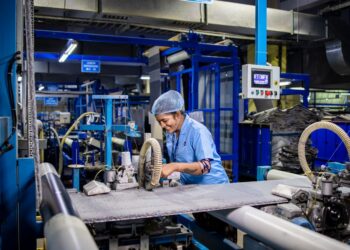
BYD, the leading Chinese electric vehicle manufacturer, is finding success without the US market. With strong demand in Asia and Europe, the company is innovating to meet consumer needs.
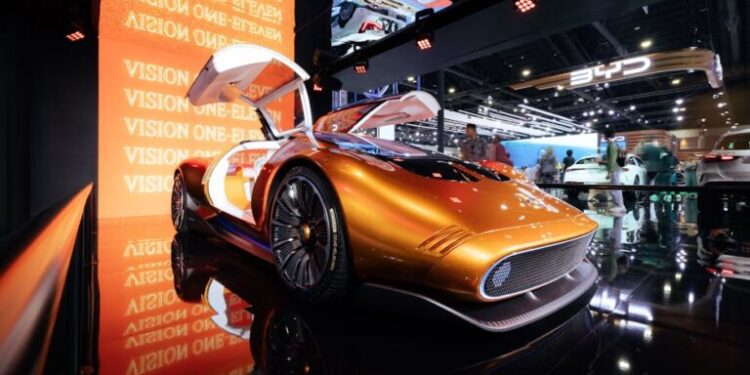
China — BYD, the leading electric vehicle (EV) manufacturer in China, has declared its ability to thrive without access to the US market. As the company expands its operations globally, it emphasizes the growing demand for electric vehicles in other regions. At the recent Beijing Auto Show, BYD’s executive vice president, Stella Li, asserted, “We survive and are successful without the US market today.” This statement underscores a significant shift in strategy for a company that has rapidly grown to become a dominant player in the global EV market.
The backdrop for this declaration is a changing landscape in the automotive industry, particularly in response to rising fuel prices and increasing consumer interest in electric vehicles. According to sharewatch.com, BYD has overtaken Tesla as the largest seller of electric vehicles, a testament to its innovation and market strategy. The company is now focusing on markets in Brazil, the UK, and Europe, where it sees substantial growth potential.
BYD’s success is also attributed to its technological advancements, particularly its new “flash charging” technology. This innovation addresses one of the biggest barriers to EV adoption: charging speed. Li described this technology as a “game-changer,” capable of adding hundreds of kilometers of range in just minutes. As consumers become more aware of the cost savings associated with EVs amidst rising oil prices, BYD is well-positioned to meet this demand.
Global Expansion Amidst Geopolitical Challenges
Despite facing challenges in the US market, BYD’s global expansion continues unabated. The company is capitalizing on a growing demand for electric vehicles worldwide, particularly in regions where it can avoid the tariffs and regulatory scrutiny that complicate access to the US market. According to cnn.com, China’s record trade surplus highlights the country’s ability to sustain its economic growth without heavy reliance on American consumers.
BYD’s success is also attributed to its technological advancements, particularly its new “flash charging” technology.
Li noted that while BYD’s domestic sales have faced difficulties, especially with declining sales over the past seven months, international markets are thriving. In Europe, for instance, BYD reported a remarkable 156% increase in sales during the first quarter of this year. This stark contrast emphasizes the importance of diversifying market strategies to mitigate risks associated with geopolitical tensions.
Moreover, the competitive landscape in China is evolving. While BYD has emerged as a leader, it faces fierce competition from both domestic and international players. The automotive market is characterized by aggressive price wars and rapid product cycles, compelling companies to innovate continuously. As Li pointed out, the pressure from competition will likely lead to consolidation within the industry, as not all manufacturers can survive the intense competition.
Shifting Focus to Innovation
As BYD strengthens its brand recognition in markets like the UK, it is shifting from a price-focused strategy to one that emphasizes technological superiority. This shift reflects a broader trend among Chinese manufacturers, who are increasingly competing on innovation rather than just cost. By integrating advanced battery technology and charging infrastructure, BYD is positioning itself as a comprehensive mobility provider rather than just a car manufacturer.
Transformative Implications for the Automotive Sector
The implications of BYD’s strategy extend beyond its own operations; they signal a transformative shift within the global automotive industry. As companies like BYD continue to innovate and expand without relying on the US market, traditional automotive giants must adapt to this new reality. According to thechinaacademy.org, the evolving landscape suggests that companies must rethink their strategies to remain competitive in an increasingly interconnected world.
For established automakers like Volkswagen and Toyota, the rise of Chinese manufacturers presents both a challenge and an opportunity. These companies are now seeking partnerships with local firms to enhance their market presence in China. For instance, BMW has collaborated with battery maker CATL, and Audi is utilizing Huawei’s driving assistance systems. Such collaborations indicate a recognition of the need to adapt to the rapidly changing market dynamics.
Zimbabwe's Central Bank is pursuing a partnership with India's NPCI to enhance digital payments, aiming to modernize banking infrastructure and improve financial inclusion. This collaboration…
For established automakers like Volkswagen and Toyota, the rise of Chinese manufacturers presents both a challenge and an opportunity.
Future Prospects and Industry Adaptation
The future of the automotive industry hinges on innovation and adaptability. As BYD demonstrates, success in the current market does not solely rely on access to traditional markets like the US. Instead, it requires a keen understanding of global consumer preferences and the ability to respond swiftly to changing market conditions.
This evolving landscape raises important questions about the future of the automotive sector. Will traditional automakers be able to keep pace with the rapid innovations introduced by companies like BYD? As competition intensifies, the industry may witness new alliances and partnerships that redefine market dynamics. The path forward is uncertain, but one thing is clear: the automotive industry is entering a new era, driven by innovation and global collaboration.
For young professionals and job seekers in the automotive sector, these developments signal a need for adaptability and continuous learning. As the industry evolves, staying informed about technological advancements and market trends will be crucial for career growth. The shift towards electric vehicles and new technologies presents opportunities for those willing to embrace change.



 Industry & Global Trends
Industry & Global Trends