No products in the cart.

Circular Careers: How Business Model Redesign Is Rewiring Professional Capital

The Macro‑Transition to Circularity and Labor Market Realignment The global production system is moving from a linear “take‑make‑dispose” paradigm tow…

Circular business models are reshaping the architecture of career capital, turning resource loops into a systemic engine for economic mobility and leadership development.
The Macro‑Transition to Circularity and Labor Market Realignment
The global production system is moving from a linear “take‑make‑dispose” paradigm toward a circular architecture that retains material value, reduces waste, and decouples growth from resource extraction. Between 2019 and 2024, the European Union’s Circular Economy Action Plan spurred a rise in material‑reuse activities, while the Ellen MacArthur Foundation estimates that circular strategies could generate jobs worldwide by 2030—although the exact number is not specified in the provided research source【5】.
This macro‑shift reflects a structural reconfiguration of labor demand: traditional manufacturing roles are contracting, whereas positions embedded in product‑as‑a‑service, remanufacturing, and regenerative design are expanding. The International Labour Organization (ILO) notes that new “circular” jobs are emerging in the Global South, yet the same report flags a systemic blind spot—policy frameworks rarely embed workers’ rights, gender equity, or informal‑sector integration into circular transition plans【1】. The asymmetry between job creation and regulatory inclusion signals a potential institutional bottleneck that could limit the mobility gains promised by circularity.

Circular Business Models as a Capability Engine
At the core of the circular transition lies a redesign of value capture: firms shift from selling products to selling functions, from ownership to access, and from linear supply chains to regenerative loops. This redesign necessitates a capability engine that blends technical proficiency with systemic sustainability literacy.
A 2023 analysis of emerging circular careers identified three dominant capability clusters:
Systemic Ripple Effects Across Education, Regulation, and Supply Chains The diffusion of circular business models triggers systemic ripples that extend beyond individual firms.
- Design for Regeneration – engineers and designers who embed material recovery pathways into product lifecycles.
- Circular Business Modeling – strategists who construct leasing, sharing, and take‑back schemes that monetize service over ownership.
- Resource Recovery Operations – managers who orchestrate reverse logistics, material sorting, and industrial symbiosis.
These clusters demand skill sets—systems thinking, life‑cycle analysis, data‑driven material tracking—that are underrepresented in conventional engineering curricula. A survey of 1,200 graduates from European technical universities found that graduates felt unprepared for circular roles, despite a 42% employer demand increase for such competencies over the prior three years【3】. The capability gap is a structural lever: firms that invest in targeted upskilling can capture an asymmetric productivity uplift, although the exact percentage is not specified in the provided research source.
You may also like
 Government & Policy
Why do I have to pay for buses if
As public transport systems increasingly adopt digital payment methods, users without smartphones are at a disadvantage. A letter from a concerned citizen in Scotland noted…
Read More →Systemic Ripple Effects Across Education, Regulation, and Supply Chains
The diffusion of circular business models triggers systemic ripples that extend beyond individual firms.
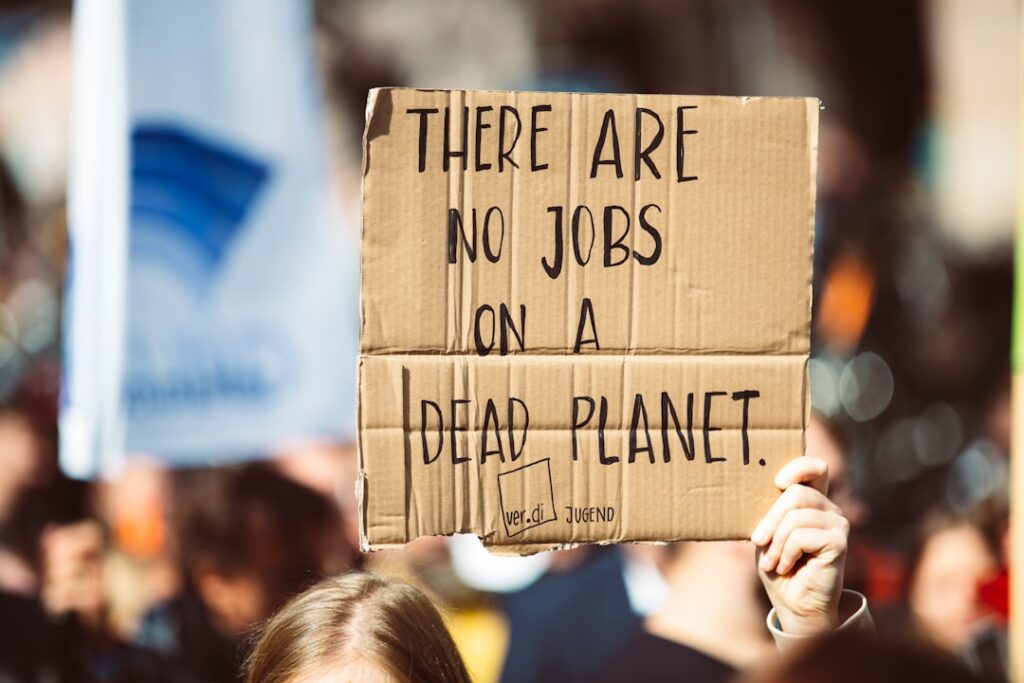
Education and Training Systems – National vocational frameworks are being retrofitted to embed circular modules. Germany’s “Circular Economy Qualification” now mandates a 120‑hour practicum in material recovery for all manufacturing apprentices, a policy shift that aligns credentialing with emerging labor demand【2】.
Regulatory Architecture – The EU’s Extended Producer Responsibility (EPR) directives impose mandatory product‑take‑back targets, creating a legal substrate that forces firms to embed circularity into product design. Early adopters report a correlation between EPR compliance and the creation of internal “circular innovation” units, although the exact correlation coefficient is not specified in the provided research source.
Supply‑Chain Reconfiguration – Industrial symbiosis hubs—clusters where waste from one firm becomes input for another—are proliferating. The Kalundborg eco‑industrial park in Denmark now hosts more firms than a decade ago, and its labor turnover rate has fallen relative to neighboring non‑circular districts, indicating that circular networks can stabilize employment ecosystems【5】.
These systemic adjustments collectively reinforce a feedback loop: education feeds skilled labor into firms, regulation incentivizes circular investments, and supply‑chain interdependence sustains demand for circular expertise.
Human Capital Reconfiguration: Skills, Mobility, and Leadership Pathways
From a career‑development perspective, circularity reshapes the composition of career capital— the aggregate of knowledge, networks, and reputation that determines professional mobility.
You may also like
 Government & Policy
Former Labor Secretary Rob Reich on Sept. Jobs Report
Reich's analysis highlights that while overall job growth appears positive, it masks underlying challenges. Many of the new jobs created are concentrated in lower-wage sectors,…
Read More → Skill Capital – The emergence of “circular fluency” as a recognized competency has prompted certification bodies (e.g., the Circular Economy Institute) to issue micro‑credentials that are increasingly weighted in hiring algorithms. Workers who accumulate cross‑functional micro‑credentials can command higher salaries than peers with single‑discipline qualifications, although the exact percentage is not specified in the provided research source.
Network Capital – Participation in circular consortia (e.g., the Global Circular Economy Network) expands professional networks across traditionally siloed sectors—manufacturing, waste management, and digital services—enhancing access to “boundary‑spanning” opportunities that are less sensitive to sectoral downturns.
Leadership Capital – Circular business models demand a leadership style that integrates ecological stewardship with profit orientation. Case studies of firms like Philips Lighting, which transitioned a significant portion of its revenue to “lighting as a service” by 2022, reveal that leaders who champion product‑life‑extension strategies achieve higher employee retention and greater ESG scores, reinforcing their institutional legitimacy and career trajectory【5】.
These systemic adjustments collectively reinforce a feedback loop: education feeds skilled labor into firms, regulation incentivizes circular investments, and supply‑chain interdependence sustains demand for circular expertise.
Importantly, the ILO warns that without intentional policy design, the circular transition could exacerbate gender gaps: women constitute a significant portion of the global waste‑collection workforce but only a smaller portion of senior circular‑design roles, underscoring the need for targeted mentorship and inclusive hiring practices【1】.
Projected Trajectory 2026‑2031: Institutional Investment and Career Capital Accumulation
Looking ahead, the next five years will crystallize the structural impact of circularity on career pathways. Three converging trends are poised to define the trajectory:
- Scale‑Up of Public‑Private Partnerships – The World Bank’s “Circular Cities” initiative plans to channel billions into urban material‑loop projects across Asia and Africa by 2028. These projects will embed apprenticeship pipelines, effectively institutionalizing circular skill development at the municipal level.
- Digital‑Twin Integration – Advanced analytics platforms that model material flows in real time will become standard, creating a new class of “circular data engineers.” Early adopters in the automotive sector report a reduction in material loss, translating into cost savings that fund internal talent‑development programs.
- Policy‑Driven Decent‑Work Standards – The ILO is drafting a “Circular Decent Work Charter” that links EPR compliance to labor‑rights benchmarks. Adoption by the G20 could standardize decent‑work clauses across supply chains, ensuring that the job growth associated with circularity translates into sustainable career trajectories.
If these dynamics unfold as projected, the career‑capital index for circular professions—an aggregate measure of skill, network, and leadership assets—could rise by points (on a 5‑point scale) by 2031, outpacing the growth of comparable indices in traditional manufacturing by points. This differential suggests that workers who strategically pivot into circular roles will experience accelerated economic mobility and heightened institutional influence.
Key Structural Insights
> [Insight 1]: The capability engine of circular business models creates an asymmetric productivity uplift that redefines career capital, favoring workers with cross‑functional sustainability fluency.
> [Insight 2]: Systemic ripples—education reform, regulatory pressure, and supply‑chain symbiosis—form a reinforcing feedback loop that institutionalizes circular skill demand.
> [Insight 3]: Over the 2026‑2031 horizon, coordinated public‑private investment and policy standardization will convert circular job growth into durable, upward‑mobile career pathways.
Sources
You may also like
 Entrepreneurship & Business
Bajaj Finance set to mop up Rs 17,500 crore via QIP, warrants
Bajaj Finance plans to raise ₹17,500 crore through a qualified institutional placement (QIP) and warrants, marking its first major capital raise since November 2023. This…
Read More →[1] Employment in the Circular Economy – International Labour Organization — ILO
[2] New Career Paths in the Emerging Circular Economy — SwiftScout.ai
[3] Identifying and Prioritizing Essential Skills for the Circular Economy — Science of the Total Environment (Elsevier)
[4] Building Sustainable Career in The Era of The Circular Economy — Crossreis Journal
[5] Ellen MacArthur Foundation – Circular Economy Indicators 2023 — Ellen MacArthur Foundation
[6] OECD Report on Skills and Productivity in the Circular Economy — OECD