Colorado Sued, Blocked, and Rewrote Its AI Law: The Hiring Rulebook Keeps Moving
In April 2026, xAI sued Colorado to stop the first comprehensive US AI law from taking effect. A federal court blocked it, and the legislature rewrote it. Illinois and Texas took different paths, and the Workday case tests vendor liability.
A statute designed to govern automated hiring in Colorado died twice in six months: first at the courthouse, then at the Capitol. While that fight ran, Illinois put a first-in-class AI anti-discrimination law into force and Texas chose a narrower route. For anyone applying, hiring or building screening tools, the rulebook moved in 2026, and it is still moving.
In April 2026, the artificial intelligence company xAI sued the state of Colorado, seeking to block enforcement of the Colorado AI Act, the state’s comprehensive artificial intelligence law, before its revised June 30, 2026 effective date, as reported by Hindustan Times on April 10 and confirmed in litigation analyses by Baker Botts and other firms. Within months, a federal court had blocked the law’s enforcement, the US Department of Justice intervened in the case, and Colorado’s legislature passed a repeal-and-replace bill, summarized by law firms including Littler, Davis Wright Tremaine and the Consumer Finance Monitor as a narrower statute focused on transparency and consumer rights, with sharply reduced obligations for employers.
That is an unusual way for a landmark regulation to exit, and it is the clearest signal yet of how unsettled the law around algorithmic decision-making has become. Automated hiring systems, which score, rank and screen job applications, sit directly inside the contested zone. The states are writing different rules on different schedules for the same AI tools, and the central US court fight over screening software, Mobley v. Workday, keeps widening.
The Colorado Collapse, in Four Steps
Colorado passed SB 24-205 in 2024, the first comprehensive state AI law in the United States, and placed duties on developers and deployers of high-risk AI systems, including systems used in employment decisions, after delaying the effective date to June 30, 2026, according to analyses from Clark Hill and others. The law required risk management programs, impact assessments and notices for consequential automated decisions.
The law required risk management programs, impact assessments and notices for consequential automated decisions.
Then came the reversal. xAI’s April lawsuit sought to stop the law before live enforcement. The Department of Justice backed the challenge, per Norton Rose Fulbright’s litigation summary, and a federal court blocked the statute’s enforcement, per McDermott Will & Schulte. In response, Colorado’s legislature passed a narrower replacement law, SB 26-189, which law firm trackers describe as drawing a sharper focus on transparency requirements and consumer rights while substantially cutting the compliance load on employers. Colorado’s attorney general has run rulemaking on automated decision-making technology at least through 2026, per the AG’s own site.
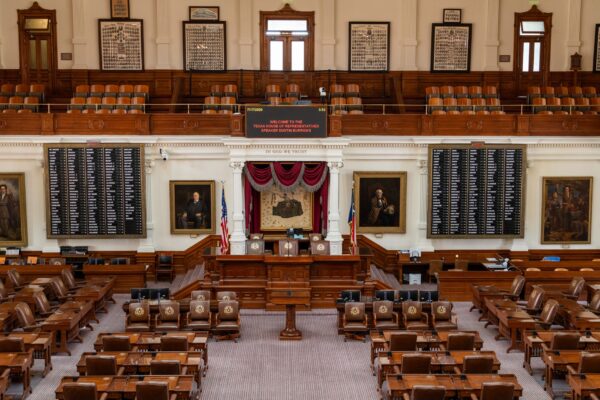
The 2026 legislative and court calendar repeatedly rewrote the rules for algorithmic hiring. (Photo: Pexels)
Illinois and Texas Went Different Ways
Illinois moved first and differently. HB 3773 amended the Illinois Human Rights Act to bar discriminatory artificial intelligence in employment decisions and add notice duties, and it took effect on January 1, 2026, as the second state law regulating AI in hiring after Colorado, per Reed Smith and Jones Day. Practical details are thin for now: Ogletree reported that Illinois postponed proposed AI notice regulations, and one industry review described the law as an AI notice duty with no implementing rules behind it yet.
Texas chose the lightest touch of the three. The Texas Responsible AI Governance Act (TRAIGA) took effect January 1, 2026 and centers on prohibited practices rather than broad risk-management duties, in summaries by Mayer Brown, Norton Rose Fulbright and others. Meanwhile, the federal layer stayed contested: KVUE reported that President Trump issued an executive order days before TRAIGA’s start date as part of a push on state AI rules, and the DOJ’s role in the Colorado case showed the same preemption fight playing out in court.
The Case Every Employer Watches: Mobley v. Workday
The states regulate conduct. The courts are deciding who pays. In Mobley v. Workday, job applicants allege that Workday’s algorithmic hiring tools screened, ranked and scored them out based on age, race, sex and disability, according to case analyses by JD Supra and Bloomberg Law headlines. Workday argued it was a software vendor, not an employer. The court rejected that as an end point: because employers delegate hiring functions to the tool, Workday could plausibly function as their agents, so federal discrimination claims could proceed.
The case then expanded. In May 2025, the court granted preliminary certification of a nationwide collective under the Age Discrimination in Employment Act covering applicants over 40 whose applications were scored, sorted, ranked or screened with Workday AI features, per JD Supra’s litigation review. In June 2026, the court again let significant portions of the amended case continue and denied Workday’s request for an immediate interlocutory appeal, JD Supra reported. The practical stakes reach past one company: most AI hiring tools are sold as standard software with capped liability and limited transparency, and vendors have generally written contracts so the customer carries the risk. Mobley tests whether the vendor shield holds when the decisions it feeds are consequential.
The Texas Responsible AI Governance Act (TRAIGA) took effect January 1, 2026 and centers on prohibited practices rather than broad risk-management duties, in summaries by Mayer Brown, Norton Rose Fulbright and others.
Which protections apply when an algorithm screens an application depends on where the applicant lives. (Photo: Pexels)
What the 2026 Shifts Do Not Settle
Three gaps remain open. First, outcomes are not liabilities: the replacement Colorado law narrows toward transparency and consumer rights, and none of the state maps yet tell a rejected applicant what the algorithm did, with evidence, in a US state except through litigation such as Mobley. Second, the federal layer is unstable: an executive order aimed at state AI rules and DOJ legal interventions can change direction with an election or a new court holding, so employers building to 2026 rules are building to a moving target. Third, none of this closes well for workers outside the regulated jurisdictions: applicants outside Illinois, Colorado or Texas depend mainly on general anti-discrimination law, which was written for humans, not systems.
What to Watch
Three markers carry into 2027. Watch the Workday docket: with the interlocutory appeal denied, the case is moving toward trial against a nationwide collective of screened applicants, and any settlement or appellate ruling will reset vendor exposure. Watch Colorado’s restart: the new transparency-focused statute and the attorney general’s rulemaking will show whether the state can regulate at all after losing in court. And watch Illinois’ long-delayed notice regulations, the first test of whether telling candidates that AI screened them changes anything about how the screening works. The deeper question the 2026 fights left unresolved is simple: when an automated system rejects you, who, exactly, can be sued.
Career Ahead AI is Career Ahead Magazine's in-house AI newsroom, reporting on careers, education, jobs and business. It produces original summaries and analysis drawn from publicly available sources, with those sources credited, and operates under the editorial oversight of the Career Ahead team. AI can make mistakes, so please tell us when something looks wrong. Corrections, copyright or takedown requests…



Government & Policy

 Government & Policy