Cornell University President Michael Kotlikoff was involved in a controversial incident with students following a debate on Gaza, raising questions about campus safety and leadership accountability.
Cornell University, US — A heated confrontation unfolded on campus when President Michael Kotlikoff allegedly struck students with his vehicle after a debate over the Gaza conflict. This incident has ignited widespread outrage among students and faculty alike, raising serious questions about leadership accountability and campus safety. Witnesses report that the altercation occurred as students protested following a speech by an anti-Israel speaker.
According to reports from JNS, the president was leaving an event when he encountered a group of students blocking his car. Eyewitnesses claim that Kotlikoff accelerated, hitting at least one student, which has led to calls for a formal investigation. The incident has been described as both alarming and unacceptable by many within the university community.
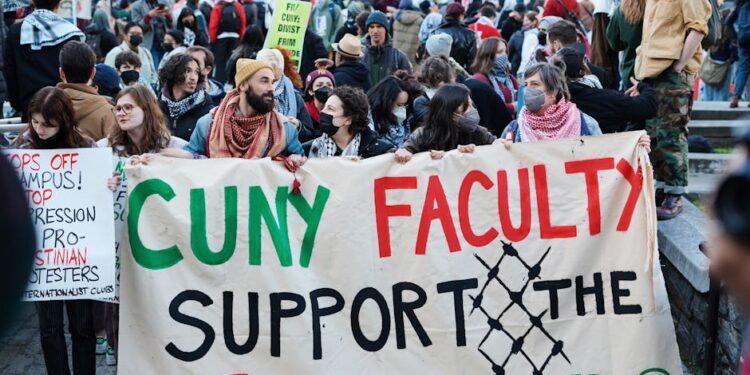
Students involved in the protest expressed their shock and anger, stating that their actions were a peaceful demonstration. They believe that the president’s response was disproportionate and indicative of a larger issue regarding how dissent is handled on campus. This incident has sparked discussions about the university’s commitment to free speech and the safety of its students.
Context of the Debate
The confrontation followed a controversial event featuring a speaker known for anti-Israel sentiments. This speaker’s presence on campus had already stirred significant tension, leading to a series of protests organized by student groups advocating for Palestinian rights. These protests aimed to highlight the ongoing conflict and its impact on students and the broader community.
As the debate unfolded, many students felt that their voices were not being heard, which contributed to the escalation of emotions. The event had drawn both supporters and detractors, illustrating the deep divisions within the student body regarding the Israeli-Palestinian conflict. This backdrop of heightened sensitivity made the subsequent incident even more volatile.
This speaker’s presence on campus had already stirred significant tension, leading to a series of protests organized by student groups advocating for Palestinian rights.
In light of these events, some students are now questioning the administration’s commitment to fostering an inclusive environment. They argue that the university must do more to ensure that all viewpoints are respected and that protests can occur without fear of retaliation or violence.
Administration’s Response
In response to the incident, President Kotlikoff released a statement describing the situation as a misunderstanding. He claimed he felt threatened by the protesters and acted out of instinct to protect himself. However, many students and faculty members have found this explanation unsatisfactory, calling for a more thorough investigation into the incident.
According to ABC News, the university is currently reviewing the events leading up to the confrontation. This review aims to assess not only the incident itself but also the university’s policies regarding campus protests and safety. The administration faces mounting pressure to address the concerns of students and to ensure that such incidents do not happen in the future.
Critics argue that the university’s response to this situation will be crucial in determining how effectively it can manage dissent and uphold the values of free speech. Many believe that a failure to act decisively could lead to further unrest on campus.
Many institutions are grappling with how to balance free speech with the need to maintain a safe environment for all students.
Implications for Campus Safety
This incident has broader implications for campus safety and the way universities handle protests. Many institutions are grappling with how to balance free speech with the need to maintain a safe environment for all students. The incident at Cornell highlights the challenges that can arise when emotions run high during politically charged discussions.
As universities become battlegrounds for differing ideologies, the importance of clear policies regarding protests and demonstrations cannot be overstated. Institutions must find ways to ensure that students can express their views without fear of violence or retribution. This balance is essential for fostering a healthy academic environment where diverse perspectives can coexist.
Furthermore, the incident raises questions about the role of university leadership in managing campus dynamics. Leaders must navigate the complexities of free speech while also protecting students from harm. The outcome of this incident could set a precedent for how similar situations are handled in the future.
Community Response and Accountability
The community response to the incident has been swift and vocal. Student organizations have organized rallies to demand accountability from the administration, emphasizing the need for transparency in the investigation. Many students are calling for a review of the university’s safety protocols and policies regarding protests.
Student organizations have organized rallies to demand accountability from the administration, emphasizing the need for transparency in the investigation.
A potential strike by North Sea oil workers could disrupt UK fuel supplies, highlighting labor relations issues in the energy sector as workers demand fair…
In addition to student protests, faculty members have also voiced their concerns. Some have called for a meeting with the administration to discuss the implications of the incident and to ensure that the university prioritizes student safety moving forward. This collective response underscores the community’s desire for change and accountability.
As the university navigates this crisis, it will need to carefully consider the voices of both students and faculty. The outcome of the investigation and the administration’s subsequent actions will be closely watched, as they could significantly impact the campus climate in the months to come.




 Education & University Insights
Industry & Global Trends