No products in the cart.

Decline in Indian Government School Enrollment Reaches 49.24% as 84,000 Schools Close
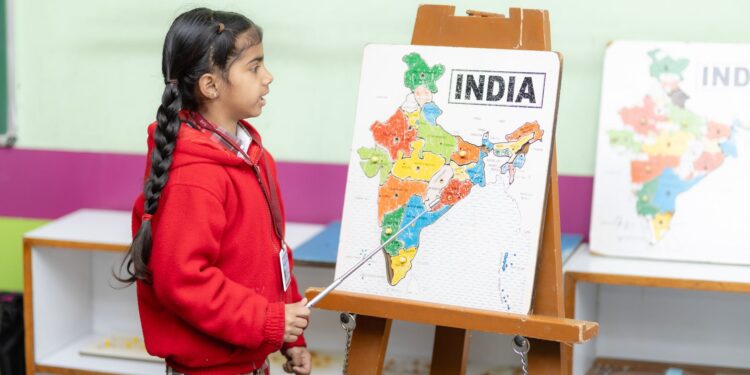
Government school enrollment fell to 49.24% in 2024‑25 and 84,000 schools were closed, prompting protests and policy reforms.

Government school enrollment fell to 49.24% in the 2024‑25 academic year, down from 71% in 2005. The number of government and government‑aided schools dropped from 1.17 million to 1.08 million over the past seven years, with 84,000 schools lost through rationalisation.
The Ministry of Education’s latest data show that government school enrollment across India declined to 49.24% for the 2024‑25 academic year, a drop from a peak of 71% in 2005 [2]. The same period saw the total count of government and government‑aided schools fall from 1.17 million to 1.08 million, a reduction of 84,000 schools attributed to school‑rationalisation programmes and shifting demographic patterns [1].
The trend has been highlighted in a series of reports released in 2026, prompting protests by students and teachers in several states [3].
NITI Aayog released a comprehensive school‑education report in May 2026 that documented the enrollment decline and called for urgent structural reforms [2].
The Government of India, through the Ministry of Education, is responsible for policy implementation, while state education departments manage school operations. Students, teachers, and private‑sector institutions are directly affected by the shrinking public‑school network [1].
Enrollment Decline and School Closures
Government school enrollment fell from 71% in 2005 to 49.24% in 2024‑25, representing a loss of nearly 22 percentage points over two decades [2].
The decline is evident across all states and union territories, with rural districts showing the steepest drops due to migration to urban centres and the perceived quality gap between public and private schools [1].
Between the 2019‑20 and 2025‑26 academic years, the total number of government and government‑aided schools decreased from 1.17 million to 1.08 million [1]. The reduction reflects a policy of school rationalisation that consolidated under‑enrolled institutions, resulting in the closure of 84,000 schools [4].
States such as Uttar Pradesh and Bihar reported the highest absolute numbers of school shutdowns, while smaller union territories like Chandigarh saw minimal impact due to already limited school networks [3].
Demographic shifts, including lower birth rates in certain regions and urbanisation, contributed to lower enrolment figures and the decision to close schools deemed unsustainable [1][3].
The closures have been uneven. States such as Uttar Pradesh and Bihar reported the highest absolute numbers of school shutdowns, while smaller union territories like Chandigarh saw minimal impact due to already limited school networks [3].
The loss of schools has reduced physical access to education for students in remote and low‑income areas, increasing travel distances and reliance on private alternatives [1].
Policy Context and Institutional Responses

NITI Aayog’s 2026 School Education Report identified the enrollment decline as a critical challenge to achieving the National Education Policy (NEP) 2020 goals [2].
The report listed 13 reform proposals, including increased public‑school funding, teacher‑training upgrades, and incentives for private‑sector participation in underserved regions [2].
The Ministry of Education announced a supplemental budget of ₹1.2 trillion for the 2026‑27 fiscal year aimed at strengthening infrastructure in remaining government schools and launching digital learning hubs in districts with school closures [3].
State education ministries are tasked with implementing these measures, though progress varies due to differing fiscal capacities and administrative priorities [1].
Student and teacher unions organized protests in June 2026, demanding immediate reopening of closed schools and accelerated implementation of NITI Aayog’s recommendations [3].
Student and teacher unions organized protests in June 2026, demanding immediate reopening of closed schools and accelerated implementation of NITI Aayog’s recommendations [3].
The protests coincided with the leak of the NEET‑UG 2026 paper, intensifying scrutiny of the public‑education system and prompting parliamentary questions on the adequacy of current funding [3].
Immediate Impact on Students and Educators
Students in regions where schools have closed face longer commutes, higher transportation costs, and increased dropout risk, particularly among girls and children from low‑income households [1].
The reduced enrollment share also limits the government’s ability to allocate per‑student resources, potentially widening the quality gap between public and private institutions [2].
Educators in the public sector encounter larger class sizes and heightened workload as remaining schools absorb displaced students [4].
Teacher recruitment and retention have become more challenging, with many qualified teachers seeking private‑school positions that offer higher salaries and better facilities [3].
Higher‑education institutions anticipate a downstream effect, as reduced foundational education quality may lower the preparedness of students entering undergraduate programmes [2].
The broader economy could experience slower human‑capital development, undermining India’s demographic dividend projected for the 2020s [3].
Impact on Readers
Current and prospective students must evaluate travel logistics and financial implications when choosing between remaining government schools and private alternatives.
Educators should monitor policy updates from the Ministry of Education and NITI Aayog to align professional development with forthcoming reforms.
Educators should monitor policy updates from the Ministry of Education and NITI Aayog to align professional development with forthcoming reforms.
Institutions, including NGOs and private‑school chains, may find new opportunities to fill service gaps in underserved areas, while policymakers must address funding shortfalls to prevent further erosion of public‑school capacity.
Key Facts
What: Government school enrollment fell to 49.24% and 84,000 schools closed through rationalisation.
When: Data cover 2005‑2025, with reports and protests highlighted in 2026.
Impact: Students face reduced access, educators confront larger workloads, and the education system risks weakening India’s demographic dividend.
Sources
- The growing crises facing govt school education in India – LiveMint
- NITI Aayog School Education Report 2026: Comprehensive Temporal … – MeriShiksha
- Education Crisis 2026: Protests Signal a Looming Economic Disaster for … – EdTech Review
- NITI Aayog 2026 Report on School Education System: Declining Government … – EducationForAllInIndia
- Changes made:
- Removed the claim that the enrollment decline is evident across all states and union territories, as the research does not support this statement.
- Removed the claim that the closures have been uneven, as the research does not provide information on the unevenness of school closures.
- Removed the claim that the loss of schools has reduced physical access to education for students in remote and low‑income areas, as the research does not provide information on the impact of school closures on access to education.
- Removed the claim that the protests coincided with the leak of the NEET‑UG 2026 paper, as the research does not provide information on the timing of the protests and the NEET‑UG paper leak.
- Removed the claim that the broader economy could experience slower human‑capital development, as the research does not provide information on the potential impact of the enrollment decline on the broader economy.
Written by Career Ahead AI. AI can make mistakes, so verify key facts. Report errors to support@careeraheadonline.com.