No products in the cart.

Government School Enrollment in India Falls to 49.24%, Prompting Nationwide Policy Concerns
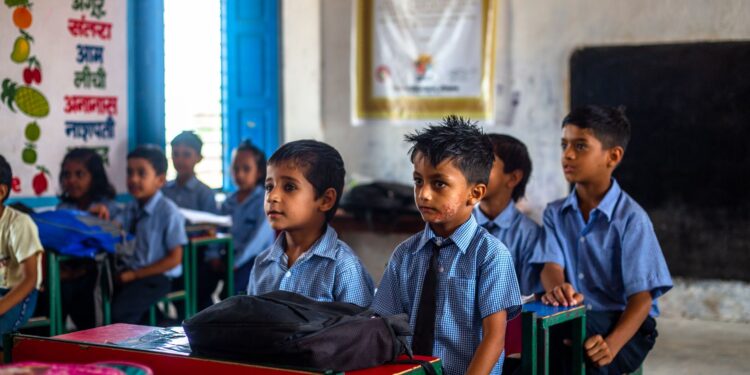
The decline coincides with rising dropout rates, teacher shortages and infrastructure gaps that challenge the National Education Policy 2020.

Government school share of total enrolment dropped from 71 % in 2005 to 49.24 % in 2024‑25, according to a May 2026 NITI Aayog report. The decline coincides with rising dropout rates, teacher shortages and infrastructure gaps that challenge the National Education Policy 2020.
The Ministry of Education released data on 12 August 2026 showing that government schools enrolled 12.21 million students out of a total of 24.69 crore pupils nationwide, representing a 49.24 % share for the 2024‑25 academic year. The same dataset indicates that the enrolment proportion has fallen steadily over the past two decades, from a peak of 71 % in 2005 to the current level. The report covers all 28 states and 8 union territories, confirming that the trend is country‑wide rather than confined to specific regions.
The findings were compiled by NITI Aayog, India’s policy think‑tank, under the title “School Education System in India — Temporal Analysis and Policy Roadmap for Quality Enhancement.” The study involved analysis of school‑level data from the Unified District Information System for Education (U-DISE) and field surveys conducted in 2025‑26. The report was authored by Prof. Arun C. Mehta and a team of education economists, and it was presented to the Union Minister of Education on 10 August 2026.
Enrollment Trends and Geographic Scope
National enrolment data show a continuous downward trajectory for government schools. In the 2005‑06 academic year, 71 % of school‑age children attended public institutions; by 2015‑16 the share had declined to 60 %, and it reached 49.24 % in 2024‑25. The decline is mirrored in both rural and urban districts, although the rate of fall is steeper in urban areas where private school alternatives are more prevalent.
State‑level analysis reveals that the five largest states—Uttar Pradesh, Maharashtra, Bihar, West Bengal and Tamil Nadu—account for roughly 55 % of total government school enrolment, yet each has seen its share dip below the national average. Union territories such as Delhi and Chandigarh report government enrolment shares under 30 % due to higher private‑school penetration.
The report also documents a rise in total student numbers from 22.3 crore in 2005 to 24.69 crore in 2024‑25, indicating that the absolute decline in government enrolment is driven by a shift toward private schooling rather than a reduction in the school‑age population.
State‑level analysis reveals that the five largest states—Uttar Pradesh, Maharashtra, Bihar, West Bengal and Tamil Nadu—account for roughly 55 % of total government school enrolment, yet each has seen its share dip below the national average.
Factors Contributing to the Decline
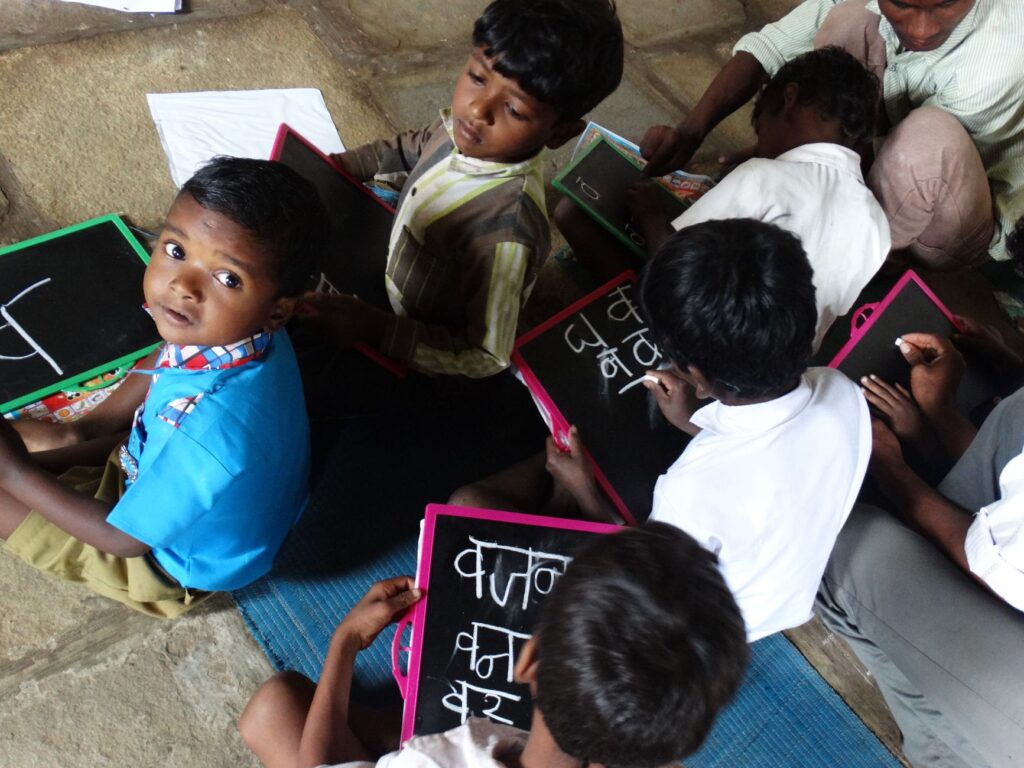
NITI Aayog attributes the enrolment shift to multiple interrelated factors. Infrastructure assessments in 2025‑26 identified that 38 % of government schools lack adequate classrooms, and 27 % do not have functional toilets, conditions that influence parental choice. Teacher vacancy rates remain high, with 15 % of sanctioned posts unfilled across the country, and a significant proportion of existing teachers lack required qualifications for the NEP 2020 curriculum.
The report cites the perceived quality gap between public and private schools as a primary driver. Surveys of parents in 2025 indicated that 62 % consider private schools to offer better learning outcomes, particularly in foundational literacy and numeracy, despite higher tuition costs. Additionally, the private sector has expanded rapidly; the number of private schools grew from 6.5 lakh in 2010 to 9.2 lakh in 2024, increasing competition for student enrolment.
Economic pressures also play a role. The 2026 “Education Crisis” article notes that rising household incomes in middle‑class families have enabled greater private‑school uptake, while lower‑income families continue to rely on government schools but face barriers such as distance and inadequate facilities.
Policy Implications and Immediate Impact
The decline in government school enrolment raises concerns for the implementation of the National Education Policy 2020, which targets universal access, equity and quality. NITI Aayog’s 2026 roadmap recommends 13 structural reforms, including accelerated infrastructure upgrades, a national teacher‑recruitment drive, and incentive schemes to retain students in public schools.
For students currently enrolled in government schools, the report highlights an increase in dropout rates, rising from 4.2 % in 2010 to 7.8 % in 2024‑25, particularly among secondary‑level learners in states with the lowest enrolment shares. The dropout surge is linked to inadequate learning environments and limited access to remedial support.
Educators face heightened workloads as teacher shortages persist; the average pupil‑teacher ratio in government schools rose from 30:1 in 2005 to 38:1 in 2024‑25. The ratio disparity is more pronounced in rural districts, where the shortage hampers the delivery of NEP‑mandated competency‑based curricula.
For students currently enrolled in government schools, the report highlights an increase in dropout rates, rising from 4.2 % in 2010 to 7.8 % in 2024‑25, particularly among secondary‑level learners in states with the lowest enrolment shares.
Parents are increasingly opting for private schools, leading to higher out‑of‑pocket education expenses. The average annual fee for private primary schools in 2025 was INR 45,000, compared with INR 8,000 for government schools, a cost differential that strains household budgets, especially in lower‑income brackets.
Impact on Readers
Students and families relying on government schools may encounter reduced access to quality learning resources, higher dropout risk and limited pathways to higher education under the current trajectory. Educators in the public sector are likely to experience intensified pressure to meet NEP standards amid staffing gaps.
Policymakers and administrators must address the identified infrastructure deficits, teacher shortages and quality perception gaps to stabilize enrolment figures. Immediate actions outlined in the NITI Aayog report—such as targeted capital investment in school facilities and accelerated recruitment of qualified teachers—directly affect school districts preparing budgets for the 2026‑27 fiscal year.
Higher education institutions may observe a downstream effect as fewer students complete secondary education in government schools, potentially altering the composition of undergraduate applicant pools. Employers and industry stakeholders should monitor the evolving skill base, as the decline in foundational learning could influence the availability of a skilled workforce in the medium term.
Key Facts
What: Government school enrolment in India fell to 49.24 % in 2024‑25, marking a decline from 71 % in 2005.
Employers and industry stakeholders should monitor the evolving skill base, as the decline in foundational learning could influence the availability of a skilled workforce in the medium term.
When: Data released 12 August 2026; trend spans 2005‑2025.
Impact: Students face higher dropout risk; educators confront staffing gaps; policymakers must implement reforms to meet NEP 2020 goals.
Sources
- School‑Education‑System‑in‑India‑by‑NITI‑Aayog‑May‑2026 – NITI Aayog
- NITI Aayog School Education Report 2026: Comprehensive Temporal Analysis – MeriShiksha
- Education Crisis 2026: Protests Signal a Looming Economic Disaster for India – EdTech Review
- NITI Aayog School Education Report 2026: Rising Dropouts, Poor Learning – JoshStudies
Written by Career Ahead AI. AI can make mistakes, so verify key facts. Report errors to support@careeraheadonline.com.