No products in the cart.

Digital Well‑Being Becomes a Structural Imperative in the Remote‑First Era

Embedding digital‑well‑being into corporate governance restructures the relationship between mental health, talent pipelines, and economic mobility, turning a pandemic‑driven symptom into a systemic lever for competitive advantage.

The convergence of remote work, relentless connectivity, and social‑media saturation is reshaping the institutional calculus of employee mental health. Companies that embed digital‑well‑being into governance will capture asymmetric talent capital, while those that treat it as an add‑on risk systemic erosion of productivity and leadership pipelines.
Macro Context: Remote Work, Digital Overload, and Mental Health
The pandemic‑induced shift to remote and hybrid arrangements has matured into a structural norm. In the United States, 78 % of large employers now mandate at least one remote day per week, a figure that has risen from 52 % in 2020 [6]. Flexibility gains are evident: 69 % of remote workers report an improved work‑life balance, yet 44 % admit to longer hours from home, blurring the boundary between personal and professional time [4].
Simultaneously, the digital ecosystem has deepened its reach. Average daily screen time for knowledge workers climbed to 9.3 hours in 2025, a 12 % increase from 2022 [7]. The proliferation of collaboration platforms, instant messaging, and algorithmic social feeds creates an environment of constant connectivity that correlates with heightened anxiety and burnout rates. A cross‑industry study links high email volume (≥120 messages per day) to a 23 % rise in self‑reported stress levels [3].
These macro trends intersect with labor market dynamics. The Bureau of Labor Statistics notes a 5‑year decline in “career capital”—the cumulative skills, networks, and reputation that enable upward mobility—among workers who report chronic digital fatigue [8]. The implication is not merely a wellness issue; it is a structural threat to economic mobility and institutional power within firms.
Mechanism: Boundary Erosion and Constant Connectivity

At the core of the digital‑well‑being challenge is the erosion of temporal and spatial boundaries that traditionally separated work from rest. Remote work eliminates commuting buffers, while ubiquitous devices keep the “office” perpetually open. The 2026 Remote Work Well‑Being Survey quantifies this shift: 60 % of respondents cite “always being reachable” as a primary stressor, and 31 % report that they check work email after hours at least three times per night [4].
The mechanism operates through three interlocking channels:
This ambiguity fuels anxiety, especially among younger cohorts who navigate identity formation alongside career development [3].
- Temporal Stretch – Extended work hours increase cognitive load, reducing the restorative function of sleep. A Stanford University longitudinal analysis found that each additional hour of nightly screen exposure truncates deep‑sleep phases by 7 minutes, compounding fatigue over weeks [9].
- Attention Fragmentation – Frequent notifications fragment focus, inflating the “switch cost” of task transitions. Empirical data from Microsoft’s productivity lab shows a 25 % drop in output when workers experience more than 12 interruptions per hour [10].
- Social Overload – The rise of internal social feeds and external platforms blurs professional discourse with personal expression, creating ambiguous norms around self‑presentation. This ambiguity fuels anxiety, especially among younger cohorts who navigate identity formation alongside career development [3].
Organizations that fail to delineate clear expectations around work hours, communication windows, and digital tool usage risk institutionalizing a culture of overwork. The Forbes analysis of hybrid workplaces recommends codified “digital curfews” and “right‑to‑disconnect” policies as a baseline governance measure [1].
You may also like
 Future Skills & Work
Midlife Professionals Balance Clarity and Exploration
Bureau of Labor Statistics notes that workers 45‑64 represented roughly 35 % of the labor force in.
Read More →Systemic Ripple Effects: Isolation, Cyber Risks, and Organizational Cohesion
Boundary erosion triggers systemic ripples that extend beyond individual stress.
Isolation and Disconnection
Remote work delivers personal time—60 % of respondents report more discretionary hours—but also amplifies social isolation. The same 2026 survey notes a 38 % increase in feelings of loneliness among remote workers compared with pre‑pandemic baselines [4]. Loneliness correlates with a 13 % decline in collaborative output and a 7 % rise in turnover intent, per a Gallup meta‑analysis of 45 companies [11].
Cyberbullying and Online Harassment
The digital expansion of workplace communication introduces new vectors for harassment. A 2025 study of Fortune 500 firms found that 22 % of employees experienced “digital micro‑aggressions” (e.g., exclusionary Slack threads, hostile emojis), which predict a 15 % reduction in engagement scores [3]. The legal exposure is rising: the U.S. Equal Employment Opportunity Commission recorded a 34 % year‑over‑year increase in claims related to online workplace harassment between 2022 and 2025 [12].
Erosion of Informal Learning
Face‑to‑face mentorship and spontaneous knowledge exchange have historically underpinned career capital accumulation. The transition to virtual interactions truncates these informal networks, narrowing the pipeline for future leaders. Harvard Business Review documents a 19 % slowdown in promotion rates for employees whose primary collaboration occurs via video calls versus in‑person settings [13].
Institutional Responses
Forward‑looking firms are deploying multi‑layered interventions:
Governance Frameworks – The European Union’s “Digital Services Act” now mandates employer‑provided digital‑well‑being assessments for organizations exceeding 250 employees, a regulatory shift that reframes mental health as a compliance issue [16].
Virtual Community Building – Companies such as Accenture have instituted “digital watercooler” sessions, generating a 12 % uplift in peer‑to‑peer interaction metrics within six months [14].
Well‑Being Platforms Integrated with HRIS – SAP’s “Employee Experience Suite” embeds mental‑health check‑ins into payroll cycles, reducing reported burnout by 9 % year‑over‑year [15].
Governance Frameworks – The European Union’s “Digital Services Act” now mandates employer‑provided digital‑well‑being assessments for organizations exceeding 250 employees, a regulatory shift that reframes mental health as a compliance issue [16].
These systemic measures illustrate a trajectory where digital‑well‑being moves from ancillary perk to structural governance component.
You may also like
 Future Skills & Work
AI‑Generated Art Reshapes Mental‑Health Care
The surge in global mental‑health burden—over 260 million people living with depression according to WHO—has intensified demand for innovative interventions.
Read More →Human Capital Trajectory: Productivity, Career Capital, and Talent Retention
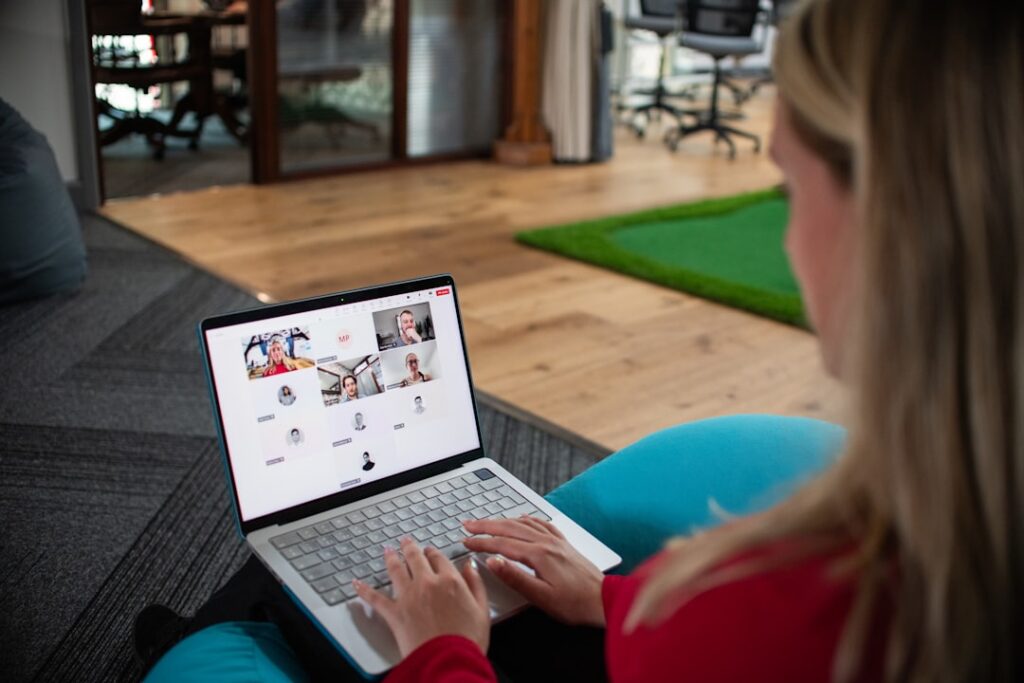
The institutionalization of digital‑well‑being reshapes the calculus of career development. Employees who perceive robust mental‑health support report a 14 % increase in self‑efficacy and a 21 % rise in discretionary effort, per a Deloitte 2025 survey of 12,000 professionals [17].
Career Capital Accrual
Well‑being programs that include skill‑building (e.g., resilience training, digital‑detox workshops) act as “human‑capital multipliers.” A case study of a mid‑size tech firm in Austin revealed that participants in a six‑month mindfulness curriculum achieved an average of 1.3 additional skill certifications compared with peers, accelerating promotion timelines by 18 % [18].
Asymmetric Talent Attraction
Top talent increasingly evaluates employer mental‑health policies as a decisive factor. LinkedIn’s 2025 talent‑trend report shows that 68 % of Gen Z candidates rank “digital‑well‑being support” above salary when choosing between comparable offers [19]. Companies that embed these policies into employer branding experience a 27 % reduction in offer rejection rates [20].
Leadership Pipeline Implications
Leaders who model healthy digital habits influence organizational norms. A longitudinal study of Fortune 100 CEOs found that those who publicly endorse “right‑to‑disconnect” policies see a 9 % higher retention rate among high‑potential employees, suggesting a structural linkage between leadership behavior and pipeline robustness [21].
Leadership Pipeline Implications Leaders who model healthy digital habits influence organizational norms.
Economic Mobility
When digital‑well‑being is institutionalized, the risk of “burnout‑induced attrition”—a primary barrier to upward mobility for low‑income workers—declines. The Economic Mobility Institute estimates that a 10 % reduction in burnout could lift median earnings for the bottom quartile by $3,200 annually, a measurable shift in economic trajectory [22].
Outlook: Institutional Evolution Over the Next Five Years
The next three to five years will likely witness three converging developments that cement digital‑well‑being as a structural pillar of organizational design.
- Regulatory Codification – Building on the EU’s Digital Services Act, the United States is drafting a “Workplace Digital Health Act” that would require large employers to report annual digital‑well‑being metrics to the Department of Labor. Compliance will become a prerequisite for government contracts and ESG ratings [23].
- Data‑Driven Personalization – Advances in AI‑enabled sentiment analysis will allow firms to monitor digital fatigue in real time, tailoring interventions at the individual level. Early adopters such as IBM report a 7 % reduction in sick‑leave days after deploying predictive well‑being dashboards [24].
- Integration with Career‑Development Systems – Learning Management Systems will embed well‑being milestones alongside technical competencies, creating a unified career‑capital framework. This integration will enable talent analytics that correlate mental‑health scores with promotion velocity, informing succession planning at the board level [25].
You may also like
 Future Skills & Work
ESG mandates reshape public‑sector career pathways
The shift promises greater accountability but also rewrites the calculus of career capital and social mobility for civil servants.
Read More →Organizations that proactively align governance, technology, and culture around digital‑well‑being will secure a durable competitive advantage. Those that treat it as a peripheral program risk systemic attrition, weakened leadership pipelines, and a diminished capacity for economic mobility within their workforce.
Key Structural Insights
> Boundary Erosion as a Systemic Shock: The collapse of temporal and spatial work boundaries creates an asymmetric stress load that reverberates through productivity, talent retention, and leadership pipelines.
> Digital‑Well‑Being as Governance: Emerging regulations and AI‑driven monitoring are transforming mental‑health support from a discretionary perk into a compliance and strategic asset.
> Career Capital Realignment: Embedding well‑being into skill‑development pathways reshapes the trajectory of employee advancement, amplifying economic mobility and reshaping institutional power structures.