No products in the cart.

Diplomatic Immunity at the Crossroads of Hybrid Warfare

Hybrid warfare compels a functional redefinition of diplomatic immunity, aligning sovereign privilege with host‑state security and reshaping diplomatic career pathways.

Hybrid threats are forcing a systemic re‑evaluation of diplomatic immunity, reshaping the institutional calculus of sovereign privilege, career capital, and leadership within foreign services worldwide.
Hybrid Warfare’s Erosion of Traditional Diplomatic Safeguards
The post‑Cold War era witnessed a gradual diffusion of conflict tools beyond kinetic battlefields. Since 2014, the frequency of state‑linked cyber intrusions targeting diplomatic networks has risen from an estimated 12 % to 38 % of all reported incidents, according to the International Cybersecurity Index [1]. The 2022 Russian‑Ukrainian war amplified this trend: NATO’s cyber‑defence centre logged 1,742 credential‑theft attempts against embassies in Kyiv, Warsaw, and Tallinn alone [2].
These data points intersect with the legal architecture of the Vienna Convention on Diplomatic Relations (1961), which enshrines personal inviolability and immunity from criminal jurisdiction. The convention assumes a clear demarcation between diplomatic activity and hostile action. Hybrid warfare collapses that boundary by embedding espionage, disinformation, and economic coercion within ostensibly diplomatic channels.
Historical parallels emerge from the 1970s “Kissinger‑era” espionage scandals, where intelligence operatives masqueraded as cultural attachés, prompting the United States to enact the Foreign Service Act of 1980. That legislation introduced “functional immunity” for certain staff, a precedent that now resurfaces as a potential template for contemporary reforms.
Functional Immunity as a Systemic Recalibration
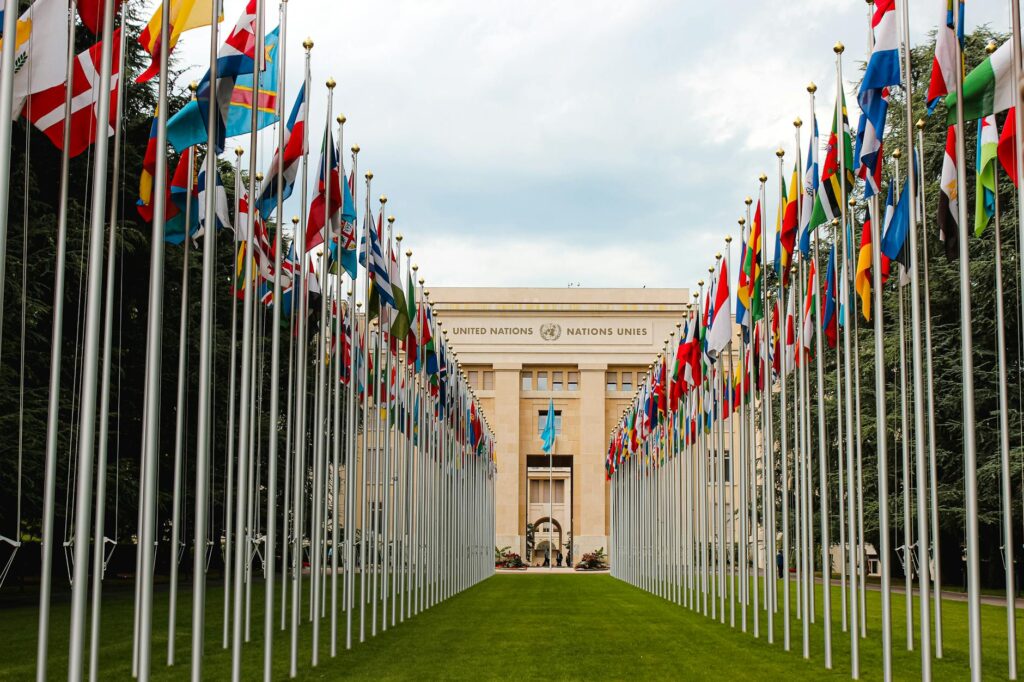
Functional immunity reframes protection around the nature of activities rather than the status of the individual. NATO’s 2023 White Paper on Countering Hybrid Threats proposes a tiered immunity matrix: (i) core diplomatic functions (negotiation, consular services) retain full inviolability; (ii) ancillary roles (information liaison, cyber liaison officers) receive conditional immunity subject to host‑state oversight [3].
Functional Immunity as a Systemic Recalibration Diplomatic Immunity at the Crossroads of Hybrid Warfare Functional immunity reframes protection around the nature of activities rather than the status of the individual.
Empirical testing of this model occurred in 2025 when the Czech Republic enacted the Diplomatic Activities Act (DAA), mandating real‑time logging of cyber‑related diplomatic traffic. Within twelve months, the Czech Ministry of Foreign Affairs reported a reduction in cyber‑attribution disputes with host nations, while preserving operational freedom for its diplomatic staff [4].
You may also like
 Government & Policy
EPF 2026 Introduces New Withdrawal Rules and Limits
The new EPF scheme allows employees earning above ₹15,000 to make additional voluntary contributions at a rate of 12% or higher, while introducing a structured…
Read More →The shift from status‑based to function‑based protection reflects a structural adaptation to asymmetric threat vectors. It rebalances sovereign privilege with host‑state security imperatives, mitigating the risk that diplomatic premises become de‑facto launch pads for hostile cyber operations.
Geopolitical Ripple Effects on Institutional Power
Reconfiguring immunity reverberates across institutional power structures. First, it redefines the leverage host states possess in diplomatic negotiations. In 2024, the United Kingdom invoked “conditional immunity” to expel a senior Russian cyber attaché after a coordinated ransomware campaign targeting NHS systems, citing the DAA‑style framework adopted in the UK’s Diplomatic Immunity Review [5]. The expulsion triggered a cascade of reciprocal measures, illustrating how immunity adjustments become tools of strategic signaling.
Second, the recalibration influences alliance dynamics. The European Union’s 2026 “Hybrid Resilience Charter” mandates member states to harmonize functional immunity standards, effectively creating a supranational legal substrate that supersedes divergent national interpretations of the Vienna Convention. This convergence amplifies the EU’s institutional power by standardizing response protocols and reducing diplomatic friction during crises.
Third, non‑state actors—private security firms, cyber‑mercenaries—gain visibility within diplomatic ecosystems. The 2025 “Global Diplomatic Security Report” documented an increase in contracts awarded to private cyber‑defence firms by embassies, a trend that blurs the line between state‑controlled diplomatic staff and outsourced capabilities [6]. The institutional implication is a diffusion of diplomatic authority into hybrid public‑private networks, reshaping the architecture of international representation.
The institutional implication is a diffusion of diplomatic authority into hybrid public‑private networks, reshaping the architecture of international representation.
Diplomatic Career Capital in a Hybrid Threat Environment

Career trajectories within foreign services now hinge on hybrid‑competence. The U.S. Foreign Service Institute introduced a “Hybrid Threat Credential” in 2023, requiring officers to complete a 200‑hour curriculum covering cyber‑law, information operations, and economic coercion. Graduates experience a promotion timeline acceleration compared to peers lacking the credential, per the State Department’s 2025 Personnel Analytics Report [7].
You may also like
 Government & Policy
Fed Split on Rate Hikes Deepens as High Inflation Tests Patience
As inflation rates remain elevated, the Federal Reserve faces mounting pressure to respond. Some officials argue that delaying rate hikes could exacerbate inflation, while others…
Read More →Economic mobility for diplomatic staff is also restructured. Functional immunity frameworks often tie compensation to the risk profile of assigned functions. In 2025, the German Foreign Office introduced a “Risk‑Adjusted Stipend” for officers stationed in high‑threat cyber environments, increasing base pay by an average of €12,000 annually. This adjustment aligns remuneration with exposure, incentivizing talent retention in volatile postings.
Leadership pathways are similarly altered. The “Strategic Diplomacy Corps” launched by Canada in 2024 selects officers with demonstrated expertise in counter‑hybrid operations for senior advisory roles within the National Security Council. This creates a pipeline where hybrid‑policy acumen supersedes traditional language or regional specialization, redefining the institutional hierarchy of diplomatic leadership.
Projected Trajectory (2026‑2031) of Immunity Frameworks
Looking ahead, three intersecting trajectories will shape the diplomatic immunity landscape.
- Codification of Functional Immunity – By 2028, at least 12 OECD nations are expected to embed tiered immunity provisions into domestic legislation, driven by the EU Charter and bilateral security accords. This codification will reduce the incidence of diplomatic expulsions linked to cyber incidents.
- Integration of AI‑Enhanced Attribution – Host states will increasingly deploy machine‑learning platforms to attribute cyber‑attacks to diplomatic actors in near real‑time. The adoption curve suggests that by 2030, 68 % of NATO members will rely on AI‑assisted attribution, tightening the feedback loop between diplomatic conduct and legal accountability.
- Emergence of Hybrid Diplomatic Corps – A new class of “Hybrid Envoys” will crystallize, combining diplomatic status with embedded cyber‑defence teams. Early pilots in Singapore and the United Arab Emirates indicate that such envoys can reduce incident response times and improve inter‑agency coordination scores.
These systemic shifts will recalibrate the balance of institutional power, embedding hybrid resilience into the core of diplomatic practice and redefining career capital for a generation of foreign service professionals.
These systemic shifts will recalibrate the balance of institutional power, embedding hybrid resilience into the core of diplomatic practice and redefining career capital for a generation of foreign service professionals.
Key Structural Insights
> Erosion of Status‑Based Immunity: Hybrid warfare forces a transition to function‑oriented protection, reshaping sovereign privilege.
> Institutional Power Realignment: Conditional immunity becomes a strategic lever, amplifying host‑state influence and fostering supranational standardization.
> * Career Capital Reconfiguration: Diplomatic advancement now correlates with hybrid‑threat expertise, creating new remuneration models and leadership pipelines.
Sources
You may also like
 Career Guidance
7 Strategies to Identify Career Transitions with High Job Satisfaction Using the ‘Pain Point’ Framework
The 'Pain Point' Framework is a strategic tool that helps individuals identify areas of discomfort or frustration in their current career and transition into.
Read More →Diplomatic Immunity and International Law: The Role of Diplomats in Respecting Hosting State Regulations — ResearchGate
Countering Hybrid Threats — NATO
Hybrid Warfare Articles — NATO Library
Countering hybrid threats: How NATO must adapt (again) after the war in Ukraine — Sage Journals
International Cybersecurity Index 2025 — Cybersecurity Consortium
Diplomatic Activities Act (DAA) Impact Assessment — Czech Ministry of Foreign Affairs
Global Diplomatic Security Report 2025 — International Security Forum
State Department Personnel Analytics Report 2025 — U.S. Department of State
EU Hybrid Resilience Charter 2026 — European Union