No products in the cart.

DOJ Files Lawsuits Against Four States Over In-State Tuition for Undocumented Students
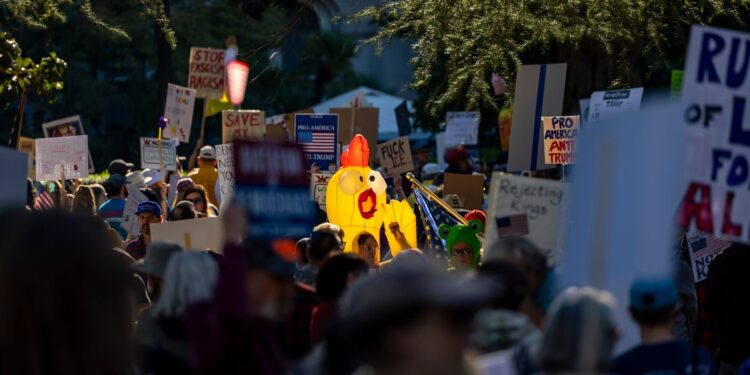
The suits were filed in federal court in early August 2026 and cite alleged violations of federal immigration law.

The Department of Justice filed civil actions against New York, Connecticut, Massachusetts, and Rhode Island, challenging state policies that grant in-state tuition rates to undocumented migrants. The suits were filed in federal court in early August 2026 and cite alleged violations of federal immigration law.
The lawsuits were lodged by the Department of Justice’s Civil Division on behalf of the federal government, asserting that the four states’ tuition-discount programs conflict with the Immigration and Nationality Act and the Illegal Immigration Reform and Immigrant Responsibility Act. The filings seek injunctions to halt the tuition benefits and request monetary penalties for alleged statutory violations. The actions were reported by major news outlets on August 12, 2026.
The plaintiffs are the United States government, represented by the DOJ, while the defendants are the state governments of New York, Connecticut, Massachusetts, and Rhode Island. The lawsuits also reference the affected student populations—undocumented migrants who, under current state policies, are eligible for tuition rates identical to those offered to resident citizens. The DOJ’s complaint outlines that the states enacted the tuition policies through legislation and administrative rules passed between 2015 and 2022.
Legal Basis and Allegations
The DOJ’s complaint argues that state-level tuition discounts for undocumented students constitute an unlawful “public benefit” that contravenes federal immigration statutes, which restrict benefits to lawfully present individuals. The filing contends that the states’ actions undermine the federal government’s exclusive authority to determine eligibility for immigration-related benefits.
According to the complaint, the states’ tuition programs were implemented without federal authorization and therefore “violate the Supremacy Clause of the United States Constitution.” The DOJ seeks a declaratory judgment that the tuition policies are invalid, a preliminary injunction to stop the states from continuing the discounts, and reimbursement of legal costs incurred by the federal government.
The filing contends that the states’ actions undermine the federal government’s exclusive authority to determine eligibility for immigration-related benefits.
The filing also alleges that the tuition benefits create a de-facto incentive for undocumented migration, a claim the DOJ says is supported by congressional intent in the 1996 Illegal Immigration Reform and Immigrant Responsibility Act. The complaint references specific statutes, including 8 U.S.C. § 1324, which prohibits the provision of public benefits to individuals not lawfully present in the United States.
States Named in the Lawsuits

New York’s lawsuit alleges that the state’s “Tuition Assistance Program” for undocumented students, enacted in 2019, provides a tuition discount of up to 75 percent at public colleges and universities. The DOJ’s filing identifies the program’s statutory authority as the New York State Higher Education Services Corporation, which the complaint claims exceeds its congressional mandate.
Connecticut’s case focuses on the 2021 “Undocumented Student Tuition Equity Act,” which allows undocumented residents to pay in-state tuition at the state’s community colleges and four-year institutions. The DOJ asserts that the act conflicts with federal law because it extends a public benefit to non-citizens without congressional approval.
Massachusetts and Rhode Island were sued jointly for similar policies. Massachusetts enacted the “Undocumented Student Tuition Assistance Act” in 2020, while Rhode Island passed comparable legislation in 2022, both granting in-state tuition rates to undocumented students attending public higher-education institutions. The DOJ’s complaint states that the two states coordinated their legal strategies, prompting a combined filing.
All four states have issued statements defending their policies as “consistent with state values of equity and access” and have indicated intentions to contest the lawsuits vigorously. Legal analysts cited in the source articles note that the cases will likely proceed to a pre-trial motion phase before any substantive hearing on the merits.
Potential Immediate Effects on Students and Institutions
The lawsuits create uncertainty for undocumented students currently enrolled under the in-state tuition programs. While the DOJ seeks an immediate injunction, no court order has yet been issued, meaning the tuition discounts remain in effect pending further judicial action. Universities and community colleges in the four states have been instructed to maintain existing billing practices until a final ruling.
Massachusetts enacted the “Undocumented Student Tuition Assistance Act” in 2020, while Rhode Island passed comparable legislation in 2022, both granting in-state tuition rates to undocumented students attending public higher-education institutions.
Higher-education administrators are reviewing compliance procedures to prepare for possible changes. Some institutions have begun drafting contingency plans that could involve reverting undocumented students to out-of-state tuition rates, which are typically 2–3 times higher. The financial impact on affected students could be significant, potentially influencing enrollment decisions and degree completion rates.
State legislatures are also assessing the lawsuits’ implications for future policy. Lawmakers in New York and Connecticut have scheduled hearings to discuss potential amendments to the tuition statutes, while Massachusetts and Rhode Island are considering bipartisan bills that would seek a federal waiver or redesign the benefit structure to avoid further legal conflict. The outcomes of these legislative efforts may affect the scope of the DOJ’s claims and the courts’ eventual rulings.
Key Facts
What: The Department of Justice sued New York, Connecticut, Massachusetts, and Rhode Island over state tuition discounts for undocumented students.
When: Lawsuits were filed in early August 2026 and reported on August 12, 2026.
What: The Department of Justice sued New York, Connecticut, Massachusetts, and Rhode Island over state tuition discounts for undocumented students.
Impact: The actions place current in-state tuition benefits for undocumented students in legal jeopardy and may require institutions to adjust tuition billing pending court decisions.
Sources
- The New York Times
- CT Mirror
- Courthouse News
Written by Career Ahead AI. AI can make mistakes, so verify key facts. Report errors to support@careeraheadonline.com.