No products in the cart.

U.S. Education Department Issues National Call to Action as Columbia University Faces Accreditation Review
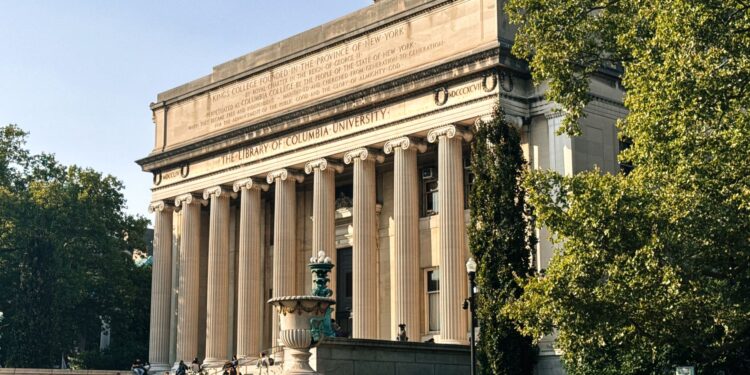
Columbia University is under federal scrutiny after an accreditation failure finding and a prior funding suspension. The U.S.

The Education Department released a nationwide directive urging colleges to publish reform commitments. Columbia University is under federal scrutiny after an accreditation failure finding and a prior funding suspension.
The U.S. Education Department announced a “National Call to Action” that asks every post‑secondary institution to publicly detail its commitments to rigorous teaching, innovative research, and national service before the end of 2026. The directive follows a series of federal actions concerning Columbia University, including a June 4, 2025 determination that the university failed accreditation standards and a July 29, 2025 list of nine reform demands issued by the Trump administration.
The entities involved include Columbia University, the U.S. Education Department, and the Trump administration that previously set conditions for continued federal funding. The department’s actions stem from concerns about accreditation compliance and campus climate issues, leading to a suspension of $400 million in federal research grants tied to antisemitism investigations. The current administration has continued the reform push through the August 2026 National Call to Action, which targets university presidents and governing boards nationwide.
Timeline of Federal Directives and Institutional Responses
On June 4, 2025, the Education Department released a formal finding that Columbia University did not meet federal accreditation standards, citing deficiencies in governance, financial management, and campus climate. The finding placed the university at risk of losing eligibility for federal student aid, a concern for an institution where roughly half of its students depend on such assistance.
Following the accreditation finding, the Trump administration issued an ultimatum on July 29, 2025, outlining nine specific demands that Columbia must satisfy to retain federal funding. The demands addressed issues such as free speech protections, antisemitism response protocols, and financial transparency. In response, the Department of Education halted $400 million in federal research grants pending compliance with the demands.
The finding placed the university at risk of losing eligibility for federal student aid, a concern for an institution where roughly half of its students depend on such assistance.
On August 3, 2026, Secretary of Education Linda McMahon released a National Call to Action, urging all university presidents and governing boards to publish a “statement of principle” describing their commitments to seven priority areas, including admissions criteria, intellectual diversity, and free expression. The call was reiterated in an August 5, 2026 briefing that detailed the expected content of the statements and set a deadline for publication by December 31, 2026.
Accreditation Findings and Funding Implications
The June 2025 accreditation determination cited failures in meeting the Department’s standards for institutional integrity, student outcomes, and campus safety. As a result, Columbia University faced the prospect of losing eligibility for Title IV federal student aid programs, which could affect up to 18,000 students who rely on federal loans and grants.
The July 2025 funding suspension removed $400 million in federal research awards, impacting ongoing projects in science, engineering, and public health. The suspension was linked to documented incidents of antisemitic harassment on campus, which the department said violated federal civil rights protections. Columbia’s leadership subsequently submitted a remediation plan to the department, though the plan’s acceptance status remains pending.
National Call to Action and Required Institutional Commitments
The August 2026 National Call to Action requires each institution to issue a public statement covering seven priority reform areas: admissions criteria, free expression, intellectual diversity, faculty governance, financial transparency, student support services, and community engagement. The statements must be posted on institutional websites and submitted to the Education Department for review.
Universities are also instructed to adopt measurable benchmarks for each priority area and to report progress annually through a standardized dashboard. The Department indicated that compliance will be monitored through periodic audits and that non-compliant institutions may face additional sanctions, including potential reductions in federal aid eligibility.
The statements must be posted on institutional websites and submitted to the Education Department for review.
Immediate Impact on Columbia Students and Faculty
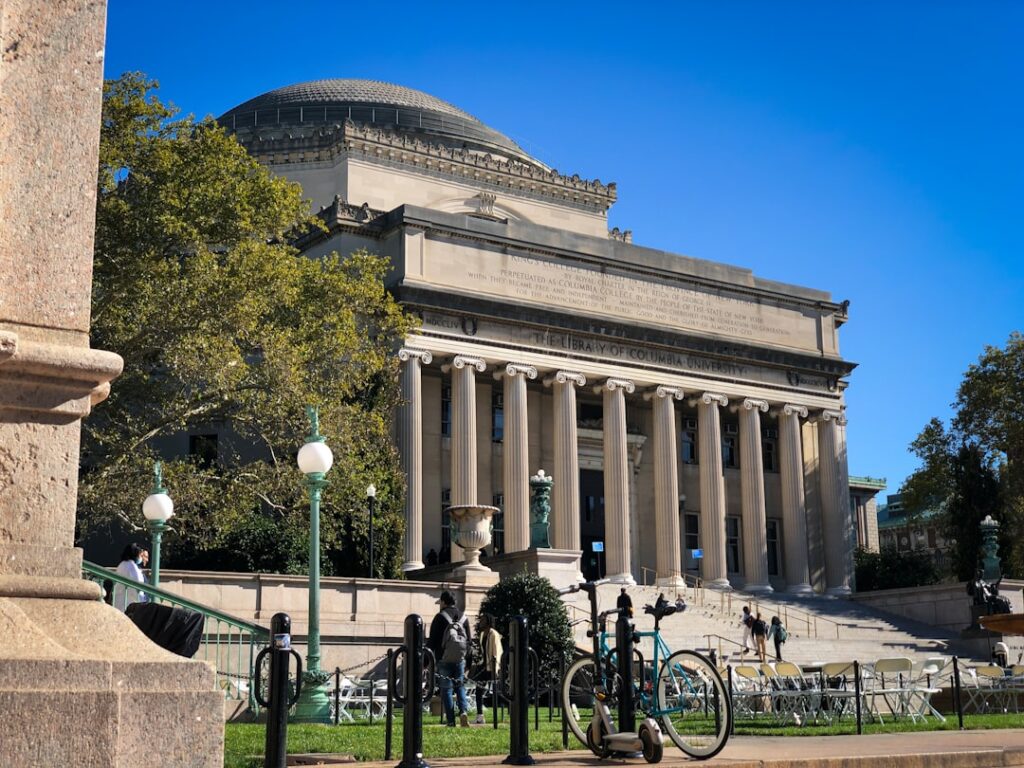
With approximately 50% of Columbia’s students receiving federal aid, the accreditation finding and funding suspension create immediate financial uncertainty for up to 18,000 students. The loss of research grants also threatens faculty research contracts, graduate student stipends, and collaborative projects with federal agencies.
University administrators have announced interim measures to mitigate disruption, including temporary tuition assistance funds, accelerated financial aid processing, and the continuation of research activities through private and state sources. The National Call to Action’s transparency requirement may compel Columbia to disclose its remediation strategies publicly, offering students and faculty clearer insight into institutional reforms.
Key Facts
What: The U.S. Education Department issued a National Call to Action for colleges to publish reform commitments, while Columbia University faces accreditation failure findings and prior funding suspensions.
When: Accreditation finding on June 4, 2025; nine reform demands on July 29, 2025; National Call to Action issued August 3, 2026, and reported August 5, 2026, with a compliance deadline of December 31, 2026.
Impact: Up to 18,000 Columbia students risk loss of federal aid; research grants of $400 million are suspended; institutions must publicly detail reform plans, affecting governance and student services nationwide.
Impact: Up to 18,000 Columbia students risk loss of federal aid; research grants of $400 million are suspended; institutions must publicly detail reform plans, affecting governance and student services nationwide.
Sources
- Education Department asks colleges to publicly detail reform commitments – Nixon Peabody
- U.S. Education Department ‘National Call to Action’ Urges Colleges and Universities to Commit Publicly to Higher‑Ed Reforms & Transparency – McGuireWoods
- Education Department Finds Columbia University Fails Accreditation Standards – VisaVerge
- Trump Lists 9 Demands for Columbia University to Keep Federal Funding – University Magazine
Written by Career Ahead AI. AI can make mistakes, so verify key facts. Report errors to support@careeraheadonline.com.