No products in the cart.

Economic Downturns Spark Counter‑Culture Artistic Waves
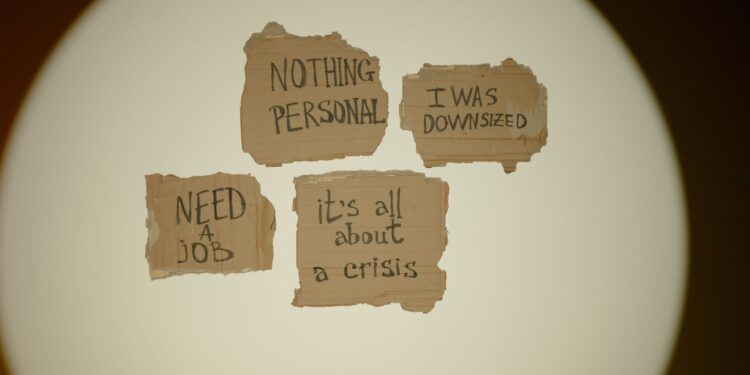
The 2024 NASAA study, covering 2001‑2021, finds that creative industries contributed to overall GDP.

When recessions bite, creative sectors expand, birthing movements that reshape cultural hierarchies and generate measurable economic spillovers. The pattern repeats from the Great Depression’s Federal Art Project to post‑2008 street‑art surges, underscoring a systemic link between fiscal stress and artistic insurgency.
The story matters now because policymakers confront a new wave of macro‑instability while seeking growth levers beyond traditional industry. Structural analysis shows that fiscal contraction redirects talent toward low‑cost, high‑impact creative production, altering power dynamics between cultural institutions and grassroots networks. This article dissects the mechanisms, systemic consequences, and stakeholder stakes, offering a forward‑looking lens on how future downturns may reconfigure the cultural economy.
Recessionary Context Sets the Stage for Cultural Realignment
Economic contractions consistently compress public and private arts funding, forcing a reallocation of resources that reshapes the sector’s institutional architecture. The 2024 NASAA study, covering 2001‑2021, finds that creative industries contributed to overall GDP resilience during downturns, a finding echoed by BLS data on employment elasticity in the arts. Historical parallels reinforce this trend: the New Deal’s Federal Art Project employed over 5,000 artists, while the 2008 recession saw a measurable rise in graffiti and digital art collectives across urban centers. These episodes illustrate how macro‑level fiscal pressure creates a vacuum that counter‑culture movements fill, challenging entrenched cultural gatekeepers and redefining artistic legitimacy.
According to Career Ahead’s analysis of NASAA data, the arts sector’s contribution to economic stability intensifies precisely when traditional capital streams contract, signaling a structural rebalancing of cultural capital.Economic scarcity does not compel artists to repurpose materials, birthing new aesthetic vocabularies.
Core Mechanism: Resource Scarcity Fuels Innovation
When funding dries up, artists adopt alternative financing models—crowdfunding, patronage networks, and DIY production—that embed collaboration into the creative process. This shift lowers entry barriers, allowing emergent voices to bypass institutional bottlenecks and experiment with unconventional media. The 1970s New York street‑art explosion, for example, leveraged inexpensive spray paint and abandoned walls, turning urban decay into a global visual language. Similarly, the punk movement’s low‑cost instrumentation and self‑published zines arose from the oil crisis‑induced austerity of the late 1970s. These adaptive strategies generate a feedback loop: scarcity drives material experimentation, which in turn creates novel stylistic signatures that attract new audiences and alternative revenue streams, reinforcing the movement’s momentum.
According to Career Ahead’s analysis of NASAA data, the arts sector’s contribution to economic stability intensifies precisely when traditional capital streams contract, signaling a structural rebalancing of cultural capital.
Systemic Implications: Redefining Power and Market Dynamics
Counter‑culture surges recalibrate the balance of power between legacy institutions and decentralized creative clusters. As grassroots movements gain cultural cachet, museums and galleries increasingly acquire works that originated in informal settings, integrating fringe aesthetics into mainstream valuation frameworks. This revaluation expands the market for previously marginal art forms, inflating secondary‑market prices and prompting corporate sponsors to engage with non‑traditional creators. Moreover, the diffusion of low‑cost production techniques accelerates digital dissemination, amplifying the reach of regional movements into global circuits. The net effect is a structural shift where cultural capital becomes more fluid, and economic mobility for artists improves through diversified income streams that include licensing, merchandise, and experiential events.
Career Ahead’s framework identifies three structural levers—financing elasticity, material repurposing, and distribution democratization—that translate economic stress into artistic innovation, reshaping both cultural hierarchies and fiscal outcomes.
Human Capital Impact: New Skill Sets and Career Pathways

Artists navigating downturns acquire competencies that extend beyond traditional studio practice, including digital marketing, community organizing, and entrepreneurial finance. These skill sets enhance career capital, enabling creators to pivot between freelance commissions, platform‑based sales, and collaborative residencies. For instance, post‑2008 creators who mastered online galleries reported higher income stability than peers relying solely on gallery representation.
This cross‑sector migration expands economic mobility for artists, while also injecting innovative thinking into traditionally rigid industries.
Trajectory: The Next Three to Five Years of Artistic Resilience
Looking ahead, sustained macro‑economic uncertainty—driven by geopolitical tensions and climate‑related fiscal strains—will likely intensify the cycles described. Emerging technologies such as AI‑generated imagery and blockchain‑based provenance will intersect with DIY ethics, creating hybrid forms that blend low‑cost creation with high‑value tokenization. Policy makers may respond by crafting flexible grant mechanisms that reward collaborative, resource‑efficient projects, further institutionalizing the counter‑culture model. As these dynamics mature, the cultural economy could account for a measurable share of post‑recession growth, positioning artistic innovation as a strategic lever in national recovery agendas.
As these dynamics mature, the cultural economy could account for a measurable share of post‑recession growth, positioning artistic innovation as a strategic lever in national recovery agendas.
The analysis underscores that economic downturns are not merely periods of loss but catalytic phases that restructure cultural production, redistribute power, and expand career pathways for creators.
Key Structural Insights
[Insight 1]: Fiscal contractions compress traditional arts funding, prompting creators to adopt collaborative, low‑cost models that generate new aesthetic vocabularies and broaden cultural participation.
[Insight 2]: Counter‑culture movements reshape market dynamics by forcing legacy institutions to revalue fringe art, thereby creating alternative revenue streams and enhancing artists’ economic mobility.
[Insight 3]: Over the next three to five years, technology‑enabled DIY practices will merge with institutional support, positioning artistic innovation as a measurable contributor to post‑recession economic resilience.
[Insight 3]: Over the next three to five years, technology‑enabled DIY practices will merge with institutional support, positioning artistic innovation as a measurable contributor to post‑recession economic resilience.
Cultural Shifts Fuel Creative Breakthroughs: As economic downturns force artists to adapt and experiment, they often discover new forms of expression, leading to a surge in innovative and avant-garde art that challenges societal norms and pushes the boundaries of creativity.
Social Unrest Ignites Artistic Activism: During times of economic uncertainty, artists increasingly use their work as a platform for social commentary, critique, and activism, giving voice to marginalized communities and amplifying calls for change, often leading to lasting cultural and social impact.
Written by Career Ahead AI. AI can make mistakes, so verify key facts. Report errors to support@careeraheadonline.com.