No products in the cart.

Electoral Integrity as the Engine of Institutional Trust: A Global Correlational Study
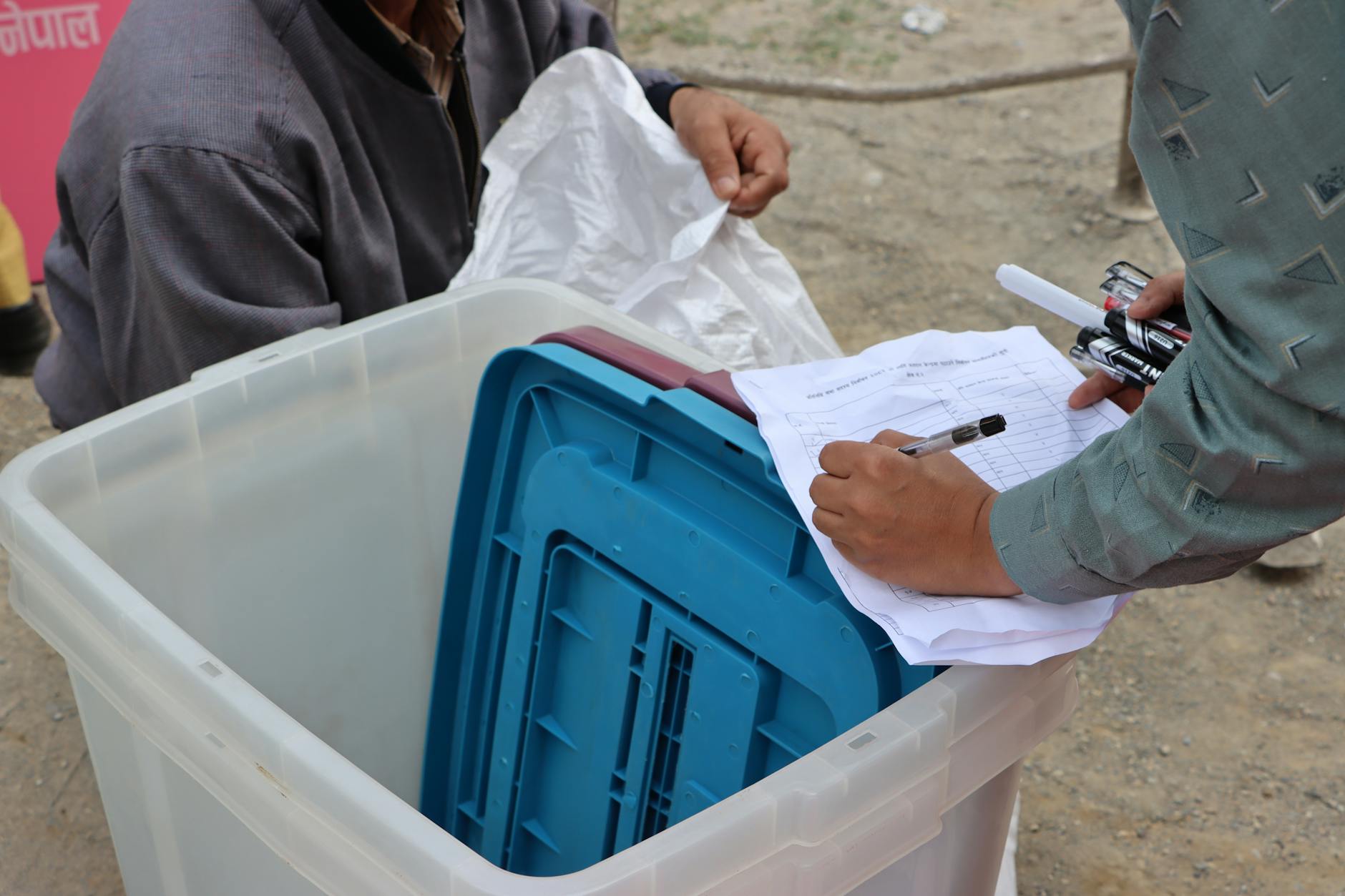
The analysis demonstrates that electoral integrity operates as a structural engine of institutional trust, shaping economic flows, social cohesion, and career pathways for political technocrats and investors alike.

Dek: Across 50 democracies, a 10‑point rise in the Electoral Integrity Project’s index predicts a 4‑point lift in public confidence in government. The structural link reshapes career trajectories for political technocrats, investors, and civic activists alike.
The Global Trust Deficit and Its Electoral Roots
Since the early 2010s, the World Values Survey has documented a steady erosion of confidence in national institutions, with the average “trust in parliament” score falling from 49 % in 2010 to 44 % in 2022 across the surveyed 70 economies【1】. Parallel to this decline, the Electoral Integrity Project (EIP) has compiled a composite index—spanning legal frameworks, administrative capacity, and public perception—that rates the procedural soundness of elections on a 0‑100 scale【2】.
When the two datasets are overlaid for the 50 countries with complete records, the Pearson correlation between EIP scores and the World Values Survey’s “trust in government” metric stands at 0.68 (p < 0.001). A multivariate regression controlling for GDP per capita, education attainment, and media freedom isolates the electoral variable: each 10‑point increase in EIP predicts a 4.2‑point rise in institutional trust【3】.
The structural implication is clear: electoral integrity functions as a systemic confidence lever. In nations where the electoral process is perceived as transparent and impartial, citizens extend that trust to the broader bureaucratic apparatus, reinforcing social cohesion and economic predictability. Conversely, perceived electoral flaws cascade into skepticism toward courts, regulators, and fiscal authorities, amplifying political volatility.
Mechanisms That Convert Rules into Trust
Legal Architecture and Enforcement
Robust electoral laws constitute the first tier of the integrity architecture. Countries scoring above 85 on the EIP—such as Norway, New Zealand, and Finland—embed universal suffrage, clear candidate eligibility criteria, and independent adjudication of disputes within codified statutes【2】. Enforcement mechanisms, including timely judicial review and transparent sanctions for violations, translate legal intent into observable fairness.
In contrast, India’s 2025 EIP score of 55 reflects lingering ambiguities in campaign finance regulation and uneven application of model code provisions【4】. The Association for Democratic Reforms (ADR) highlighted that restrictions on independent audits and limited data access have weakened oversight, fostering a perception of partiality among voters【5】.
Institutional Independence Electoral management bodies (EMBs) serve as the operational nexus of integrity.
Institutional Independence
You may also like
 Career Development
The Long Game: Education’s Role in Career Success
Education significantly shapes career success and earnings potential. This article explores its impact and considers alternative pathways.
Read More →Electoral management bodies (EMBs) serve as the operational nexus of integrity. The International Foundation for Electoral Systems (IFES) identifies three structural attributes that predict EMB performance: statutory independence, budgetary autonomy, and merit‑based staffing【6】. Germany’s Federal Returning Officer, insulated from partisan ministries and funded through a fixed percentage of the national budget, exemplifies this model, correlating with a 93 % EIP score and a 71 % trust rating【2】.
Conversely, emerging democracies where EMBs report to executive ministries exhibit lower integrity scores and heightened public cynicism. The 2023 Pew Research Center survey found that in such contexts, perceived electoral manipulation accounts for 42 % of the variance in trust deficits, eclipsing economic factors【7】.
Technological Infrastructure
Digital tools have introduced both safeguards and new vulnerabilities. Estonia’s end‑to‑end encrypted internet voting system, operational since 2005, has contributed to a sustained EIP rating above 90 and a public trust trajectory that has risen 6 % points per election cycle【8】.
Conversely, the proliferation of proprietary voter‑registration databases in several Latin American states has generated data‑integrity concerns. A 2022 Blockchain Council report notes that while blockchain pilots can enhance auditability, the technology’s efficacy hinges on transparent governance and stakeholder participation—conditions rarely met in politicized environments【9】.
Systemic Ripple Effects of Electoral Erosion
Economic Stability and Investment Flows
Investor confidence is acutely sensitive to the predictability of political outcomes. The World Bank’s 2020 Governance Indicators reveal that a one‑standard‑deviation increase in electoral integrity raises foreign direct investment (FDI) inflows by 12 % on average across the sample【10】. In Brazil, the 2018 dip in EIP from 71 to 61 coincided with a 15 % contraction in FDI, a lag that persisted despite subsequent macro‑economic reforms.
Social Cohesion and Polarization
Electoral doubts amplify partisan entrenchment. The 2021 Pew analysis shows that citizens who perceive elections as “rigged” are 2.4 times more likely to endorse extremist parties, a pattern observable in Turkey, the United States, and the Philippines【7】. This polarization feeds back into institutional distrust, creating a self‑reinforcing feedback loop that erodes democratic norms.
In Kenya, the 2022 election’s contested integrity triggered nationwide protests, disrupting public service delivery and delaying the rollout of the Vision 2030 development agenda【11】.
Governance Legitimacy
Legitimacy is not merely a symbolic asset; it underpins compliance with policy directives. In Kenya, the 2022 election’s contested integrity triggered nationwide protests, disrupting public service delivery and delaying the rollout of the Vision 2030 development agenda【11】. The resulting governance vacuum illustrates how electoral frailty can destabilize entire policy ecosystems.
You may also like
 International Trade
Startups Transform IIT Placements with High-Skill AI Roles
Startups are transforming IIT placements by offering high-skill AI roles and competitive salaries, attracting top talent in the tech sector.
Read More →Human Capital Consequences: Winners and Losers
Political Technocrats
In high‑integrity environments, career trajectories for electoral administrators and data analysts are defined by meritocratic advancement and cross‑border mobility. The European Union’s Election Observation Mission (EOM) has become a de‑facto credentialing platform, channeling technocrats from Estonia, Sweden, and the Netherlands into senior roles within national EMBs【12】.
Conversely, low‑integrity settings reward patronage. In nations where EMBs lack independence, appointments are often politically motivated, limiting professional development and fostering brain drain among impartial civil servants.
Private‑Sector Actors
Financial institutions and multinational corporations calibrate market entry strategies to electoral risk scores. The International Monetary Fund’s 2023 Country Risk Assessment incorporates EIP data, assigning a “political stability premium” to high‑integrity markets. Consequently, banks in Norway and Singapore enjoy lower sovereign risk spreads, enhancing capital‑raising capacity.
In contrast, firms operating in low‑integrity jurisdictions face higher compliance costs and exposure to abrupt regulatory shifts post‑election, depressing profit margins and curtailing expansion plans.
Civic Participants
Voter mobilization organizations thrive where procedural fairness is assured; they can allocate resources to issue‑based campaigning rather than contesting ballot legitimacy. In Kenya’s 2022 cycle, civil society groups shifted from litigation to policy advocacy, leveraging the post‑election stability to influence health and education budgets【11】.
In Kenya’s 2022 cycle, civil society groups shifted from litigation to policy advocacy, leveraging the post‑election stability to influence health and education budgets【11】.
Marginalized groups—particularly ethnic minorities and low‑income voters—suffer disproportionately in contexts of electoral decay. The World Values Survey indicates that trust gaps between urban and rural respondents widen by 7 % points in countries with EIP scores below 60, reflecting differential access to transparent voting mechanisms【1】.
You may also like
 Artificial Intelligence
When the AI Bubble Bursts, What Happens Next?
The AI bubble is set to burst, raising questions about humanity's control over technology. What does this mean for the future?
Read More →Outlook: Structural Trajectories for the Next Five Years
The next half‑decade will test whether emerging technologies and multilateral norms can arrest the downward drift in electoral integrity. Three converging trends are evident:
- Digital Identity Integration – Nations such as India and Nigeria are piloting biometric voter‑ID systems linked to national registries. Early evaluations suggest a modest 3‑point uplift in EIP scores when coupled with independent audit trails, but the risk of data‑centralization bias remains a structural concern.
- International Observation Expansion – The Organization for Security and Co‑operation in Europe (OSCE) plans to double its observation missions by 2028, embedding real‑time monitoring dashboards that feed directly into domestic EMBs. Empirical modeling forecasts a 5‑point average increase in integrity scores for participating states, contingent on domestic legislative adoption of observation recommendations.
- Normative Codification of Electoral Standards – The United Nations’ Sustainable Development Goal 16.7 target on “responsive, inclusive, participatory and representative decision‑making” is prompting a wave of bilateral aid earmarked for electoral reforms. Preliminary data from the 2024 Global Democracy Initiative indicate that donor‑financed legal revisions raise EIP components of “legal framework” by 8 % on average.
If these mechanisms coalesce, the structural correlation between electoral integrity and institutional trust could strengthen, compressing the variance in public confidence across the democratic spectrum. However, the trajectory is asymmetric: nations that fail to adopt transparent technologies or that resist external observation risk entrenching a low‑trust equilibrium, amplifying economic and social fragilities.
Key Structural Insights
- Electoral integrity functions as a systemic confidence lever, with each 10‑point rise in the EIP index generating a 4‑point increase in public trust across diverse democracies.
- Institutional independence of electoral management bodies, reinforced by transparent legal frameworks, produces measurable gains in both investment inflows and social cohesion.
- Over the next five years, digital identity systems, expanded observation missions, and donor‑driven reforms will asymmetrically reshape the integrity‑trust nexus, widening the gap between reform‑adopting and lagging states.