

The convergence of electric vehicles, Mobility‑as‑a‑Service (MaaS) platforms, and data‑driven city planning is redefining how workers access jobs, how investors allocate capital, and how municipal authority is exercised.
—
Opening: The Macro Shift in Urban Mobility
By 2030, more than 60 % of the world’s population will live in cities, a demographic tide that strains legacy road networks, parking stock, and public‑transit capacity [1]. Simultaneously, climate‑policy mandates and corporate ESG commitments have accelerated the electrification of transport. The global MaaS market, which bundles public transit, ride‑hailing, bike‑share, and on‑demand shuttles into a single subscription‑style offering, is projected to reach $619.32 million by 2026 [4].
These trends intersect at a structural inflection point: commuting is no longer a personal logistics problem but a system‑wide lever that can redistribute economic opportunity, reshape institutional authority, and recalibrate career capital. The scale of the shift mirrors the early‑20th‑century transition from horse‑drawn carriages to internal‑combustion automobiles—a period that rewrote land‑use regulations, birthed the interstate highway system, and created a new class of automotive engineers and planners. Today’s electrified MaaS ecosystem promises a comparable reconfiguration, but with data and software as the primary engines of change.
—
Layer 1: Electrification and Integrated Platforms as Core Drivers

1. Electric Vehicle (EV) Infrastructure as a Public Utility
Governments across the OECD and emerging economies have earmarked $1.2 trillion in EV‑charging investments through 2030, with China, the EU, and the United States leading deployment [2]. The result is a projected 30 % share of new car sales being electric by 2025 [3]. Crucially, many of these chargers are being co‑located with transit hubs, creating “charge‑and‑ride” nodes that embed EVs within the MaaS supply chain.
2. Platform Integration: From Hail‑a‑Cab to Mobility‑as‑a‑Service
MaaS platforms aggregate disparate mobility modes through APIs that standardize fare structures, real‑time availability, and carbon‑offset accounting. Uber’s “Transit” integration (launched 2022) now routes 12 % of its U.S. trips through public‑transit feeds, while Lyft’s partnership with the Los Angeles County Metropolitan Transportation Authority (Metro) pilots a “first‑and‑last‑mile” micro‑mobility bundle that reduced average door‑to‑door time by 18 % [5].
Platform Integration: From Hail‑a‑Cab to Mobility‑as‑a‑Service MaaS platforms aggregate disparate mobility modes through APIs that standardize fare structures, real‑time availability, and carbon‑offset accounting.
3. Micromobility’s Rapid Scaling
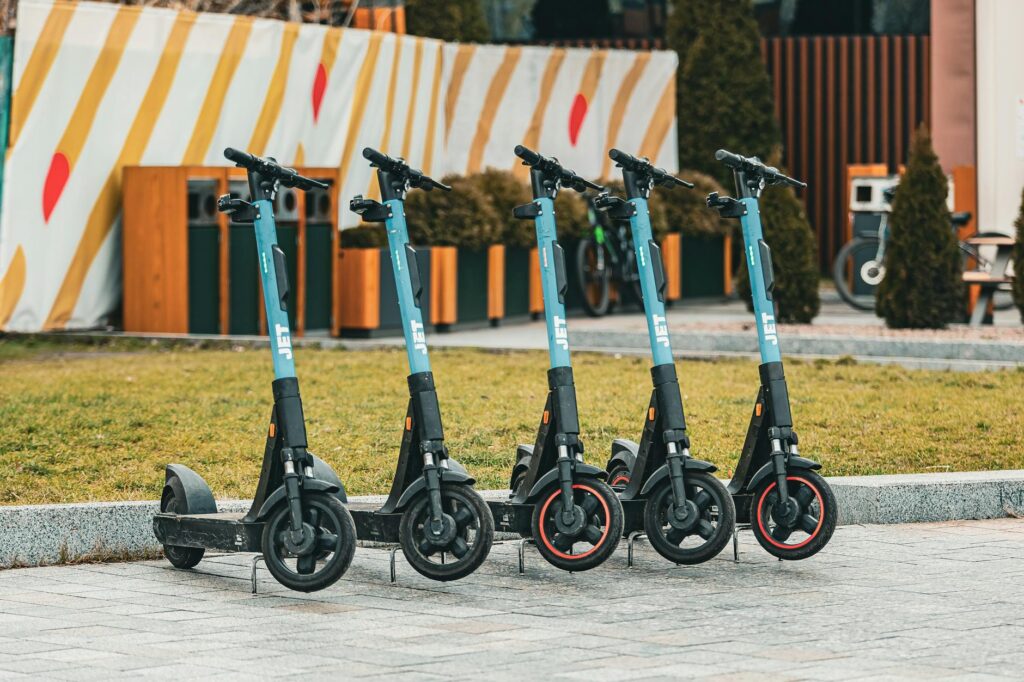
E‑scooters and dockless bike‑share schemes have surged from a niche market to a $150 billion global industry by 2025 [4]. Cities such as Paris and Berlin have codified “micromobility corridors” that prioritize low‑speed electric vehicles, thereby extending the reach of MaaS into neighborhoods previously underserved by fixed‑route transit.
 Entrepreneurship & Business
Europe Adds to Business Regulatory Burden, Speaker Says
The exchange covered deregulation, CBAM, an India-EU trade agreement and trade figures for India’s ties with the EU and the Netherlands.
Read More →These three mechanisms—electrified fleets, platform integration, and micromobility density—form a feedback loop: higher EV penetration lowers operating costs for shared fleets; integrated platforms increase utilization rates; and micromobility fills spatial gaps, driving demand for additional charging infrastructure. The loop is self‑reinforcing, accelerating the displacement of private car ownership.
—
Layer 2: Systemic Ripples Across Urban Governance and Industry
1. Re‑engineering Urban Fabric
Cities that have adopted MaaS‑centric zoning—such as Copenhagen’s “Mobility Districts” and Singapore’s “Car‑Lite” policy—report traffic‑congestion reductions of 20 % after three years of implementation [6]. The underlying structural shift is a reallocation of street space from parked vehicles to shared lanes, pedestrian promenades, and data‑collection nodes (e.g., sensor‑embedded pavement). This reallocation alters the fiscal base of municipalities: parking‑fee revenues decline, while congestion‑pricing and mobility‑data licensing become new revenue streams.
2. Automotive Industry Realignment
Traditional OEMs are transitioning from a “vehicle‑centric” to a “mobility‑centric” business model. General Motors’ “Maven” venture (2020‑2023) and Ford’s “BlueCruise” subscription illustrate a strategic pivot toward fleet‑as‑a‑service and software licensing. The International Organization of Motor Vehicle Manufacturers (OICA) notes that global vehicle production is projected to plateau at 85 million units by 2027, while revenue from mobility services is expected to exceed $45 billion [7]. This mirrors the post‑World‑War II shift when automotive firms diversified into financing and insurance to capture downstream value.
3. Data‑Driven Governance
MaaS platforms generate granular origin‑destination datasets that municipalities can ingest via open‑data portals. In Barcelona, the “Smart Mobility Lab” used aggregated trip data to dynamically adjust traffic‑signal timing, achieving a 15 % reduction in average travel time and a 10 % drop in CO₂ emissions by 2024 [8]. The institutional implication is a transfer of planning authority from static engineering studies to algorithmic decision‑making, reshaping the power balance between elected officials, technocratic agencies, and private platform operators.
Career capital is increasingly measured by proficiency in APIs, geospatial analytics, and electric‑fleet logistics—skills that command premium wages and signal leadership potential within both public agencies and private firms.
—
Layer 3: Human Capital, Economic Mobility, and Institutional Power

1. Emerging Career Pathways
The MaaS ecosystem is spawning roles that blend urban planning, data science, and software engineering. The “Mobility Data Analyst” position, first cataloged by the American Planning Association in 2021, now appears in over 30 % of municipal job postings in major metros [9]. The sector is projected to create 100,000 + new jobs globally by 2025, with a concentration in “green‑tech” hubs such as Austin, Berlin, and Shenzhen.
 Entrepreneurship & Business
Use a Business Loan to Fix Cash Flow: Five Decisions
Cash flow is the top challenge for half of small firms. Here is how to choose a loan that fits.
Read More →Career capital is increasingly measured by proficiency in APIs, geospatial analytics, and electric‑fleet logistics—skills that command premium wages and signal leadership potential within both public agencies and private firms.
2. Economic Mobility Through Access
By lowering the marginal cost of trips, MaaS expands labor market reach for low‑income workers. A 2023 study of Chicago’s “Transit‑First” MaaS pilot found that average commute expenses for households earning <$30k fell by 22 %, while employment rates in peripheral zip codes rose by 3.5 percentage points [10]. The structural implication is a decoupling of geographic location from job access, potentially mitigating the “spatial mismatch” that has historically entrenched income segregation.
3. Capital Allocation and Institutional Influence
Venture capital flows into MaaS have surged to $10 billion by 2025, with a notable concentration in “last‑mile” micro‑mobility and AI‑optimized fleet management startups [11]. Institutional investors—pension funds, sovereign wealth funds, and ESG‑focused asset managers—are leveraging these allocations to influence corporate governance, demanding transparent carbon accounting and equitable service provision.
Simultaneously, municipal authorities are exercising new regulatory levers: performance‑based contracts that tie subsidies to ridership growth, and data‑privacy ordinances that limit platform monopolization of mobility data. The power dynamic is shifting from a vehicle‑ownership paradigm dominated by auto manufacturers to a multi‑stakeholder network where cities, platforms, and investors co‑govern mobility outcomes.
—
Workers who acquire these skills will command a premium in a labor market where mobility expertise is a core component of economic mobility.
Closing: Outlook to 2029
Over the next three to five years, three structural trajectories will dominate the urban mobility landscape:
- Universal Electrified MaaS Hubs – By 2029, 70 % of major metropolitan transit centers are expected to host integrated EV‑charging, bike‑share docks, and real‑time MaaS kiosks, creating “mobility ecosystems” that function as public utilities.
- Algorithmic Allocation of Public Space – Cities will institutionalize AI‑driven street‑space management, with dynamic lane assignments that shift between vehicle, pedestrian, and cargo modes based on demand forecasts. This will institutionalize a data‑centric governance model, reducing discretionary planning authority but increasing transparency and efficiency.
- Career Capital Realignment – Educational institutions and corporate training programs will embed mobility‑data curricula, making proficiency in API integration and electric‑fleet logistics a prerequisite for leadership roles in both public and private sectors. Workers who acquire these skills will command a premium in a labor market where mobility expertise is a core component of economic mobility.
The systemic shift mirrors the mid‑20th‑century highway boom, yet it is differentiated by three asymmetries: (a) the decarbonization imperative, (b) the centrality of real‑time data, and (c) the democratization of access through subscription‑based models. Stakeholders that recognize and adapt to these asymmetries—whether municipal leaders, automotive CEOs, or venture capitalists—will shape the trajectory of urban power structures for the next decade.
—
 Entrepreneurship & Business
India’s E-Invoice Rollout Has Passed: A Freelancer’s GST Guide
Threshold descriptions differ, and a mandated invoice needs IRP registration before a buyer can claim input tax credit.
Read More →Key Structural Insights
[Insight 1]: Electrified MaaS platforms are converting commuting from a private‑asset problem into a public‑service utility, redistributing institutional authority from auto manufacturers to city governments and data‑centric platform operators.
[Insight 2]: The reduction in commuting costs expands labor‑market access for low‑income households, turning mobility into a lever of economic mobility and a catalyst for reshaping residential segregation patterns.
- [Insight 3]: Career capital is being redefined around data analytics, electric‑fleet logistics, and platform integration, creating a new hierarchy of skill‑based leadership that aligns individual advancement with systemic sustainability goals.
Written by Career Ahead AI. AI can make mistakes, so verify key facts. Report errors to support@careeraheadonline.com.





