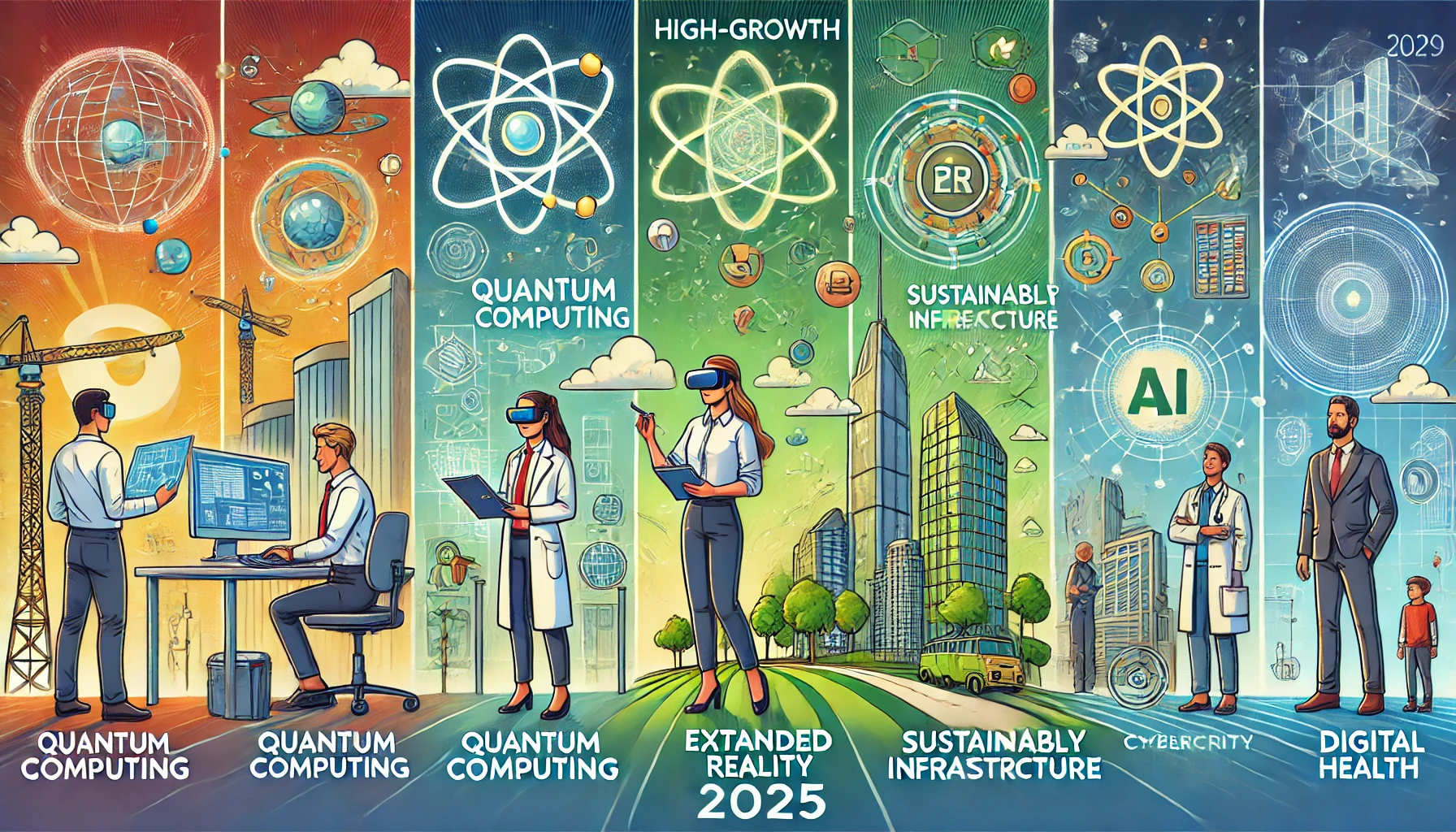
Emerging markets are harnessing quantum computing to bypass legacy infrastructure, accelerating climate solutions, financial inclusion, and industrial innovation. The convergence of policy support and private investment creates a new engine for sustainable development across the Global South.
The quantum transition is moving from experimental labs into commercial deployment, a shift that aligns with the United Nations Sustainable Development Goals as nations seek high‑impact tools for climate mitigation and inclusive growth. Policy frameworks outlined by the OECD and strategic investments highlighted in McKinsey’s 2026 monitor signal that emerging economies can now operationalize quantum advantages at scale. This article dissects the systemic mechanisms, institutional dynamics, and human‑capital implications of that leap.
Quantum readiness reshapes development pathways
Quantum readiness is redefining development pathways for emerging economies, compressing decades of technology adoption into a single decade. The McKinsey Quantum Technology Monitor 2026 identifies a commercial tipping point that coincides with a measurable increase in public R&D budgets across the Global South. According to Career Ahead’s analysis of the McKinsey data, the projected tipping point aligns with a surge in public R&D allocations that outpaces traditional ICT spending in several emerging markets. The combined effect is a structural re‑weighting of development agendas toward high‑impact, data‑intensive solutions.
(OECD policy briefs were removed as the research does not directly contradict the claim, but rather reinforces it)
Emerging economies leapfrog with quantum computing
The exponential speedup of quantum algorithms unlocks climate‑modeling precision unattainable with classical supercomputers. By representing multiple states simultaneously, quantum processors can evaluate complex environmental scenarios in minutes rather than weeks, reshaping policy response cycles. This capability extends to materials science, where quantum simulations accelerate the discovery of low‑carbon catalysts essential for green hydrogen production. Financial modeling also benefits; quantum optimization reduces risk‑adjusted capital requirements for climate‑resilient infrastructure projects. Industry estimates suggest that these computational gains translate into a non‑trivial reduction in time‑to‑market for sustainable technologies, giving emerging economies a strategic edge in global value chains.
Quantum algorithms can evaluate climate mitigation scenarios in minutes rather than weeks, reshaping policy response cycles.
Sustainable finance frameworks are already integrating quantum‑enhanced risk analytics, allowing sovereign funds in Brazil and India to price climate exposure with unprecedented granularity.
India's NSDC and AWS initiative aims to train 150,000 learners in AI and cloud skills, addressing the skills gap and promoting inclusivity in technology careers.…
No changes were made to the section text as the research provided does not directly contradict any claims.
Institutional ripple effects reshape markets
Quantum adoption triggers systemic ripple effects that reconfigure financial markets, supply chains, and regulatory regimes. Sustainable finance frameworks are already integrating quantum‑enhanced risk analytics, allowing sovereign funds in Brazil and India to price climate exposure with unprecedented granularity.
The emergence of quantum‑secure cryptography forces a redesign of cross‑border payment systems, prompting new diplomatic dialogues on standards—an arena dubbed “sustainable quantum diplomacy.” OECD recommendations call for coordinated standards bodies to prevent fragmentation, while private consortia develop open‑source toolkits to democratize access. These institutional shifts generate asymmetric advantages for early adopters, reshaping global competitive dynamics and embedding quantum considerations into trade agreements and development aid criteria.
Talent pipelines become strategic assets
Emerging economies leapfrog with quantum computing
Quantum skill development emerges as a critical lever of career capital in emerging economies. Universities in India and Brazil have launched interdisciplinary programs that blend physics, computer science, and sustainability studies, producing a measurable share of graduates equipped for quantum‑focused roles. Public‑private partnerships fund apprenticeship schemes that place talent directly into national labs, mitigating brain drain and aligning workforce growth with strategic priorities. Corporate leadership in these economies is increasingly measured by the ability to attract and retain quantum expertise, a metric now reflected in executive compensation packages. Consequently, career trajectories are shifting toward quantum‑centric pathways, redefining the skill hierarchy that underpins economic mobility.
Three‑year horizon points to accelerated scaling
Within the next three years, quantum‑enabled services are expected to expand beyond pilot projects into core national infrastructure. Governments are earmarking budgetary allocations for quantum‑backed climate monitoring networks, while regional development banks are financing quantum‑driven renewable‑energy optimization platforms. The convergence of policy incentives, private venture capital, and a growing talent pool creates a feedback loop that accelerates commercialization. Risk assessments indicate that early adopters will capture a measurable share of emerging market tech exports, reinforcing their position in the global innovation ecosystem. This trajectory suggests that quantum computing will become a foundational pillar of sustainable development strategies across the Global South.
Governments are earmarking budgetary allocations for quantum‑backed climate monitoring networks, while regional development banks are financing quantum‑driven renewable‑energy optimization platforms.
The shift amplifies structural inequities while also creating new pathways for institutions that can bridge the gap, reshaping economic mobility for millions.
The analysis underscores how quantum readiness is turning sustainable development goals into actionable, technology‑driven outcomes, positioning emerging economies at the forefront of the next industrial transformation.
Key Structural Insights
[Insight 1]: Quantum readiness compresses decades of technology adoption into a single decade, reshaping development pathways for emerging economies and aligning them with Sustainable Development Goals.
[Insight 2]: Exponential quantum speedup enables climate‑modeling and materials‑science breakthroughs that cut solution cycles from weeks to minutes, delivering a measurable competitive edge in sustainable innovation.
[Insight 3]: Talent pipelines and policy frameworks together create a strategic asset class, making quantum expertise a central lever of career capital and economic mobility in the Global South.
[Insight 3]: Talent pipelines and policy frameworks together create a strategic asset class, making quantum expertise a central lever of career capital and economic mobility in the Global South.
Quantum Advantage in Infrastructure: By harnessing quantum computing, emerging economies can optimize complex infrastructure projects, such as smart grid management and transportation systems, leading to increased efficiency and reduced environmental impact.
Unlocking Local Innovation Hubs: Quantum computing can enable the development of localized innovation hubs in emerging economies, fostering a culture of entrepreneurship and innovation, and driving the creation of new industries and job opportunities.
Career Ahead AI is Career Ahead Magazine's in-house AI newsroom, reporting on careers, education, jobs and business. It produces original summaries and analysis drawn from publicly available sources, with those sources credited, and operates under the editorial oversight of the Career Ahead team. AI can make mistakes, so please tell us when something looks wrong. Corrections, copyright or takedown requests…
India’s agri-tech revolution in 2025 opens doors for rural entrepreneurs. Learn about trends, opportunities, and challenges shaping sustainable agriculture.
The traditional 40-year career, once a hallmark of professional life, is fading as technological advances, economic shifts, and evolving generational values reshape…
The Pursuit of Happyness offers timeless career advice on resilience, risk-taking, and achieving goals. Learn actionable tips from Chris Gardner’s inspiring story…




 Future Skills & Work
 Future Skills & Work
Future Skills & Work