Emotion AI Just Became Illegal at Work (Where, Exactly)
The EU AI Act has banned inferring employee emotions since February 2025. California's AB 1883 starts its ban on January 1, 2027. What the laws cover, and the loopholes vendors are already driving toward.
In the European Union, a software tool that infers whether you are bored, anxious or resentful at work has been an illegal product for more than a year and a half. In the United States, the first state-level equivalent, California’s AB 1883, begins its prohibition on January 1, 2027. The sentiment-analysis era is now entering the enforcement zone.
The EU’s rule is a prohibition, not a oversight requirement, and it is written in unusually direct language. Article 5(1)(f) of the AI Act bans the placing on the market, putting into service or use of AI systems “to infer emotions of a natural person in the areas of workplace and education institutions,” except where the system is intended for medical or safety reasons. The European Commission’s high-level summary classifies emotion recognition at work among prohibited “unacceptable risk” practices, and the provision has been in force in member states since February 2, 2025, under the Act’s phased application schedule (Article 113).
That ban is the premise your employer’s HR toolkit quietly runs into. Engagement scoring that reads faces or voices, interview transcripts marked up for mood, video-conferencing tools that label attention: all of these sit on a technology the EU has decided should not be used to judge workers at all. The question for employees is no longer whether the technology works but where it will treated as a core violation of employment rules.
Engagement scoring that reads faces or voices, interview transcripts marked up for mood, video-conferencing tools that label attention: all of these sit on a technology the EU has decided should not be used to judge workers at all.
The first US answer came from Sacramento. In October 2026, California enacted AB 1883 (Chapter 853, Statutes of 2026), summarized by Ogletree Deakins as the state’s debut workplace emotion-AI restriction, effective January 1, 2027. The law bans employers from using a “workplace surveillance tool” (which means any system that collects information about employees’ activities, communications, biometrics or behavior other than direct observation) to recognize or make inferences about a person’s emotional state, and separately bans collecting employees’ neural data. The chapter was signed alongside two related measures: AB 1331, which bans monitoring employees in workplace bathrooms, and SB 947, the “Robo Bosses Act,” which bars employers from relying solely on automated decision systems to discipline or fire employees from July 1, 2027. Violations can bring civil penalties of up to $500 each, and the California Private Attorneys General Act adds civil litigation exposure, though money cannot undo the loss of trust in the first place.
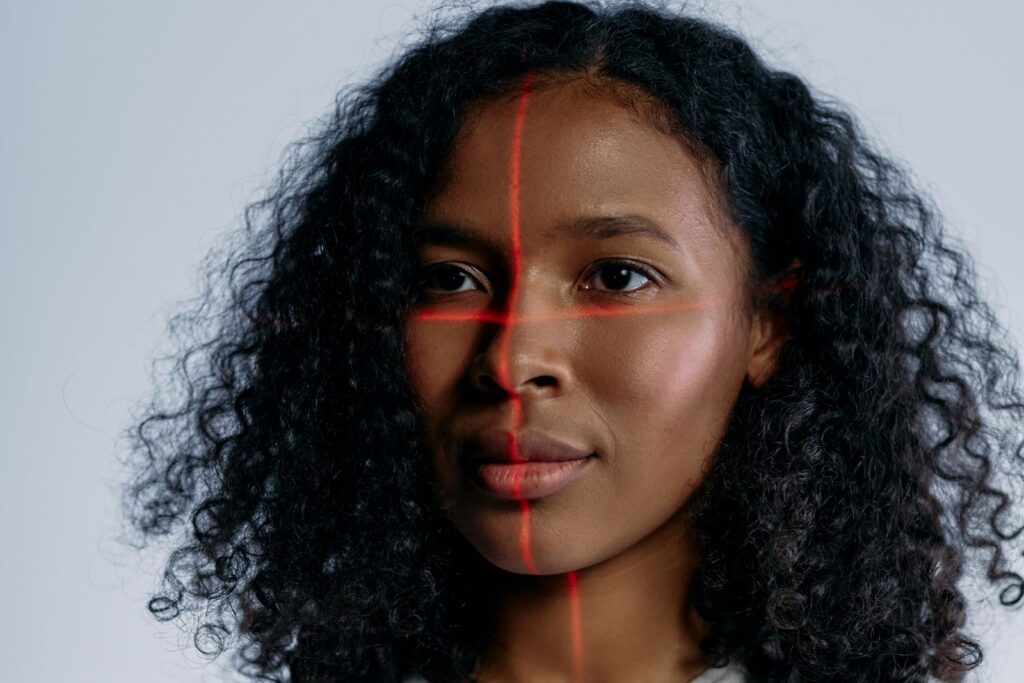
Reading an employee’s face, voice or keystrokes for sentiment is about to get a regulator too. (Photo: Pexels)
The Loopholes Both Laws Leave Open
The legal map is less clean than the headlines. In November 2025, reporting in EUobserver dissected the AI Act’s emotion-recognition provisions, noting that while Article 5(1)(f) sounds like an “outright ban,” it leaves other high-impact contexts untouched, including border management, healthcare and public services, and that the Act itself struggles to define emotion recognition consistently across its articles. The medical-or-safety carve-out is also a door: vendors can reposition a product as “wellness support” and wander to the edge of the ban. A policy paper published by Springer in March 2025 asked whether there is “no obvious loophole” in the ban, reflecting the same concern.
The US map is thinner still. Outside California, no dedicated statute regulates emotion AI in employment; the general rules are anti-discrimination law and privacy rules that were not written for millisecond facial analysis, so enforceability depends on proving discrimination after the fact. A product’s visibility is not a proxy for legality until January 2027, in California, or the EU’s national enforcement rules.
The Science Behind the Product Doesn’t Help Vendors
The engineering case against sentiment tools isn’t privacy law; it’s validity. As The Conversation reported in December 2024, “tech companies claim AI can recognise human emotions,” but “the science doesn’t stack up”, the underlying research shows that facial configurations are not universal signposts of underlying emotional states, so a model built to score them inherits accuracy errors and bias. Researchers cited by EUobserver made the same point, including their tendencies to produce biased output. A tool banned on rights grounds may also be banned on accuracy grounds, since invalid inferences leave “disengaged” verdicts that trigger reviews, “wellness check-ins” or work redistribution. A verdict that is both biased and unreliable is worse than a manager’s hunch, which at least is contestable face-to-face.
Three checkpoints matter next. Watch EU member-state enforcement activity after the February 2025 start date, including fines that will establish which repositioned “wellness” tools slip through the medical-or-safety carve-out. Watch California’s January 1, 2027 start, where AB 1883’s enforcement (limited to $500 per violation) will be tested against vendors who rebrand sentiment analysis as engagement intelligence. And watch whether the US federal response materializes at all, since the US lacks a federal rule, the Colorado-style sectoral approach and the Asian markets are writing their own versions. For workers, the practical takeaway is specific: from January 2027 in California, an algorithmic mood reading is unlawful; from the EU’s banned list since February 2025, it is law; everywhere else, it is unregulated and contestable, which means the burden of proof sits with whoever is willing to argue.
Career Ahead AI is Career Ahead Magazine's in-house AI newsroom, reporting on careers, education, jobs and business. It produces original summaries and analysis drawn from publicly available sources, with those sources credited, and operates under the editorial oversight of the Career Ahead team. AI can make mistakes, so please tell us when something looks wrong. Corrections, copyright or takedown requests…


AI & Technology

 Government & Policy