A recent report reveals that enterprises are shifting their focus from coding productivity to enhancing overall business execution. This transition highlights the importance of governance, architecture, and organizational complexity in technology project execution.
Enterprises are increasingly shifting their focus from coding productivity to enhancing overall business execution. This change reflects a growing recognition that faster coding alone does not guarantee better business outcomes. A recent report by Sonata Software, published on July 25, 2026, emphasizes that the next phase of enterprise AI adoption will hinge on how effectively organizations integrate governance, enterprise knowledge, and operational workflows into AI-enabled software delivery.
The report indicates that software delivery in large enterprises is rarely constrained by coding alone. Instead, factors such as governance, architecture, security, compliance, domain knowledge, and organizational complexity often dictate how quickly businesses can execute technology projects. Despite the increasing prevalence of AI coding assistants, many firms still struggle to translate experimentation into measurable business value. According to Deloitte’s 2026 report, organizations that successfully integrate AI into their operations can achieve significant improvements in productivity and decision-making, yet many face barriers in realizing these benefits.
McKinsey’s 2025 State of AI survey reveals that while AI adoption is widespread, many organizations encounter challenges in scaling business value from AI initiatives. The report also references DORA’s 2025 research, which found that AI amplifies existing organizational systems, accelerating workflows in high-performing organizations while magnifying inefficiencies in fragmented ones. This insight underscores the necessity for a strategic approach to AI implementation, rather than a mere focus on coding speed. As AI tools become more sophisticated, the ability to leverage them effectively will be crucial for maintaining a competitive advantage.
Transforming Workflows for Enhanced Performance
The shift from coding productivity to business execution is significant for enterprise AI developers and technology executives. As organizations deploy AI coding assistants across their development teams, they must also redesign workflows to ensure that these tools enhance overall business performance. The Sonata Software report stresses that organizations may deploy AI coding assistants across thousands of developers and still fail to improve delivery cycles, reduce costs, or enhance business responsiveness if workflows are not redesigned. This indicates that simply adopting AI tools is insufficient; organizations must also cultivate a culture that embraces change and innovation.
As organizations deploy AI coding assistants across their development teams, they must also redesign workflows to ensure that these tools enhance overall business performance.
In the last quarter, AI startups attracted over $10 billion in venture capital, a figure that highlights the ongoing investor interest despite economic headwinds.
In this context, the next generation of AI delivery platforms is expected to evolve from “prompt-to-code” systems to “context-to-code” systems. This transition means that enterprise knowledge—including customer standards, regulatory controls, project knowledge, architectural patterns, reusable assets, and delivery workflows—will be readily available at the point of execution. This capability will enable AI to improve enterprise-wide delivery rather than merely enhancing individual productivity. As noted by Sundaralata A, Vice President at Sonata Software, the more important question for business leaders is no longer, “Can AI help a developer code faster?” but rather, “Can AI help the enterprise move faster?” This distinction is crucial as organizations strive to leverage AI not just as a tool for coding efficiency but as a strategic engine for enterprise transformation.
Measuring Success Beyond Coding Metrics
The implications of this shift extend beyond the technical aspects of AI development. Business executives must also adapt to this new landscape by leveraging AI to enhance their decision-making processes and operational efficiencies. By focusing on broader business indicators such as idea-to-production time, compliance cycle time, onboarding speed, knowledge reuse, and business outcome realization, executives can better measure the success of their AI initiatives. The 2025 Stack Overflow Developer Survey highlighted that while AI adoption among developers is high, many still struggle with trusting the outputs generated by these systems. This trust issue could hinder the broader acceptance and effective utilization of AI tools in business execution.
Collaboration Between Technical and Business Teams
Additionally, organizations need to foster collaboration between technical teams and business units. This collaboration will be essential to ensure that AI solutions are not only technically sound but also aligned with the strategic objectives of the organization. As a result, organizations that succeed in this new AI landscape will be those that can transform enterprise context into executable intelligence, making knowledge reusable, governance intrinsic, and delivery scalable. Furthermore, as AI becomes increasingly integrated into business processes, the need for transparency and accountability in AI decision-making will become paramount, as highlighted in Deloitte’s findings.
Future Directions for Enterprise AI
Organizations must remain vigilant in addressing these challenges while embracing the opportunities presented by AI. The evolution of AI from a mere productivity tool to a strategic business asset will require continuous adaptation and learning from both developers and executives. As this transformation unfolds, the ability to govern, contextualize, orchestrate, and operationalize AI across the software delivery lifecycle will become a key competitive advantage. The future of enterprise AI lies in its capacity to drive not just efficiency but also innovation and strategic alignment across all levels of the organization.
Frequently Asked Questions
What are the key business execution skills needed for enterprise AI developers?
Enterprise AI developers need to develop skills in business strategy, governance, and operational workflows. These skills will help them align their projects with broader organizational goals.
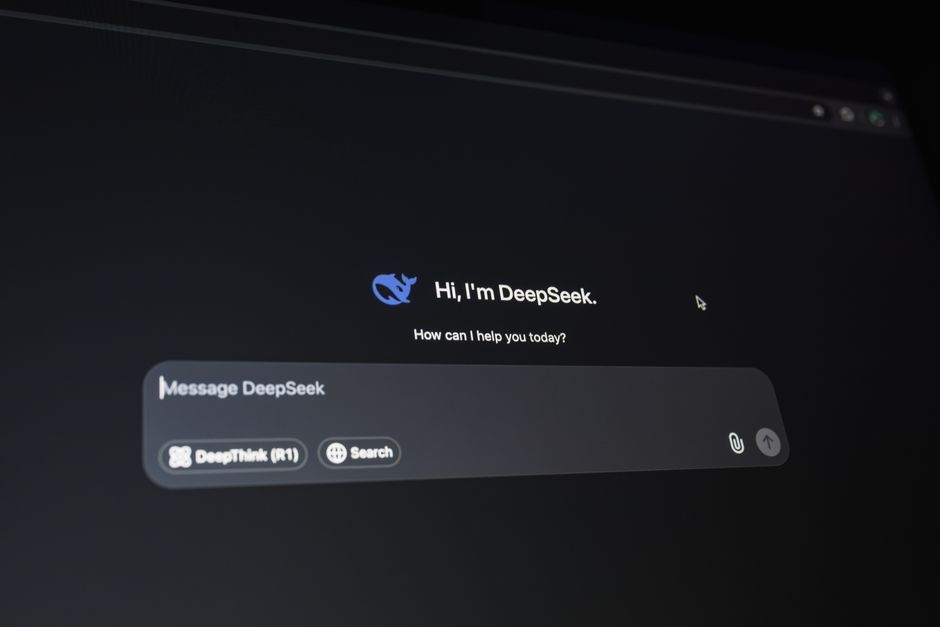
Chinese AI firm DeepSeek has successfully narrowed the performance gap with leading US AI models to just 3%, signaling a significant shift in the global…
Enterprise AI developers need to develop skills in business strategy, governance, and operational workflows.
How can business executives leverage AI for better execution?
Business executives can leverage AI by focusing on broader business indicators such as compliance cycle time and idea-to-production time. This approach will help them measure the success of AI initiatives beyond just coding productivity.
What should enterprise AI developers do to adapt to the shift towards business execution?
Enterprise AI developers should focus on understanding business context and aligning their projects with organizational objectives. This alignment will be crucial as enterprises prioritize business execution over coding productivity.



AI & Technology


 AI & Technology