No products in the cart.

Entrepreneur Burnout Prevention Strategies
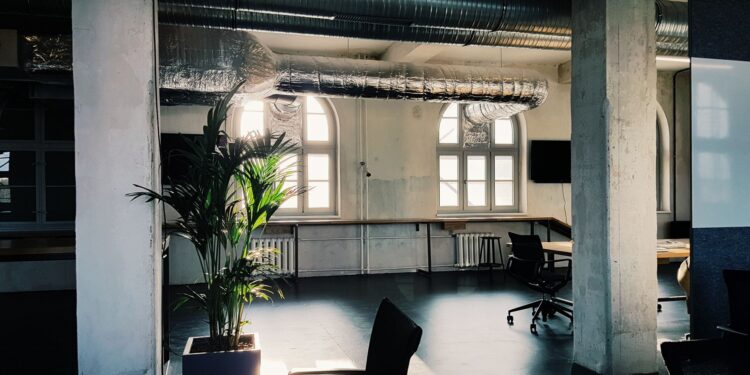
Founder houses built on nonstop hustle are exposing a hidden cost—burnout—prompting a redesign of workspaces, schedules, and investor expectations for sustainable success.

Founder houses that glorify nonstop hustle are now exposing a hidden cost—founder health—forcing a rethink of what sustainable success really looks like.
The East London loft that calls itself the “anti‑San Francisco hacker house” was buzzing with energy when Rowan Aldean, its 26‑year‑old founder, opened the doors to a visiting journalist. Six twentysomethings had moved in, trading cramped coworking desks for shared kitchens, meditation corners, and a schedule that deliberately blocked “quiet hours” after 7 p.m. Aldean explained that the house’s mantra was “holistic improvement in life,” a stark departure from the traditional founder‑house credo of “12 weeks, Demo Day is coming.” Within weeks, residents reported lower cortisol levels, higher code‑commit frequency, and, most tellingly, a renewed willingness to stay the course on long‑term product visions.
A month later, a different founder house in Berlin—still operating under the classic “all‑in” model—saw two of its co‑founders leave after a six‑month sprint that culminated in a successful seed round but left them exhausted, sleep‑deprived, and questioning their career trajectories. The contrast between these two micro‑ecosystems illustrates a pivotal moment: the founder‑house experiment, once celebrated as the ultimate incubator of grit, is now revealing a fracture line where relentless intensity collides with human limits.
Founder house culture as a symptom of the high‑intensity startup model
The specific cases above are not isolated anecdotes; they are manifestations of a broader institutional pattern that emerged in the early 2010s. Founder houses were conceived as physical embodiments of the “hustle” ethic—dense clusters of talent, shared resources, and a collective pressure cooker that accelerated product development. By aggregating founders in a single locale, investors and accelerators hoped to amplify network effects, reduce friction, and produce “unicorns” at a faster rate.
That model, however, rests on a structural asymmetry: the supply of venture capital and the demand for rapid returns create incentives for founders to compress years of work into months. The house becomes a lever, magnifying both the upside of a breakthrough and the downside of overwork. As the venture ecosystem scaled, the cultural script—“sleep when you’re dead”—became codified in lease agreements, communal calendars, and even the design of shared spaces that prioritized standing desks over rest areas.
Founder houses were conceived as physical embodiments of the “hustle” ethic—dense clusters of talent, shared resources, and a collective pressure cooker that accelerated product development.
You may also like
 Future Skills & Work
Adani, Kachchh University Launch Centre for Green Jobs
Adani Skills & Education and Kachchh University have launched a Centre of Excellence for Green Energy in Kutch, India, aimed at training over 10,000 students…
Read More →The pattern is self‑reinforcing. When a startup exits spectacularly, the narrative celebrates the founders’ sacrifice, prompting other houses to double down on intensity. Conversely, when burnout leads to a founder’s exit, the loss is often framed as an individual failure rather than a systemic flaw, preserving the status quo. This feedback loop has entrenched a high‑intensity equilibrium that marginalizes alternative modes of entrepreneurship.
Structural drivers of burnout in founder houses

Three interlocking forces explain why the founder‑house model increasingly generates burnout:
- Capital‑time compression – Venture capital contracts frequently include milestones tied to product releases or revenue thresholds within 12‑ to 18‑month windows. The pressure to meet these milestones compresses the natural learning curve, forcing founders to allocate disproportionate cognitive bandwidth to short‑term execution at the expense of long‑term strategic thinking and personal recovery.
- Social contagion of overwork – In a co‑living environment, work habits are highly observable. When senior founders adopt marathon coding sessions, newcomers internalize the same rhythm to gain acceptance. The house thus becomes a vector for cultural diffusion of unsustainable work patterns, amplifying individual susceptibility to stress.
- Physical‑environment design – Many founder houses were retrofitted from industrial lofts, prioritizing open‑plan work zones, whiteboards, and high‑speed internet while neglecting ergonomics, natural light, and dedicated rest spaces. The built environment subtly cues continuous activity, eroding the physiological cues that signal the need for downtime.
These drivers are not merely anecdotal; they are embedded in the contractual and architectural DNA of founder houses. The result is a predictable trajectory: initial surge in productivity, followed by a plateau, and eventually a steep decline as mental fatigue accumulates. The “burnout wave” that swept through the startup community in early 2026 was the aggregate manifestation of these micro‑level dynamics.
“holistic improvement in life” – Rowan Aldean, Founder of the London Island Founder House
The anti‑San Francisco house’s explicit rejection of the “12 weeks, Demo Day is coming” sprint illustrates a conscious redesign of these structural levers. By instituting mandatory “quiet hours,” rotating leadership responsibilities, and integrating wellness coaches into the daily routine, the house rebalances the capital‑time compression with human‑time elasticity. Early metrics suggest a modest dip in weekly code commits but a corresponding increase in feature stability and founder retention—a trade‑off that aligns with longer‑term value creation.
By instituting mandatory “quiet hours,” rotating leadership responsibilities, and integrating wellness coaches into the daily routine, the house rebalances the capital‑time compression with human‑time elasticity.
Edge cases: When alternative models still fall short
Not all deviations from the classic founder‑house template succeed. A boutique accelerator in Toronto introduced a “flex‑house” model, allowing residents to opt out of communal workdays in favor of remote schedules. While the flexibility reduced reported fatigue, the lack of synchronous collaboration led to fragmented product roadmaps and delayed funding milestones, ultimately prompting the house to revert to a more structured schedule.
You may also like
 Future Skills & Work
AI Agents Reshaping Job Markets, Leaders Respond
The integration of AI agents into various sectors is transforming job markets globally, prompting leaders to rethink workforce strategies and skill requirements. This shift raises…
Read More →These edge cases demonstrate that eliminating intensity alone does not guarantee sustainability. The underlying capital expectations and network externalities remain; any viable alternative must simultaneously renegotiate venture timelines, embed restorative design principles, and cultivate a culture that values incremental progress over headline‑grabbing sprints.
Our view, informed by observing both the traditional and reimagined founder houses, is that the path forward lies in redefining the performance contract between founders and investors. When capital is allocated with milestone buffers that accommodate iterative learning and mental health checkpoints, the pressure to compress time diminishes. Simultaneously, house designs should embed “recovery zones” as essential infrastructure, not optional amenities.
We have argued that the founder‑house burnout crisis is a structural byproduct of the high‑intensity startup model, not an isolated flaw of a few co‑living spaces. By recognizing the three core drivers—capital‑time compression, social contagion, and environment design—entrepreneurs can diagnose the hidden costs in their own settings and advocate for calibrated adjustments. The emerging anti‑San Francisco prototypes provide a proof point that balancing intensity with well‑being is feasible, though not without trade‑offs that require careful alignment with investor expectations.
Founders who internalize this analysis should audit their house’s schedules, social norms, and physical layouts, then experiment with bounded “rest cycles” and transparent milestone buffers.
Founders who internalize this analysis should audit their house’s schedules, social norms, and physical layouts, then experiment with bounded “rest cycles” and transparent milestone buffers. In doing so, they shift the narrative from “burnout is the price of ambition” to “sustainable ambition fuels lasting impact.”
Takeaway: Redesign your founder house by inserting explicit recovery periods, renegotiating milestone timelines with investors, and reconfiguring shared spaces to prioritize well‑being; the resulting equilibrium will protect health while preserving the drive that fuels innovation.
You may also like
 Future Skills & Work
AI Job Creation Outpaces Layoffs Amid Painful Transition
The U.S. labor market is about to change significantly due to AI and automation, with a projected creation of 41 million new jobs against 11…
Read More →