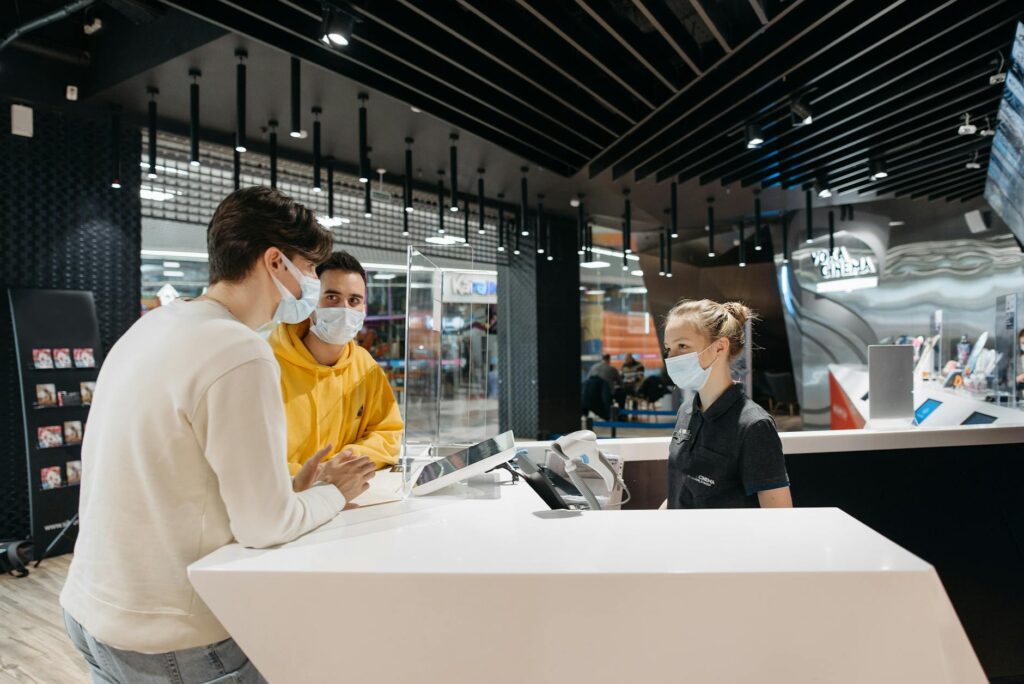
The post‑COVID era has accelerated a systemic reallocation of consumer capital from durable goods to experiential assets, prompting retailers to redesign value chains around immersion rather than transaction.
Data from leading market‑research firms show a double‑digit rise in experience‑linked spend, reshaping career pathways, loyalty architectures, and institutional power within the retail ecosystem.
Macro Context: From Pandemic Shock to Persistent Preference
The pandemic’s disruption of physical commerce forced households to substitute travel, dining, and live events with home‑based consumption. As restrictions eased, a latent desire for “real‑world” engagement emerged, converting temporary deprivation into a durable preference for experiences. SightX’s 2026 consumer‑mindset survey reports that 42 % of discretionary spend now targets experience‑oriented categories—a 12 % year‑over‑year increase since 2022—and that the “experience premium” (the price differential consumers are willing to pay for immersive offerings) has risen from 8 % to 15 % across the retail cohort [1].
Salsify’s analysis of e‑commerce traffic corroborates the shift: the average online session now includes at least one “experience trigger”—a video, AR preview, or influencer‑driven narrative—before conversion, and the proportion of shoppers who report “seeking memorable moments” as a primary purchase driver climbed from 27 % in 2021 to 38 % in 2025 [2]. The convergence of always‑on digital exposure (particularly TikTok’s 1.2 billion monthly active users) and the psychological need for post‑pandemic social reconnection creates a structural demand for retail experiences that blend physical presence with digital storytelling.
These macro‑level dynamics reconfigure the allocation of career capital: firms that embed experiential design into core operations generate new professional tracks (experience architects, community curators, data‑driven immersion analysts) while traditional merchandising roles face compression. The shift also alters institutional power, as platform‑centric ecosystems (TikTok, Instagram, Meta) gain leverage over legacy retail channels, dictating the terms of consumer engagement.
Core Mechanism: The Institutional Realignment of Consumer Spend

1. Materialism to Experientialism – Quantified
Between 2020 and 2025, U.S. consumer expenditure on travel, entertainment, and wellness grew at a compound annual growth rate (CAGR) of 9.4 %, outpacing durable goods (CAGR 4.1 %) and non‑durable goods (CAGR 3.6 %) [1]. The “experience elasticity”—the percentage change in experience spend for each 1 % change in disposable income—has risen from 0.68 in 2018 to 0.91 in 2025, indicating that experience consumption now behaves more like a necessity than a luxury.
2. The Experience Economy as a Dominant Force
The “experience economy” concept, first articulated by Pine and Gilmore in 1999, now commands a 27 % share of total retail revenue in the United States, according to the National Retail Federation’s 2025 annual report. This share surpasses the combined contribution of apparel and electronics, underscoring a structural reallocation of market share toward services that generate emotional resonance and social capital.
This share surpasses the combined contribution of apparel and electronics, underscoring a structural reallocation of market share toward services that generate emotional resonance and social capital.
3. Social Media as the Experience Amplifier
Platform algorithms prioritize content that elicits strong affective responses, rewarding experiential narratives with higher reach. TikTok’s “Shop Now” integration, launched in 2023, has driven a 34 % lift in conversion rates for retailers that embed short‑form experience videos within product pages [2]. Influencer‑led “experience drops”—limited‑time events co‑created with brands—have become a primary driver of foot traffic, with 62 % of Gen Z shoppers reporting that they visited a physical store after seeing an influencer’s live‑streamed experience.
 Entrepreneurship & Business
How William Draper Influenced Modern Venture Capital
Draper played a key role in establishing venture capital as a driver of technology innovation. He co-founded Draper, Gaither & Anderson in 1961, which later…
Read More →Collectively, these mechanisms illustrate a systemic reorientation of consumer capital: the decision matrix now incorporates experiential utility, social signaling, and digital authenticity alongside price and convenience.
Systemic Implications: Ripple Effects Across Retail Architecture
Retail Strategy Recalibrated for Immersion
Retailers are reallocating CAPEX from square footage to experiential infrastructure. Nike’s “House of Innovation” stores, for example, devoted 45 % of renovation budgets in 2024 to AR fitting rooms, kinetic displays, and community workshops, reporting a 28 % increase in average transaction value versus standard formats. Similarly, Sephora’s “Beauty Studio” concept, which integrates live tutorials and personalized scent profiling, generated a 22 % uplift in repeat visitation rates within six months of launch.
These investments are not isolated; they reflect an emerging institutional norm where “experience as a service” (EaaS) becomes a core retail offering. The shift drives supply‑chain adjustments, with manufacturers now required to deliver modular components (e.g., interchangeable display units, IoT sensors) that enable rapid reconfiguration of store layouts for pop‑up events.
Expansion of the Sharing Economy
The preference for access over ownership dovetails with the experience surge. Data from the Sharing Economy Association shows that the proportion of consumers who opt for subscription‑based access to high‑end experiences (e.g., curated travel itineraries, premium fitness studios) grew from 18 % in 2021 to 31 % in 2025. This trend reduces the barrier to entry for experience consumption, amplifying demand elasticity and prompting retailers to launch “experience bundles” that combine product purchase with service access (e.g., a home‑audio system bundled with a six‑month virtual concert subscription).
Loyalty Programs Reimagined
Traditional points‑based loyalty schemes are losing relevance as consumers prioritize exclusive, socially shareable experiences. Retailers such as Target have pivoted to “experience tiers,” granting members early access to pop‑up collaborations with artists and limited‑edition events. Early data indicates that members in the top tier exhibit a 3.6× higher lifetime value than baseline shoppers, confirming that experiential rewards generate stronger retention than discount incentives.
Human Capital Impact: Winners, Losers, and Emerging Pathways Experience Economy Redefines Retail: A Structural Shift in Post‑Pandemic Consumer Capital Winners: Experience‑Centric Talent The rise of immersive retail has spawned new career tracks.
These systemic ripples underscore a feedback loop: as retailers embed experience into their value propositions, platforms amplify demand, and consumers reallocate capital, reinforcing the structural shift.
Human Capital Impact: Winners, Losers, and Emerging Pathways

Winners: Experience‑Centric Talent
 Entrepreneurship & Business
Tata Trusts Restructures Tata Sons for Strategic Shift
Tata Trusts has proposed a significant restructuring of Tata Sons Private Limited (TSPL) to prevent its classification as a financial company, amidst rising tensions over…
Read More →The rise of immersive retail has spawned new career tracks. “Experience architects”—professionals who design cross‑channel journeys integrating physical space, digital touchpoints, and community programming—now command median salaries 22 % above traditional visual merchandisers, according to the 2025 Retail Talent Survey. Data‑analytics roles focused on measuring affective engagement (e.g., sentiment heatmaps, dwell time in AR zones) have also seen a 31 % hiring surge since 2022.
Losers: Conventional Merchandising and Transactional Roles
Conversely, roles anchored in pure product selection and price optimization face headwinds. A 2025 Deloitte report found that 38 % of mid‑level merchandising positions were restructured into “experience‑integration” functions, with a corresponding 12 % reduction in headcount for pure SKU‑centric teams.
institutional power Redistribution
Platform providers (TikTok, Meta) have accrued bargaining power, extracting higher data‑sharing fees and co‑marketing commitments from retailers. In contrast, legacy department stores that failed to integrate experiential elements (e.g., Sears, J.C. Penney) have experienced accelerated decline, with average same‑store sales falling 14 % YoY in 2025, compared to a 3 % decline for experience‑enabled peers.
Career Trajectories
For professionals seeking upward mobility, building expertise at the intersection of experiential design, data science, and community management offers a clear trajectory toward senior leadership. Executives who successfully orchestrate “experience ecosystems”—coordinating brand, platform, and consumer communities—are emerging as the new institutional power brokers within retail.
Outlook: Structural Trajectory Through 2029
If current elasticity trends persist, experience‑linked spend could surpass 35 % of total retail revenue by 2029, driven by three reinforcing forces: (1) continued platform algorithmic privileging of immersive content, (2) scaling of subscription‑based experience bundles, and (3) institutionalization of experience metrics (e.g., Net Emotional Impact Score) within corporate performance dashboards.
Policy implications include potential regulatory scrutiny of data practices surrounding affective analytics, as consumer privacy frameworks evolve to address the collection of biometric and emotional data in retail settings.
Retailers that embed experiential design at the strategic planning level—allocating >30 % of CAPEX to immersive infrastructure and integrating experience KPIs into executive compensation—will likely capture a disproportionate share of future growth. Conversely, firms that treat experience as a peripheral add‑on risk marginalization as consumer capital continues to flow toward platforms and brands that can deliver asymmetric, shareable moments.
Policy implications include potential regulatory scrutiny of data practices surrounding affective analytics, as consumer privacy frameworks evolve to address the collection of biometric and emotional data in retail settings. Anticipating such shifts, forward‑looking retailers are investing in privacy‑by‑design architectures to sustain trust while leveraging experience data.
 Entrepreneurship & Business
Europe Adds to Business Regulatory Burden, Speaker Says
The exchange covered deregulation, CBAM, an India-EU trade agreement and trade figures for India’s ties with the EU and the Netherlands.
Read More →In sum, the post‑pandemic reallocation of consumer capital toward experiences reflects a structural redefinition of value creation in retail, with profound implications for institutional power, career capital, and the trajectory of the industry over the next half‑decade.
Key Structural Insights
- The post‑pandemic surge in experience‑linked spend reconfigures consumer capital, elevating emotional utility to a core component of retail value creation.
- Institutional power is shifting toward platform‑centric ecosystems that monetize immersive content, compelling retailers to embed experience design into strategic planning.
- Over the next five years, experience metrics will become integral to executive performance, dictating career trajectories and reshaping the competitive hierarchy of the retail sector.
Written by Career Ahead AI. AI can make mistakes, so verify key facts. Report errors to support@careeraheadonline.com.