No products in the cart.

Exploring Pyright: Advanced Type Checking in Python
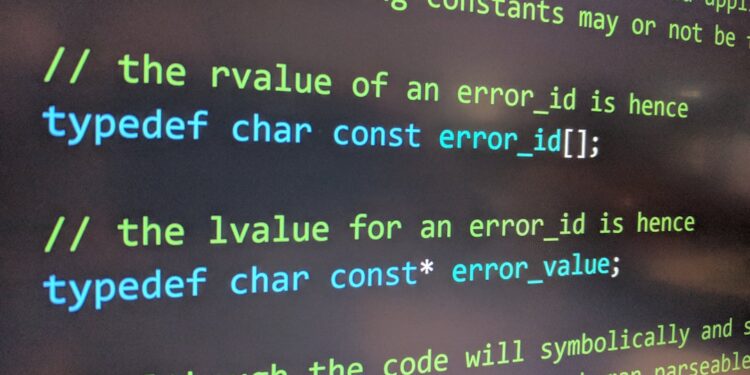
This article delves into Pyright, a powerful static type checker for Python, exploring its features like generics, protocols, and strict mode to enhance code safety.

Understanding Pyright’s Role in Type Safety
In the evolving world of programming, type safety has emerged as a critical concern. Developers increasingly seek tools that can catch errors before runtime, ensuring robust and maintainable code. Pyright, a static type checker developed by Microsoft, has gained traction for its efficiency and comprehensive features. This article examines Pyright’s capabilities, focusing on its implementation of generics, protocols, and strict mode, which are essential for modern Python development.
Pyright stands out in the Python ecosystem by providing advanced type checking that goes beyond basic annotations. It integrates seamlessly into development environments, offering real-time feedback on type errors. This feature is particularly beneficial for teams working on large codebases, where maintaining type consistency can be challenging. By leveraging Pyright, developers can enhance their coding practices and reduce the likelihood of runtime errors.
Key Features of Pyright
One of the defining features of Pyright is its implementation of generics, which allows developers to create flexible and reusable code components. Generics enable functions and classes to operate on different data types while maintaining type safety. For instance, a generic function can accept a list of any type, ensuring that the operations performed on the list are valid for its elements.
According to earezki.com, Pyright’s generics feature simplifies the creation of data structures and algorithms that require type flexibility without sacrificing safety. This capability is essential in scenarios where the type of data is not known until runtime, allowing for greater adaptability in code design. By using generics, developers can write cleaner, more maintainable code that is easier to understand and less prone to errors.
Another significant aspect of Pyright is its support for protocols, which facilitate structural subtyping. Protocols allow developers to define interfaces that specify method signatures without requiring explicit inheritance. This feature promotes a more flexible design, as any class implementing the required methods can be treated as an instance of the protocol.
Strict Mode: A Step Towards Enhanced Safety
Pyright also introduces a strict mode that significantly raises the bar for type safety across an entire codebase. In strict mode, Pyright enforces more rigorous checks, identifying potential issues that may not be flagged under default settings. This includes missing return types, untyped parameters, and implicit ‘Any’ types, which can lead to ambiguous behavior in applications.
By identifying and addressing type-related issues early in the development process, teams can avoid costly bugs and improve overall code quality.
You may also like
 Entrepreneurship & Business
Marico Boosts Plix Stake to 84.09%; Q2 Revenue Surge Ahead
Marico has increased its stake in Satiya Nutraceuticals to 84.09%, a strategic move expected to enhance revenue growth amid rising consumer demand for health-focused products.…
Read More →As highlighted by analyticscampus.com, adopting strict mode can be particularly beneficial for teams transitioning to type-checked codebases. It encourages developers to be explicit about their type declarations, fostering a culture of clarity and precision. By identifying and addressing type-related issues early in the development process, teams can avoid costly bugs and improve overall code quality.
Moreover, the strict mode allows for fine-tuning through the pyrightconfig.json file, where developers can customize diagnostic rules according to their project’s needs. This flexibility empowers teams to balance between strict enforcement and practical workflow considerations, making Pyright a versatile tool for diverse development environments.
Real-World Applications of Pyright
Real-world applications of Pyright showcase its effectiveness in enhancing code quality. For instance, in large-scale projects, where multiple developers contribute to a codebase, maintaining type consistency becomes paramount. Pyright’s ability to catch type mismatches in real-time helps teams collaborate more effectively, reducing the risk of integration issues.
Consider a scenario where a developer creates a function that processes user input. By employing Pyright, the developer can ensure that the function only accepts specific types, such as strings or integers. If another team member mistakenly passes a list to this function, Pyright will immediately flag the error, preventing potential runtime failures.
This proactive error detection not only saves time during development but also enhances the user experience by ensuring that applications behave as expected. As projects scale, the importance of such tools becomes increasingly evident, reinforcing the need for robust type-checking solutions like Pyright.
This proactive error detection not only saves time during development but also enhances the user experience by ensuring that applications behave as expected.

Debates Surrounding Type Checking
Despite its advantages, the adoption of strict type checking tools like Pyright is not without controversy. Some developers argue that the overhead of maintaining type annotations can slow down the development process. They contend that Python’s dynamic nature is one of its core strengths, allowing for rapid prototyping and flexibility that strict typing may hinder.
However, proponents of type safety counter that the long-term benefits of using tools like Pyright far outweigh the initial investment in time and effort. They argue that the reduction in runtime errors and the improvement in code readability ultimately lead to faster development cycles and lower maintenance costs. This debate highlights the ongoing tension between flexibility and safety in programming practices.
You may also like
 Entrepreneurship & Business
College Students Shape the Future of A.I. Investment
College students are increasingly influencing the A.I. investment landscape, with initiatives like Dorm Room Fund raising substantial capital. This shift highlights the growing importance of…
Read More →
Furthermore, the rise of static typing in dynamically typed languages like Python has sparked discussions about the future of programming paradigms. As more developers embrace type checking, questions arise about the balance between type safety and the language’s inherent flexibility. This evolving landscape suggests that while tools like Pyright are gaining popularity, the conversation around type checking will continue to develop.
The Future of Type Checking in Python
The future of Pyright and similar type checking tools appears promising as the demand for reliable software continues to grow. With the increasing complexity of applications, developers are seeking ways to enhance code quality and reduce errors. Pyright’s advanced features position it well to meet these needs, making it a valuable asset for both individual developers and teams.
As the Python community evolves, we can expect further enhancements to Pyright, including improved integration with popular IDEs and expanded support for emerging Python features. The ongoing development of type hinting and static analysis tools will likely drive innovation in this space, fostering a culture of quality and reliability in Python programming.
Moreover, as educational institutions incorporate type safety into their curricula, new generations of developers will enter the workforce with a strong understanding of type checking principles.
Moreover, as educational institutions incorporate type safety into their curricula, new generations of developers will enter the workforce with a strong understanding of type checking principles. This shift will likely influence industry standards, making static typing a norm rather than an exception in Python development.
Enhancing Career Prospects with Pyright
For aspiring developers and professionals in the tech industry, understanding and utilizing tools like Pyright can significantly enhance career prospects. As companies increasingly prioritize code quality and maintainability, proficiency in type checking becomes a valuable skill. Familiarity with Pyright not only demonstrates technical capability but also reflects a commitment to best practices in software development.
Moreover, as the demand for Python developers continues to rise across various sectors, those equipped with knowledge of advanced type checking will stand out in the job market. Employers are looking for candidates who can contribute to building robust, error-free applications, and expertise in tools like Pyright positions individuals as strong contenders for roles in software development.
You may also like
 Entrepreneurship & Business
Earnings Must Validate AI Investments
Tiffany McGhee emphasizes the need for companies to demonstrate the effectiveness of their AI investments in earnings reports, as global AI spending is projected to…
Read More →