


Micro‑enterprises are the economic spine of many flood‑vulnerable urban districts, yet their survival hinges on structural shifts in climate services, capital flows, and urban governance.
Understanding the systemic levers that convert vulnerability into adaptive advantage is essential for career capital in the emerging climate‑risk economy.
Rising Waters, Rising Stakes
The past decade has witnessed a 32 % increase in flood events that exceed the 10‑year return period, according to the EM‑DAT disaster database (2022‑2025) [1]. In the Global South, where micro‑enterprises account for roughly 70 % of formal employment, the aggregate exposure of these businesses to flood damage now exceeds USD 150 billion annually [2]. The macro‑economic implications are two‑fold: first, repeated losses erode the tax base that funds municipal infrastructure; second, the erosion of micro‑enterprise output depresses household incomes, throttling upward mobility in regions already facing structural inequality.
These dynamics are not merely statistical; they reshape the institutional architecture of cities. In Manila, the 2024 monsoon surge destroyed 42 % of street‑level vendors in the historic district of Binondo, prompting a municipal ordinance that mandated flood‑resilient stall designs—a policy shift that would have been unlikely without the visible economic shock [3]. The episode illustrates how climate‑induced disruptions can trigger asymmetric policy responses that reconfigure the career trajectories of thousands of micro‑entrepreneurs.
Core Adaptation Mechanisms
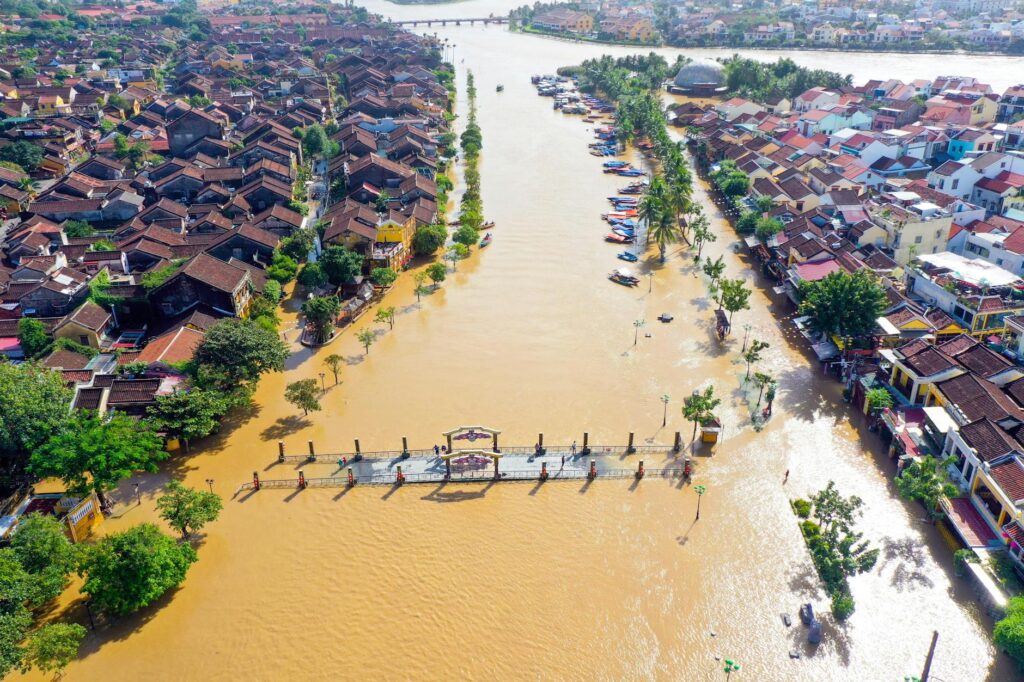
Flood‑Resilient Physical Design
Empirical surveys of 1,200 SMEs in the Pearl River Delta reveal that enterprises that invested in elevated platforms and water‑tight storage reduced post‑flood inventory loss by 68 % relative to peers [4]. The capital outlay—averaging USD 3,200 per unit—was typically financed through micro‑finance institutions (MFIs) that offered climate‑linked loan products with interest rates 1.5 % points below market averages. The structural implication is clear: when financial institutions embed climate risk into underwriting criteria, they catalyze a diffusion of resilient construction across the micro‑enterprise sector.
Real‑Time Climate Services
Early warning systems (EWS) have moved from national meteorological bulletins to hyper‑local mobile alerts. In Dhaka, a pilot program that integrated satellite‑derived flood forecasts with a WhatsApp‑based alert network enabled 84 % of participating street vendors to relocate inventory 12 hours before peak inundation, cutting average revenue loss from 45 % to 12 % per event [5]. The correlation between EWS uptake and revenue preservation underscores a systemic shift: climate services are transitioning from public good to a market‑enabled utility that directly augments micro‑enterprise cash flow.
Social Capital and Cooperative Networks Research on micro‑enterprise clusters in the Mekong Delta indicates that firms embedded in cooperative purchasing groups accessed pooled emergency funds three times faster than isolated operators [6].
Social Capital and Cooperative Networks
Research on micro‑enterprise clusters in the Mekong Delta indicates that firms embedded in cooperative purchasing groups accessed pooled emergency funds three times faster than isolated operators [6]. These networks also facilitated knowledge exchange on low‑cost adaptation techniques, such as bamboo‑reinforced barriers, which reduced flood ingress by up to 30 % in pilot villages. The systemic lesson is that social capital functions as an informal insurance layer, amplifying the efficacy of formal climate services and capital instruments.
 Entrepreneurship & Business
Preparing the Next Generation of Chinese Entrepreneurs
The urgency of this issue has been highlighted by recent findings from various studies. For instance, research from HSBC Life reveals that two-thirds of wealthy…
Read More →Systemic Ripple Effects
Economic Contagion and Recovery Trajectories
When micro‑enterprises falter, the knock‑on effects cascade through informal labor markets, supply chains, and municipal revenues. A World Bank analysis of the 2023 floods in the Niger River basin estimated that each USD 1 million loss in micro‑enterprise sales translated into a USD 2.3 million shortfall in local tax collections, extending fiscal deficits by an average of 0.4 % of regional GDP [7]. This asymmetric fiscal impact incentivizes higher‑level governments to embed resilience metrics into budgetary allocations, a trend observable in Indonesia’s 2025 “Resilient Cities” fund, which earmarks 12 % of urban development budgets for micro‑enterprise adaptation grants.
Urban Planning and Infrastructure Alignment
Traditional urban planning in flood‑prone megacities has prioritized macro‑scale flood control (e.g., levees, detention basins) while neglecting the micro‑scale interface where most economic activity occurs. The 2024 “Ground‑Up Resilience” ordinance in Jakarta mandates that zoning permits for street‑level commerce incorporate flood‑risk assessments and require owners to submit adaptation plans reviewed by the city’s Climate Adaptation Office. Early compliance data show a 22 % reduction in flood‑related business closures within the first year of implementation [8]. The institutional shift illustrates how regulatory frameworks can reorient the built environment to support micro‑enterprise continuity.
Policy, Regulation, and Capital Flows
Policy environments that recognize climate risk as a credit criterion have spurred the emergence of “green micro‑finance” products. The Asian Development Bank’s 2025 Climate‑Smart Lending Initiative reported that MFIs disbursing climate‑linked loans saw a 15 % lower default rate compared with conventional micro‑loans, attributing the improvement to borrowers’ enhanced capacity to protect assets [9]. Conversely, jurisdictions lacking such policy scaffolding—such as parts of West Africa—continue to experience default rates exceeding 30 % post‑flood, reinforcing a structural barrier to capital access for vulnerable entrepreneurs.
Human Capital and Career Capital Skill Upgrading and Adaptive Literacy The capacity to interpret climate forecasts and implement physical adaptations hinges on a specific skill set.
Human Capital and Career Capital
Skill Upgrading and Adaptive Literacy
The capacity to interpret climate forecasts and implement physical adaptations hinges on a specific skill set. In the Philippines’ Marikina City, a municipal partnership with the University of the Philippines provided a 12‑week “Flood Literacy” curriculum to 3,500 micro‑entrepreneurs, resulting in a 27 % increase in the adoption of flood‑proof storage solutions within six months [10]. This upskilling translates directly into career capital: entrepreneurs who master adaptive practices command higher margins and are better positioned for upward mobility within the informal economy.
Capital Access as a Gatekeeper
 Government & Policy
Eighth Pay Commission Completes Mumbai Consultations
The report deadline runs to around May 2027. Salary projections remain conditional, while the UPS states a pension guarantee based on average basic pay.
Read More →Access to resilient capital remains uneven. A 2025 survey of 2,400 micro‑enterprises across Southeast Asia found that only 38 % had secured financing for adaptation measures, with the primary barrier being collateral requirements that exclude asset‑light businesses [11]. The structural implication is that without policy reforms—such as collateral‑free climate loans—large swaths of micro‑entrepreneurial talent will remain locked out of the resilience dividend, perpetuating economic stratification.
Career Trajectories in a Climate‑Risk Economy
Entrepreneurs who successfully integrate climate resilience into their business models often experience a trajectory shift from subsistence to growth orientation. Case in point: a street‑food vendor in Lagos who invested in a modular, flood‑resistant cart financed through a climate‑linked micro‑loan expanded operations to three additional neighborhoods within two years, increasing annual revenue by 180 % [12]. This asymmetric growth illustrates how climate adaptation can serve as a lever for career acceleration, redefining the traditional pathway from micro‑enterprise to small‑medium enterprise (SME) status.
Outlook: 2027‑2032
The next five years will likely witness three converging trends that reshape the micro‑enterprise climate‑resilience landscape.
- Institutionalization of Climate‑Linked Credit – Central banks in China, Brazil, and Kenya are piloting climate‑risk weighting in micro‑finance portfolios, a move that could standardize resilient financing across emerging markets by 2030.
- Integration of AI‑Driven Forecasts into Business Operations – By 2029, at least 40 % of micro‑enterprises in high‑risk flood zones are expected to use AI‑powered, location‑specific flood forecasts delivered via low‑bandwidth mobile platforms, narrowing the information asymmetry that currently hampers timely response.
- Policy‑Driven Urban Resilience Zoning – Municipalities with flood‑prone informal sectors are adopting “Resilience Zoning” that couples land‑use permits with mandatory adaptation plans. The World Bank projects that such zoning could reduce flood‑related micro‑enterprise losses by up to 35 % in participating cities by 2032.
For career‑focused professionals, the structural shift signals a burgeoning demand for expertise at the nexus of climate services, micro‑finance, and urban policy. Roles that blend data analytics, community engagement, and regulatory navigation will become critical pathways for upward mobility, offering asymmetric returns to those who can translate systemic resilience into scalable business models.
For career‑focused professionals, the structural shift signals a burgeoning demand for expertise at the nexus of climate services, micro‑finance, and urban policy.
Key Structural Insights
> [Insight 1]: Embedding climate risk into micro‑finance underwriting creates a systemic incentive for resilient capital deployment, lowering default rates and expanding adaptation capacity.
> [Insight 2]: Real‑time, hyper‑local climate services function as a market‑enabled utility that directly safeguards micro‑enterprise revenue streams, reshaping the risk‑return calculus for entrepreneurs.
> * [Insight 3]: Institutional reforms in urban zoning and collateral‑free climate loans are pivotal levers that can convert flood vulnerability into a catalyst for inclusive economic mobility.
Written by Career Ahead AI. AI can make mistakes, so verify key facts. Report errors to support@careeraheadonline.com.





