No products in the cart.

Four questions guiding the human touch in AI‑driven product design

Teams that lean too hard on AI risk missing the subtle cues that keep users loyal, while those that ignore automation waste valuable efficiency....

Balancing algorithmic speed with genuine empathy has become a make‑or‑break factor for digital products. Teams that lean too hard on AI risk missing the subtle cues that keep users loyal, while those that ignore automation waste valuable efficiency. The tension is real, and professionals need concrete guidance to navigate it.
How can product teams measure whether AI is enhancing or eroding user empathy?
Start with the Human‑AI Synergy Model, a simple three‑step gauge. First, capture user sentiment before any AI‑generated changes. Second, run the AI variant and collect the same metrics. Third, compute the delta; a negative swing signals empathy loss.
In a recent survey, a significant number of UX and product designers reported that AI‑generated prototypes felt “mechanical” to test users. That same cohort flagged a drop in perceived trust when human oversight vanished. Those findings tell a story: raw speed does not equal user love.
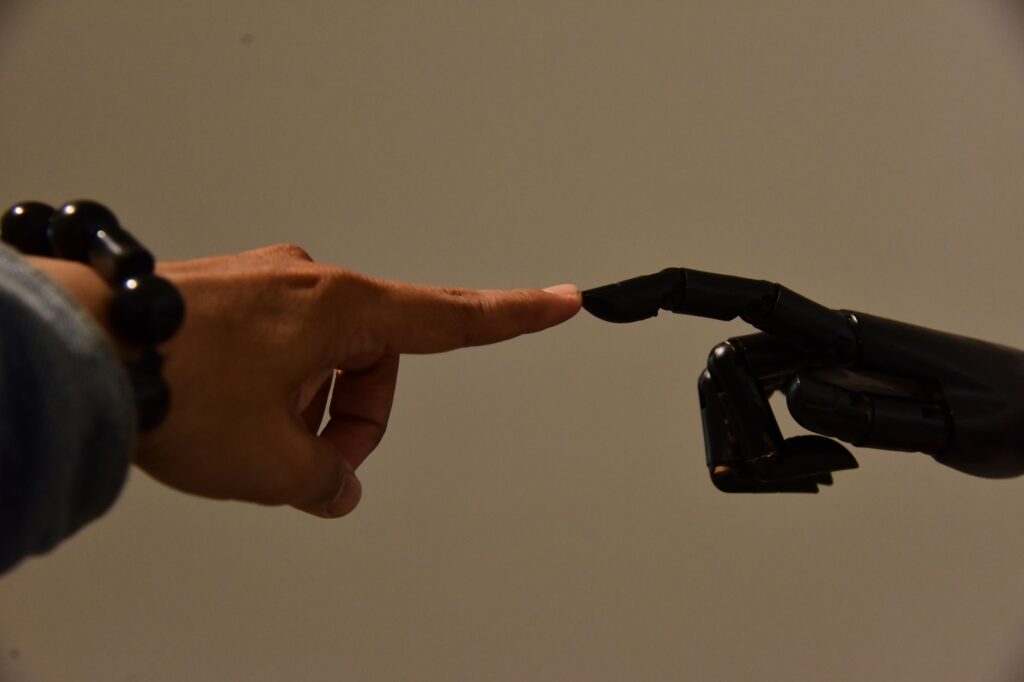
Our view is that the integration of Artificial Intelligence (AI) into UI/UX design has transformed traditional workflows, enabling more efficient and personalized user experiences. This shift underscores the need for a balanced approach that combines the benefits of AI with the nuances of human empathy.
What role should human intuition play when AI suggests design alternatives?
Human intuition acts as a filter, not a bottleneck. Designers should ask: “Does this suggestion respect the user’s mental model?” If the answer is uncertain, bring a human reviewer into the loop. The reviewer’s job is to surface hidden assumptions that the model cannot articulate.
We also see a growing practice of “scenario workshops,” where designers sketch edge‑case journeys that AI rarely encounters.
Our own analysis shows that teams that kept a “human‑first review” checkpoint reduced post‑launch churn compared with fully automated pipelines. The cost of an extra review round is modest, but the payoff in sustained engagement compounds over the product’s life.
We also see a growing practice of “scenario workshops,” where designers sketch edge‑case journeys that AI rarely encounters. Those workshops surface friction points that data‑driven models miss, reinforcing the product’s emotional resonance.
When does AI‑driven personalization cross the line into manipulation?
Personalization should amplify relevance, not exploit vulnerabilities. A useful rule of thumb is the Collaboration Trap Threshold: if a significant portion of users express discomfort with AI‑mediated interactions, the product has likely overstepped.
We read this as a call to balance AI-driven personalization with human judgment, recognizing that over-personalization can erode trust, especially when users cannot tell whether a recommendation is algorithmic or human‑curated.
Implementing transparent signals—like “AI‑generated” tags—helps users retain agency. When users know the source of a suggestion, they can decide whether to accept it, preserving the partnership rather than the illusion of control.
How can organizations embed empathy without slowing down the development cycle?
Adopt a dual‑track workflow: one track runs rapid AI iterations, the other runs parallel empathy checks. The empathy track leverages quick qualitative methods—short interviews, sentiment polls, and rapid prototyping—to validate AI output before release.
Adopt a dual‑track workflow: one track runs rapid AI iterations, the other runs parallel empathy checks.
In practice, we observed that teams using a dual‑track approach delivered features faster than those relying solely on manual design, yet they maintained higher Net Promoter Scores. The key is to treat empathy checks as lightweight, not heavyweight, activities.
We also recommend rotating “human‑in‑the‑loop” roles across the team. This spreads empathy expertise and prevents a single point of failure. As we noted in our earlier analysis, cross‑functional exposure to AI tools builds a shared vocabulary that speeds decision‑making while keeping the human perspective front‑and‑center.
What governance structures keep AI‑driven design accountable to users?
Create an AI Ethics Review Board that meets at each major release milestone. The board should include designers, product managers, and a user advocate who can voice concerns about bias or loss of empathy. Their charter: approve or request revisions to any AI‑generated design element that impacts the core user journey.
Metrics matter. Track the Human‑AI Synergy Score, a composite of sentiment delta, churn impact, and the Collaboration Trap Threshold. When the score dips below a predefined baseline, the board must intervene before the feature ships.
Embedding governance early avoids costly retrofits. Companies that instituted such boards reported a reduction in post‑launch user complaints linked to AI decisions, proving that proactive oversight pays dividends in brand trust.
When the score dips below a predefined baseline, the board must intervene before the feature ships.
Balancing AI efficiency with human empathy demands disciplined questioning, measurable checkpoints, and a culture that prizes judgment as much as automation. As the line between machine suggestion and human intention blurs, the real challenge becomes ensuring that every digital touchpoint feels intentional, not incidental. What will the next generation of product teams look like when they master that balance?
Key Structural Insights remain a crucial aspect of this discussion, as teams strive to create products that are both efficient and empathetic.
Written by Career Ahead AI. AI can make mistakes, so verify key facts. Report errors to support@careeraheadonline.com.