


The AI-Driven market shift
On March 26, 2026, Jeremy Siegel, emeritus professor of finance at the Wharton School and senior economist at WisdomTree, discussed how the Iran conflict, Federal Reserve decisions, and artificial intelligence are shaping market performance. The conversation highlights the complex interplay between geopolitics, AI, and financial markets, setting the stage for a deeper exploration of these themes.
As tensions rise globally, the financial landscape is increasingly influenced by the dual forces of geopolitical strife and technological advancement.
AI is not just a tool for innovation but a critical factor in shaping investor psychology and market behavior. Siegel emphasized that AI’s impact is not confined to the technology sector but extends to traditional industries, from healthcare to manufacturing.
He noted that investors are increasingly looking at AI-driven sectors for growth opportunities, particularly in automation and machine learning applications. However, this optimism is tempered by uncertainty regarding regulatory environments and the potential for AI to disrupt labor markets.
The intersection of AI and geopolitics adds another layer of complexity, as nations vie for technological supremacy and control over data infrastructure.
The Geopolitics of AI Research
A Delicate Balance
The growing intersection of geopolitics and AI research has led to significant shifts in collaboration and innovation. The world’s top AI research conference, NeurIPS, recently faced controversy over new restrictions for international participants, sparking concerns about decoupling U.S. and Chinese scientists in AI research.
This incident reflects a growing clash between geopolitics and global scientific collaboration, with implications for the future of AI development.
Paul Triolo, a partner at the advisory firm DGA-Albright Stonebridge, noted that attracting Chinese researchers to NeurIPS benefits U.S. interests, yet some American officials advocate for a separation of U.S. and Chinese scientific endeavors, particularly in AI.

In mid-March 2026, the NeurIPS organizers issued an updated handbook for paper submissions, which included controversial new restrictions. The rules stated that the event could not provide services such as peer review, editing, and publishing to any organizations subject to U.S. sanctions.
In mid-March 2026, the NeurIPS organizers issued an updated handbook for paper submissions, which included controversial new restrictions.
The restrictions linked to a broad database of sanctioned entities, including companies like Tencent and Huawei in China, as well as organizations from Russia and Iran.
 Government & Policy
Britain Sells Five-Year Debt at a 5.036% Yield
Gilt yields have risen across advanced economies, while dealers put the rise in Britain’s gross financing requirement for 2027/28 at £27 billion.
Read More →The move triggered immediate backlash from the global AI community, especially Chinese researchers, who saw it as an attempt to politicize a scientific conference.
The Backlash and Reversal
Chinese academic groups quickly responded to the restrictions, with some issuing statements condemning the policy and urging their members to boycott NeurIPS.
The China Association of Science and Technology (CAST), a prominent government-affiliated body, announced that it would cease funding for Chinese scholars traveling to attend NeurIPS.
Instead, it would redirect resources to support domestic and international conferences that “respect the rights of Chinese scholars.”
This shift signals a growing emphasis on self-reliance in scientific research and a strategic pivot away from Western-dominated platforms.

Under mounting pressure, NeurIPS revised its guidelines.
The organizers clarified that the restrictions applied only to Specially Designated Nationals and Blocked Persons, a list primarily used for terrorist groups and criminal organizations.
They also issued an apology, stating that the initial restrictions were the result of a miscommunication with their legal advisors.
Despite the reversal, the incident has left a lasting impact on the perception of international collaboration in AI research.
Despite the reversal, the incident has left a lasting impact on the perception of international collaboration in AI research.
It raises fundamental questions about how far national interests can override the principles of open scientific inquiry.
The $1 Billion Bet on Robotics
physical intelligence‘s Ambitious Plans
As geopolitical tensions reshape the AI landscape, investment in robotics is surging globally.
 Government & Policy
Chinese Brands Drop Mbappé After Mao Joke Backlash
Mengniu and Dongpeng condemned words that hurt Chinese sentiment, while CCTV suspended La Liga matches, according to The Paper.
Read More →Physical Intelligence, a two-year-old San Francisco robotics startup, is reportedly in talks to raise a substantial investment in new funding at a valuation exceeding $11 billion.
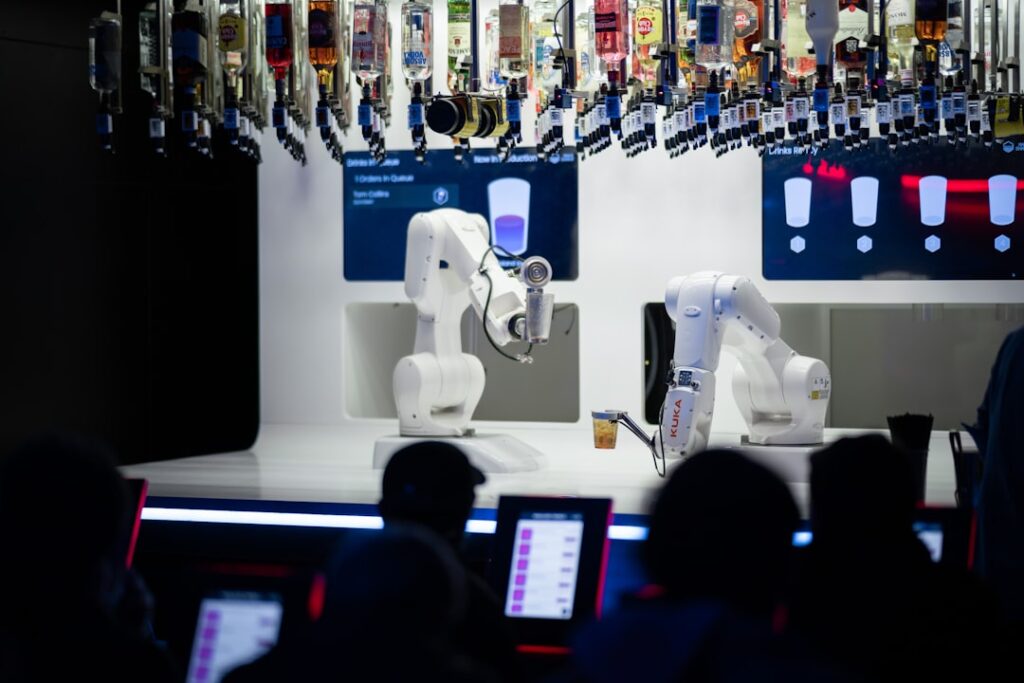
The company’s ambition is to develop general-purpose AI models capable of powering robots for various tasks, from folding laundry to peeling vegetables.
This significant investment reflects a broader trend where venture capital is increasingly directed toward companies that leverage AI to solve practical problems.
Physical Intelligence is backed by major venture capital firms, including Founders Fund and Lightspeed Venture Partners, with Thrive Capital and Lux Capital also participating.
The startup has already raised over a substantial amount in previous rounds, and its current valuation represents more than double its previous worth in just four months.
The rapid growth underscores the confidence of investors in the potential of AI-driven robotics to transform industries such as logistics, manufacturing, and home automation.
Similar trends are emerging in Europe and Asia, where firms like Boston Dynamics (U.S.) and SoftBank’s Pepper (Japan) are also pushing the boundaries of AI-powered robotics.
The Road to Commercialization Despite the massive valuation, Physical Intelligence has yet to announce a clear timeline for commercialization.
The Road to Commercialization
Despite the massive valuation, Physical Intelligence has yet to announce a clear timeline for commercialization.
Co-founder Lachy Groom has stated that the company is focused on building AI models that can perform a wide range of tasks, a goal that requires substantial computational resources and time.
The approach is reminiscent of the long-term vision of companies like OpenAI, which prioritizes foundational research over immediate product releases.
 Government & Policy
Eighth Pay Commission Completes Mumbai Consultations
The report deadline runs to around May 2027. Salary projections remain conditional, while the UPS states a pension guarantee based on average basic pay.
Read More →This strategy allows Physical Intelligence to iterate rapidly and scale its technology without the pressure of market expectations.
The robotics sector is becoming a critical battleground for innovation, with companies racing to secure funding and talent.
As AI and robotics converge, the potential for automation in various sectors grows, influencing labor markets and economic structures.
The competition for dominance in this space is intensifying, with geopolitical factors playing an increasingly prominent role in shaping investment decisions and technological priorities.
In China, for instance, the government’s “Made in China 2025” initiative has spurred massive investments in AI-driven automation, while the EU’s Horizon Europe program emphasizes ethical AI development.
Tiny Teams, Big Impact
Written by Career Ahead AI. AI can make mistakes, so verify key facts. Report errors to support@careeraheadonline.com.





