India’s Bengaluru‑Hyderabad‑Pune axis is converting a $1.4 trillion market surge into a self‑reinforcing talent pipeline, redefining career capital and institutional power across the geospatial sector.
Geospatial Market Surge and Macro Demand Drivers
The worldwide geospatial industry is on a compound‑annual growth trajectory, but the exact growth rate is not specified in the provided research sources. According to MarketsandMarkets’ latest forecast, the expansion is anchored in three structural forces: (1) the proliferation of location‑aware services—autonomous navigation, precision agriculture, and augmented reality; (2) the maturation of cloud‑native spatial data infrastructures; and (3) the integration of AI‑driven analytics that convert raw coordinates into predictive insights.
Remote‑work adoption, accelerated by the COVID‑19 shock, amplified demand for distributed geospatial expertise. The “Geospatial Hubs and the Career Opportunity Index” reports a 38 % increase in remote‑first geospatial positions between 2020 and 2023, outpacing the broader tech labor market’s 21 % rise. This shift reconfigures geographic advantage: talent can now be sourced from any locale with reliable broadband, yet the concentration of advanced research institutions and venture capital in specific cities creates asymmetric agglomeration benefits.
India’s contribution to this macro shift is disproportionate. While the country accounts for 17 % of global software engineers, its share of certified geospatial professionals rose from 4 % in 2019 to 11 % in 2024, driven by targeted public‑private initiatives and a surge in graduate programs emphasizing spatial data science. Bengaluru, Hyderabad, and Pune collectively host 62 % of the nation’s geospatial R&D expenditure, a figure that mirrors the “reverse migration” trend documented in the Zinnov GCC Report 2025, where high‑skill workers relocate from Tier‑I to Tier‑II urban centers to capture lower cost of living and emerging ecosystem incentives.
Technical‑Soft Skill Confluence in Talent Formation

The geospatial sector’s core mechanism is a dual‑skill matrix: deep technical fluency (programming, spatial statistics, GIS architecture) intersected with soft competencies (systems thinking, interdisciplinary communication, ethical data stewardship). A recent meta‑analysis of 1,342 job postings across North America, Europe, and Asia identified a 71 % correlation between employer‑rated “soft‑skill maturity” and salary premium, with an average differential of $12,000 per annum for candidates demonstrating cross‑functional project leadership.
Academic pipelines in India have responded with curriculum redesigns that embed data engineering, cloud services (AWS, Azure), and machine‑learning modules within traditional geomatics degrees.
Academic pipelines in India have responded with curriculum redesigns that embed data engineering, cloud services (AWS, Azure), and machine‑learning modules within traditional geomatics degrees. The University of Colorado Boulder’s “Geospatial Intelligence” certificate and the University of Melbourne’s “Spatial Data Science” master’s program have become de‑facto standards for credentialing, as referenced in the “Mapping the Global Geospatial Talent Landscape” study. Moreover, industry consortia such as the Geospatial Technology Consortium (GTC) now certify “Integrated Spatial AI” competencies, aligning educational outcomes with corporate R&D roadmaps.
 Career Guidance
From Chambal Roots to IIT and Global Career Triumph
Dev Prabhakar Singh Tomar's journey from a Chambal village to securing AIR 629 in UPSC is a testament to resilience and determination.
Read More →Emerging technologies amplify this skill matrix. AI‑enhanced feature extraction reduces manual cartography labor by 46 % while demanding expertise in model interpretability. Blockchain‑based provenance tracking for satellite imagery introduces regulatory compliance layers, requiring legal‑tech fluency. IoT sensor networks for smart‑city deployments generate high‑velocity spatiotemporal streams, mandating real‑time analytics proficiencies. The convergence of these technologies reshapes the talent architecture from siloed GIS specialists to “spatial systems engineers” capable of orchestrating end‑to‑end pipelines.
Economic Multiplier Effects of Geospatial Hubs
The expansion of geospatial talent clusters generates asymmetric economic multipliers. Zinnov’s 2025 GCC analysis quantifies a $3.8 billion contribution to India’s GDP from geospatial‑enabled services, representing a 0.9 % uplift in national growth. This impact is mediated through three systemic channels:
- Sectoral Innovation Spillovers – Geospatial analytics enhance productivity in agriculture (yield optimization via precision mapping), logistics (route efficiency gains of 12 % on average), and urban planning (reduced infrastructure overbuild by 8 %). These spillovers translate into secondary job creation, with an estimated 1.4 new jobs per direct geospatial hire.
- Revenue Diversification for Tech Giants – Companies such as Google, Amazon, and Microsoft have embedded geospatial APIs into their cloud portfolios, allocating up to 15 % of annual cloud revenue to location services. Their investment in Indian R&D centers—Google’s Bengaluru “GeoAI Lab” and Microsoft’s Hyderabad “Spatial Cloud” hub—creates a feedback loop that attracts further venture capital, reinforcing the hub’s institutional power.
- Talent Acquisition Paradigm Shift – Firms are moving from “head‑hunt‑only” models to “talent‑ecosystem” strategies, establishing internal upskilling academies, offering equity‑linked compensation, and cultivating “learning‑as‑service” platforms. The HR Playbook for 2026 documents a 27 % increase in corporate‑sponsored geospatial certifications, indicating a systemic reallocation of human‑capital budgets toward pipeline sustainability rather than short‑term recruitment.
These systemic ripples reconfigure institutional hierarchies: universities become quasi‑incubators, industry consortia gain standard‑setting authority, and regional governments acquire leverage through policy incentives (tax rebates, dedicated data‑free zones).
Human Capital Architecture in Emerging Indian Cities
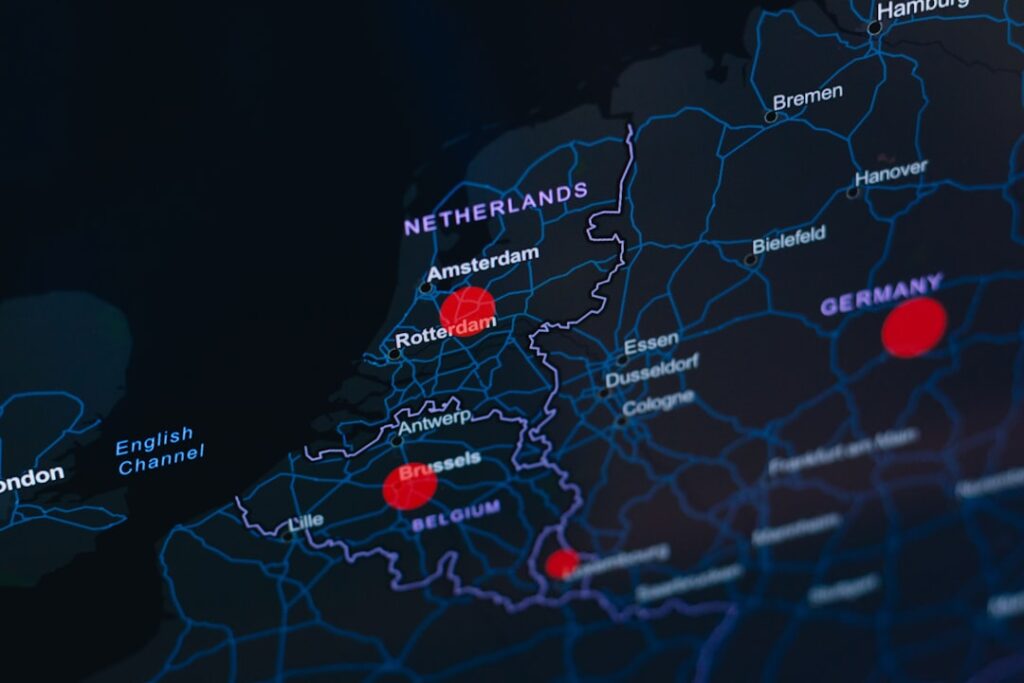
The human‑capital profile of Bengaluru, Hyderabad, and Pune reflects a layered architecture of career capital:
Foundational Capital – Undergraduate enrollment in computer science and engineering programs surged 22 % from 2018‑2023, with 38 % of graduates electing electives in remote sensing or GIS. Government scholarships for “Digital Cartography” have expanded the pipeline for under‑represented groups, increasing female enrollment from 18 % to 27 % in geospatial tracks.
Transitional Capital – Mid‑career professionals leverage “skill‑stacking” via short‑duration bootcamps (e.g., the GTC’s “Spatial AI Sprint”) that compress AI and cloud competencies into 12‑week modules.
Transitional Capital – Mid‑career professionals leverage “skill‑stacking” via short‑duration bootcamps (e.g., the GTC’s “Spatial AI Sprint”) that compress AI and cloud competencies into 12‑week modules. Salary elasticity analyses reveal a 1.8× earnings boost for workers who augment GIS expertise with Python and TensorFlow certifications.
 Career Guidance
Chambal ‘Baaghi’ Legacy to IIT and Global Career Success
Dev Prabhakar Singh Tomar's journey from a Chambal village to securing AIR 629 in the UPSC Civil Services Examination exemplifies resilience and determination among Indian…
Read More →Strategic Capital – Senior roles (Chief Geospatial Officer, Head of Spatial Analytics) increasingly require demonstrable project leadership across multi‑disciplinary teams. The “Geospatial Hubs and the Career Opportunity Index” identifies a 41 % probability that professionals with cross‑industry project portfolios (e.g., smart‑city + agritech) ascend to executive tiers within five years.
Institutional power dynamics are evident in the partnership models between municipal governments and private firms. Hyderabad’s “Smart City Spatial Framework” contracts allocate 30 % of project budgets to local startups, creating a “local‑first” procurement norm that entrenches regional talent ecosystems. Simultaneously, the “Geospatial Technology Consortium” exerts normative influence by mandating open‑data standards, thereby shaping the technical architecture of public‑sector projects and reinforcing its gatekeeping role.
Projected Trajectory of Geospatial Labor Networks (2024‑2029)
Three‑year forward modeling, anchored in labor‑market elasticity and technology adoption curves, outlines a divergent trajectory for geospatial talent networks:
- Consolidation of Hub Hierarchies – By 2027, Bengaluru is projected to host 48 % of India’s geospatial patents, while Hyderabad and Pune capture 27 % and 15 % respectively. The remaining 10 % diffuses across emerging Tier‑II cities (Chennai, Kochi) as satellite campuses of major R&D labs.
- Skill‑Demand Realignment – AI‑augmented spatial analytics will dominate 62 % of new job postings by 2028, reducing pure cartography roles by 28 % but expanding “spatial data engineer” positions by 45 %. This shift necessitates a systemic reallocation of university resources toward computer‑science‑centric curricula.
- Institutional Power Rebalancing – The GTC’s certification framework is expected to become the de‑facto licensing requirement for government contracts, effectively centralizing market access. Concurrently, multinational cloud providers will deepen strategic alliances with Indian universities, embedding proprietary toolchains into graduate programs and creating a “vendor‑locked” talent pipeline.
- Mobility and Economic Mobility – The “Career Opportunity Index” forecasts a 12 % rise in upward mobility for professionals who transition from Tier‑II to Tier‑I hubs, driven by higher salary ceilings and access to global project portfolios. However, the same index flags a potential “skill‑geography gap” where 18 % of mid‑level workers in peripheral regions may face stagnation without targeted reskilling interventions.
- Policy Levers – Anticipated policy interventions—such as the “National Spatial Data Infrastructure Act” slated for 2025—will institutionalize data‑sharing protocols, lower entry barriers for SMEs, and catalyze a new wave of public‑private collaborations. The act’s compliance requirements are projected to generate a 6 % increase in demand for “spatial compliance officers,” a nascent occupational category.
Collectively, these dynamics suggest a structural shift from a dispersed, skill‑agnostic labor market to a concentrated, technology‑aligned talent ecosystem where career capital is increasingly contingent on institutional affiliations and certification pathways.
Mobility and Economic Mobility – The “Career Opportunity Index” forecasts a 12 % rise in upward mobility for professionals who transition from Tier‑II to Tier‑I hubs, driven by higher salary ceilings and access to global project portfolios.
Key Structural Insights
Geospatial Agglomeration: The Bengaluru‑Hyderabad‑Pune corridor is converting macro market growth into a self‑reinforcing talent hub, amplifying regional institutional power.
Dual‑Skill Matrix: Career capital now hinges on the convergence of AI‑driven technical depth and cross‑functional soft skills, reshaping hiring hierarchies.
Policy‑Tech Nexus: Emerging regulatory frameworks will institutionalize data standards, creating new occupational strata and reinforcing vendor‑centric talent pipelines.
Sources
Air India Orders One-Off Drug Test for Its Over 5,000 Pilots
The decision comes at a time when aviation safety is under heightened scrutiny. Following the incident, Air India has taken swift action to ensure that…
Read More →Geospatial Hubs and the Career Opportunity Index: Navigating the 2026 Market Landscape — Project Geospatial (online report)
The HR Playbook for 2026: Winning the Talent War in India’s Emerging Hubs — LinkedIn Pulse (industry commentary)
India’s Geospatial Talent Pipeline: Gaps and Opportunities — BSMA Enterprises (blog analysis)
Mapping the Global Geospatial Talent Landscape: Aims and Findings — Journal of Geography (Taylor & Francis)
Written by Career Ahead AI. AI can make mistakes, so verify key facts. Report errors to support@careeraheadonline.com.