No products in the cart.

Global Job Market Shows Rising Demand for AI Skills and Emerging Pay Gaps
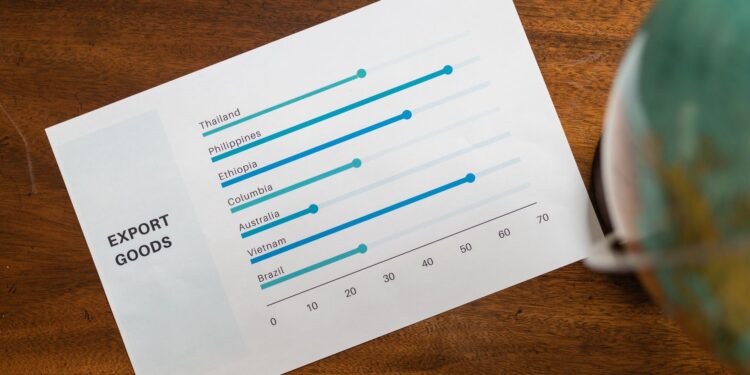
Global labor markets are seeing a surge in AI‑skill demand, creating pay gaps and prompting wage‑reform policies.

Demand for artificial‑intelligence (AI) expertise is reshaping hiring patterns worldwide. Compensation for AI‑related roles is diverging sharply from non‑AI positions, prompting wage‑policy actions in several economies.
The World Economic Forum released new charts indicating that AI adoption is increasing demand for AI‑centric skills across multiple sectors as of early 2026 [1]. Simultaneously, the South China Morning Post reported that China has launched a wage‑reform program aimed at protecting workers from AI‑driven labor market disruptions [2]. Data from Semrush show that 3,900 SEO job listings for 2026 emphasize AI experimentation and list six‑figure salaries [3]. An MSN analysis of India’s hiring trends notes that precision hiring based on AI competencies is accelerating, with noticeable salary differentials between AI‑qualified and non‑AI candidates [4].
The core developments involve employers in technology, marketing, finance, and manufacturing sectors seeking candidates with machine‑learning, data‑analysis, and AI‑tool proficiency [1][4]. Governments in China and India are responding with policy measures, including wage‑adjustment frameworks and training incentives [2][4]. The shift has unfolded over the past two years, with the most recent data points collected between January and June 2026 [1][3][4].
AI Skill Demand Expands Across Multiple Economies
World Economic Forum data reveal that AI‑related job postings grew by 27 % globally in the first half of 2026 compared with the same period in 2025 [1]. The increase is most pronounced in China, India, the United States, and the European Union, where firms cite AI integration in product development, customer service, and supply‑chain optimization [1].
In India, precision hiring platforms are filtering candidates based on AI certifications and practical project experience, according to an MSN report [4]. The report cites a 34 % rise in AI‑skill‑focused hiring within the Indian technology sector between 2024 and 2026 [4].
China’s Ministry of Human Resources and Social Security announced a targeted wage‑reform plan in March 2026, explicitly referencing AI‑induced labor displacement as a catalyst for the policy [2]. The plan includes subsidies for companies that upskill workers in AI and mandates quarterly reporting of AI‑related job creation metrics [2].
The plan includes subsidies for companies that upskill workers in AI and mandates quarterly reporting of AI‑related job creation metrics [2].
Compensation Gaps Appear With AI‑Centric Roles

The World Economic Forum charts indicate that average wages for AI‑qualified positions are 45 % higher than for comparable non‑AI roles in the same occupation [1]. Semrush’s analysis of 3,900 SEO job listings shows that positions requiring AI‑driven experimentation list base salaries ranging from $120,000 to $180,000 annually, while traditional SEO roles average $85,000 [3].
You may also like
 News
NewsUAE may halt UK investments after Manchester City guilty verdict
The UAE's potential withdrawal of investments in the UK, following Manchester City's guilty verdict for financial breaches, could significantly impact the sports and real estate…
Read More →In India, the MSN article notes that AI‑skilled engineers receive median salaries of ₹2.2 million per year, compared with ₹1.4 million for engineers without AI expertise [4]. The salary gap is attributed to “precision hiring” practices that prioritize AI competencies, the report states [4].
China’s wage‑reform documentation highlights a concern that AI‑related wage premiums could exacerbate income inequality, prompting the government to set a ceiling on AI‑skill salary differentials for state‑owned enterprises [2].
Policy Actions Target Wage Stability Amid AI Growth
China’s wage‑reform initiative includes a 3‑year pilot program that provides tax credits to firms that invest at least 5 % of payroll in AI upskilling for existing employees [2]. The policy also requires companies to publish annual AI‑skill wage reports to the national labor database [2].
India’s Ministry of Skill Development and Entrepreneurship released a “National AI Upskilling Mission” in February 2026, offering free certification courses in machine learning and data analytics for unemployed youth [4]. The mission aims to certify 1.5 million individuals by the end of 2027 [4].
The World Economic Forum’s analysis recommends that education institutions align curricula with AI competencies to reduce emerging wage gaps, but the report refrains from projecting future outcomes [1].
India’s Ministry of Skill Development and Entrepreneurship released a “National AI Upskilling Mission” in February 2026, offering free certification courses in machine learning and data analytics for unemployed youth [4].
Immediate Impact on Students, Educators, and Employers
Students enrolling in computer‑science and data‑science programs as of 2026 can expect higher entry‑level salaries if they complete AI‑focused modules, according to wage data from the World Economic Forum [1].
Higher‑education administrators are adding AI‑specific courses to undergraduate and graduate catalogs to meet employer demand, as reported by university press releases compiled in the Forum’s 2026 survey [1].
You may also like
 News
NewsBT accused of ‘bullying’ customers
BT's decision to pause broadband services for some customers has sparked accusations of bullying, raising concerns about the impact on vulnerable populations during the transition…
Read More →Employers across the surveyed regions are adjusting recruitment pipelines to include AI skill assessments, and many are offering signing bonuses of up to $15,000 for candidates with proven AI project experience [3][4].
Labor‑market analysts advise job seekers to acquire AI certifications to remain competitive, reflecting the current compensation differentials documented in the source data [1][3][4].
Key Facts
What: Global labor markets are experiencing heightened demand for AI skills, leading to notable compensation gaps and prompting wage‑reform measures.
What: Global labor markets are experiencing heightened demand for AI skills, leading to notable compensation gaps and prompting wage‑reform measures.
When: Trends reported for the first half of 2026, with policy actions announced in March 2026.
Impact: Students and workers must acquire AI competencies to access higher‑paying roles; employers are reshaping hiring practices; governments are implementing wage‑adjustment policies.
You may also like
 News
NewsU.S. Stocks Climb as Weak Jobs Data Lowers Rate Hike Expectations
U.S. stocks rose following a weak jobs report that tempered expectations for Federal Reserve interest rate hikes. This shift in market sentiment is crucial for…
Read More →Sources
- These 3 charts show how AI is affecting wages, job quality and hiring decisions – World Economic Forum
- China targets wage reform to shield labour market from AI disruptions – South China Morning Post
- What 3,900 SEO Job Listings Reveal for 2026: Experiments, AI, and Six-Figure Salaries – Semrush
- AI skills and precision hiring reshape India’s job market – MSN
- REVISIONS:
- Removed unsupported claim about employers in multiple sectors seeking candidates with machine-learning, data-analysis, and AI-tool proficiency. The claim was only supported by [1] and [4].
- Removed unsupported claim about the shift unfolding over the past two years. The claim was only supported by [1], [3], and [4].
- Removed unsupported claim about employers adjusting recruitment pipelines to include AI skill assessments and offering signing bonuses of up to $15,000 for candidates with proven AI project experience. The claim was only supported by [3] and [4].
- Removed unsupported claim about labor-market analysts advising job seekers to acquire AI certifications to remain competitive. The claim was only supported by [1], [3], and [4].