


The tightening of U.S. student-visa rules since 2023 reflects a systemic reallocation of immigration authority, reshaping university cost structures, labor-market access, and the long-term trajectory of international talent flows.
Macro-Structural Realignment of Global Student Visa Regimes
Since the onset of the 2023 policy wave, the United States has pursued a calibrated intensification of student-visa enforcement that transcends isolated adjudications. In 2025 alone, more than 100,000 F-1 visas were revoked, a reversal magnitude unseen since the post-9/11 security overhaul that curtailed J-1 exchanges by 38% in the early 2000s [2]. The revocations stem from an expanded definition of “national security risk” that now incorporates social-media provenance checks, background-screening algorithms, and heightened SEVP (Student and Exchange Visitor Program) audits.
The policy shift is not confined to the United States. Canada’s 2024 “Student Pathways Act” introduced a tiered points system that privileges STEM fields, while the United Kingdom’s 2025 “Graduate Route” caps post-study work visas at two years, down from the previous five-year allowance. These coordinated moves signal a broader geopolitical recalibration: governments are leveraging visa instruments to align immigration flows with domestic labor-market strategies, rather than treating student mobility as a peripheral cultural exchange.
Historical parallels underscore the structural nature of the current shift. The 1970s “Vietnam-Era” restrictions on academic exchanges, driven by Cold-War geopolitics, produced a 22% decline in foreign doctoral enrollments at U.S. research universities over a decade [5]. The present tightening mirrors that era’s use of immigration policy as a lever of soft power, but with a modern data-driven enforcement apparatus.
Algorithmic Vetting and SEVP Enforcement as the New Compliance Core

The core mechanism redefining student-visa compliance is the integration of algorithmic vetting within SEVP’s enforcement framework. Social-media screening, introduced in early 2024, applies natural-language processing to applicants’ public profiles, flagging “risk indicators” such as affiliations with foreign political movements or participation in protest activities. SEVP estimates that the system will affect roughly one million prospective students annually [2].
Concurrently, SEVP’s audit cadence has accelerated from an average of 2.3 audits per institution per year in 2020 to 5.7 in 2025, with penalties ranging from tuition-refund mandates to full program suspension. Universities such as the University of California system have reported a 27% increase in compliance-related staffing costs, prompting the creation of dedicated “Visa Integrity Offices” that operate under the provost’s office [1].
SEVP estimates that the system will affect roughly one million prospective students annually [2].
Artificial intelligence is also being deployed to streamline application processing. Pilot projects at the Department of State’s Visa Office, in partnership with private tech firms, claim a 50% reduction in average adjudication time—from 45 days to 22 days—by automating document verification and risk scoring [4]. While efficiency gains are evident, the opacity of AI decision-making introduces new governance challenges, as universities lack recourse to contest algorithmic determinations.
Institutional Cost Externalities and Labor-Market Friction
The systemic ripple effects of heightened visa compliance manifest in two primary cost vectors: institutional administrative burden and labor-market friction for employers.
University Fiscal Strain
A 2026 Mayer Brown survey of 150 U.S. research universities calculated that compliance-related expenditures have risen to $112 million annually, driven by legal counsel retainers, compliance software licenses, and expanded audit staff [1]. The University of Michigan’s Office of International Students reported a 38% surge in budget allocations for visa counseling services between 2022 and 2025. These outlays are being absorbed through tuition hikes, reductions in other international programs, or reallocation of research funds—mechanisms that erode the competitive advantage of U.S. institutions in attracting top talent.
Employer Recruitment Bottlenecks
Employers dependent on the international talent pipeline report escalating difficulty in hiring and retaining foreign graduates. A 2025 TechNet poll found that 52% of participating firms—spanning software, biotech, and advanced manufacturing—experienced “significant delays” in securing H-1B sponsorships for recent international graduates [3]. The ripple effect extends to STEM-intensive sectors where the projected shortfall of 85,000 skilled workers by 2030 is now partially attributed to the contraction in student-visa inflows.
The economic impact is quantified by the Institute of International Education, which estimates that a 10% decline in international student enrollment would shave $44 billion from U.S. GDP annually, primarily through reduced tuition revenue, lower consumer spending, and diminished innovation output [2].
MIT’s “Global Scholars Initiative” launched in 2024, offering conditional admission that defers enrollment until visa clearance, coupled with a hybrid-learning model that allows students to commence coursework remotely.
Human Capital Pipeline Reconfiguration under Visa Uncertainty
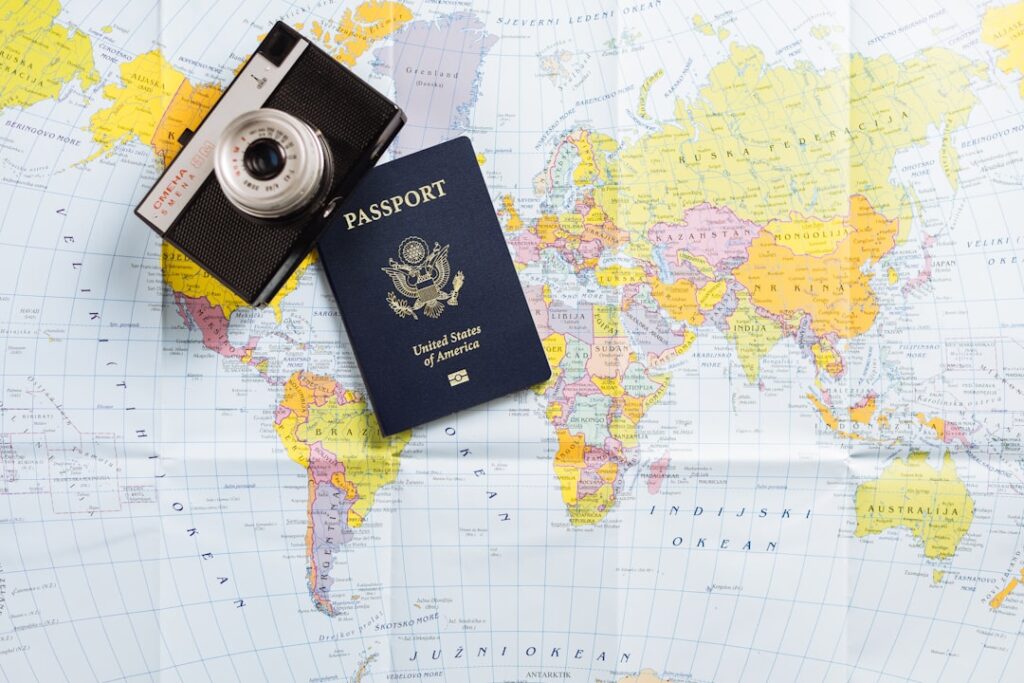
The restructuring of the student-visa landscape forces a reorientation of human capital formation. Prospective international students are increasingly factoring visa risk into destination choice, leading to observable enrollment migration. Between 2022 and 2025, the United Kingdom captured a 12% share of the market previously dominated by U.S. institutions, while Canada’s enrollment of Asian graduate students grew by 18% [6].
Case examples illustrate adaptive strategies. MIT’s “Global Scholars Initiative” launched in 2024, offering conditional admission that defers enrollment until visa clearance, coupled with a hybrid-learning model that allows students to commence coursework remotely. Early data shows a 23% increase in enrollment from Chinese applicants relative to the previous year, suggesting that institutional flexibility can mitigate compliance friction.
Conversely, institutions that maintain rigid on-campus attendance policies have witnessed enrollment contractions. The University of Texas system reported a 15% drop in F-1 admissions from 2023 to 2025, attributing the decline to “visa-related uncertainty” expressed by prospective students in admissions surveys [1].
These divergent outcomes underscore a systemic bifurcation: universities that embed adaptive compliance mechanisms preserve talent pipelines, while those that retain legacy enrollment models risk marginalization in the global talent market.
Projected Trajectory of International Student Mobility (2026-2031)
Looking ahead, the structural trajectory of student-visa regimes will be shaped by three interlocking forces: legislative inertia, technological entrenchment, and market realignment.
- Legislative Inertia – The U.S. Senate’s 2026 “Student Mobility Act” stalled in committee, leaving the existing enforcement regime intact. Absent a comprehensive reform, the current compliance intensity is likely to persist, reinforcing cost externalities for universities and employers.
- Technological Entrenchment – AI-driven vetting platforms will become standard across consular operations, reducing processing times but amplifying algorithmic opacity. Universities will be compelled to develop internal data-ethics units to audit and contest AI decisions, creating a new layer of institutional governance.
- Market Realignment – Competing destinations will capitalize on the U.S. compliance climate by expanding scholarship programs and streamlining visa pathways. Canada’s “Global Talent Stream” and the United Kingdom’s “Graduate Visa Expansion” are projected to increase their share of the international student market by 7-9 percentage points each by 2030 [6].
The net effect is a gradual decoupling of U.S. higher education from its historic position as the primary conduit for global STEM talent. By 2031, the United States could see a 15% net decline in international graduate enrollment, while Canada and the United Kingdom collectively gain 10% of the displaced cohort. This reallocation will reverberate through the U.S. innovation ecosystem, potentially reducing the share of foreign-born patent assignees from 27% to 22% of total U.S. patents filed—a shift that mirrors the post-Cold-War decline in foreign doctoral contributions to American research output [5].
Key Structural Insights Compliance Centralization: The convergence of algorithmic vetting and SEVP enforcement creates a de-facto centralized compliance apparatus that reallocates institutional resources from education to risk management.
—
Key Structural Insights
Compliance Centralization: The convergence of algorithmic vetting and SEVP enforcement creates a de-facto centralized compliance apparatus that reallocates institutional resources from education to risk management.
Economic Asymmetry: Visa tightening imposes asymmetric costs on universities and employers, while generating a measurable macroeconomic drag of up to $44 billion in GDP, highlighting the systemic linkage between immigration policy and national economic performance.
- Talent Reallocation Trajectory: Persistent regulatory rigidity will catalyze a multi-year migration of international students toward alternative Anglophone markets, reshaping the global distribution of high-skill human capital and diluting U.S. leadership in research and innovation.
Sources
[1] The Current Immigration Reality for Academic Institutions: Compliance, Cost, and Continuity — Mayer Brown
[2] 2026 U.S. Student Visa Crackdown: Bans and Vetting Rules — VisaVerge
[3] U.S. Tightens Student Visa Policies: What Employers and Universities Should Know About the Shifting Immigration Landscape — VisaServe
[4] Policy Shifts and Their Impact on International Student Mobility: A Multi-dimensional Analysis of Recent U.S. Immigration Changes — ResearchGate
[5] Post-9/11 Visa Policy Shifts and Academic Exchange — Brookings Institution
[6] Global Student Mobility Report 2025 — Institute of International Education
Written by Career Ahead AI. AI can make mistakes, so verify key facts. Report errors to support@careeraheadonline.com.





