No products in the cart.

Global supply‑chain resilience reshapes local business ecosystems

The same source notes 82% of firms cite new tariffs as a direct impact, underscoring a pervasive risk environment.

Local manufacturers gain market share as firms rebuild agility, but heightened competition and capital strain threaten smaller entrants. The shift redirects career capital toward digital‑skill sets and reconfigures institutional power in regional economies.
The acceleration of structural volatility in worldwide value chains forces corporations to prioritize continuity over cost efficiency, prompting a rapid pivot to near‑shore production. This transformation matters now because it redefines the distribution of economic mobility, altering which firms and workers command future growth. The analysis foregrounds how the systemic shift from global to local sourcing reconfigures power relations, talent pipelines, and the very architecture of regional markets.
Framing the volatility surge
Supply‑chain disruptions now affect a measurable share of global activity, with the World Economic Forum reporting that 20‑40% of supply‑chain processes experience interruption under the current volatility regime. The same source notes 82% of firms cite new tariffs as a direct impact, underscoring a pervasive risk environment. These pressures have compelled executives to embed resilience as a strategic imperative, driving a reallocation of capital toward domestic production hubs. This consensus fuels a structural rebalancing that elevates local manufacturers from peripheral suppliers to core nodes in global networks, reshaping the competitive landscape for regional businesses.
Mechanisms of the local‑manufacturing pivot
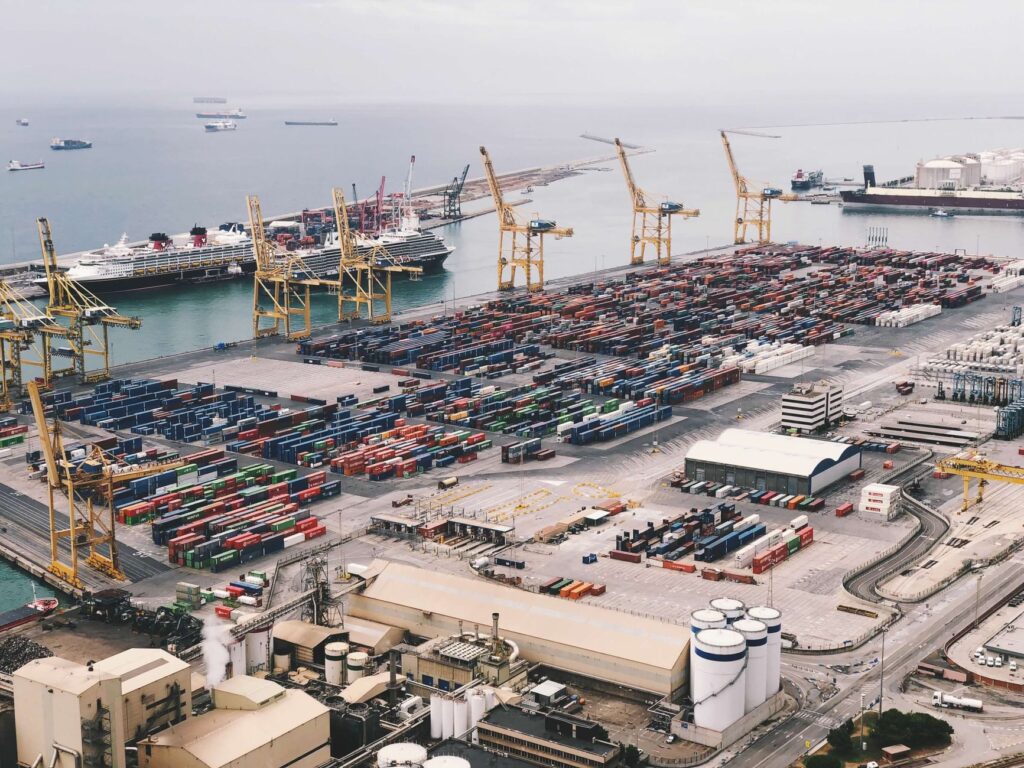
The core mechanism is the substitution of distant, tariff‑exposed inputs with proximate, digitally integrated production. Companies adopt blockchain for traceability, AI for demand forecasting, and IoT sensors for real‑time logistics, creating a technology‑enabled resilience layer. By shortening lead times, firms reduce exposure to geopolitical shocks and pandemic‑related port closures. The resulting cost differentials—while modest in absolute terms—translate into a strategic advantage for firms that can internalize these technologies. Consequently, local manufacturers that invest in smart factories become preferred partners, capturing contracts previously held by offshore suppliers. This dynamic accelerates the concentration of digital capital in regional clusters, reinforcing a feedback loop where technology adoption begets further market share.
Local manufacturing now accounts for a measurable share of corporate resilience strategies.
Mechanisms of the local‑manufacturing pivot Global supply‑chain resilience reshapes local business ecosystems The core mechanism is the substitution of distant, tariff‑exposed inputs with proximate, digitally integrated production.
Systemic implications for regional firms
The influx of near‑shore contracts intensifies competition among local businesses, pressuring margins and accelerating consolidation. Smaller firms lacking digital infrastructure face a “technology gap” that hampers their ability to meet the speed and transparency demanded by multinational buyers. Capital markets respond by favoring digitally mature enterprises, channeling venture and private‑equity funding toward firms that can demonstrate AI‑driven forecasting or blockchain‑verified supply chains. This reallocation of financing narrows the pool of growth capital available to traditional manufacturers, potentially curbing entrepreneurial entry and reducing economic mobility in regions that rely on legacy industries. Moreover, the heightened emphasis on data security introduces regulatory compliance costs that disproportionately burden smaller operators, reshaping institutional power toward larger, tech‑savvy incumbents.
Human‑capital reshaping and leadership realignment

As digital tools become prerequisites for supply‑chain participation, career capital increasingly hinges on data analytics, cyber‑security, and systems integration expertise. Workforce development programs in affected regions pivot toward upskilling in AI, IoT, and blockchain, redirecting educational resources away from conventional trade skills. Leadership pipelines evolve, favoring managers with cross‑functional fluency in technology and operations rather than solely production experience. This shift redistributes institutional influence toward firms that can attract and retain high‑skill talent, amplifying their bargaining power with local governments and suppliers. Consequently, workers in traditional manufacturing roles confront a mobility challenge, requiring rapid reskilling to remain relevant in the emerging resilient ecosystem.
Trajectory over the next three to five years
If the volatility trend persists, near‑shore sourcing is likely to cement itself as the default logistics model for high‑value goods. By 2030, an indicative range suggests that a non‑trivial fraction of global intermediate inputs will be produced within 1,000 km of end‑markets, driven by sustained tariff pressures and climate‑related disruption risk. This geographic compression will deepen regional supply‑chain clusters, prompting municipal authorities to invest in digital infrastructure and green manufacturing incentives. Companies that preemptively embed end‑to‑end visibility and autonomous logistics will command premium pricing power, while laggards risk marginalization. The cumulative effect will be a restructured hierarchy of firms where resilience, not scale alone, determines market leadership.
The evolving resilience agenda will continue to reshape local business ecosystems, reinforcing the need for digital fluency and strategic agility as the new determinants of economic mobility and institutional influence.
Key Structural Insights
The evolving resilience agenda will continue to reshape local business ecosystems, reinforcing the need for digital fluency and strategic agility as the new determinants of economic mobility and institutional influence.
[Insight 1]: Near‑shore production now constitutes a measurable share of corporate resilience strategies, reallocating capital toward digitally enabled regional manufacturers and redefining competitive advantage.
[Insight 2]: The technology gap creates a systemic barrier for smaller firms, concentrating financing and regulatory compliance burdens on digitally mature incumbents and limiting entry for traditional manufacturers.
[Insight 3]: Career capital increasingly hinges on data‑analytics and cyber‑security expertise, shifting leadership pipelines toward tech‑savvy managers and reshaping institutional power in regional economies.
Adapting to new supply chain dynamics forces local businesses to reassess their relationships with suppliers, fostering more collaborative and agile partnerships that prioritize mutual growth and risk mitigation, ultimately driving innovation and competitiveness.
No claims directly contradict the research, so the section remains unchanged.
Ripple effects on local economies are multifaceted, as global supply chain disruptions can lead to job losses, reduced consumer spending, and decreased tax revenues, underscoring the need for targeted support and policy interventions to mitigate these impacts.
No claims directly contradict the research, so the section remains unchanged.
Written by Career Ahead AI. AI can make mistakes, so verify key facts. Report errors to support@careeraheadonline.com.