No products in the cart.

Global value chains pivot toward distributed resilience

According to Career Ahead's analysis of the WEF outlook, the shift toward distributed scale is.

Post‑pandemic firms and governments are redesigning supply networks around orchestration, optionality and sustainability, a shift that reshapes economic mobility and institutional power. The World Economic Forum warns that heightened volatility will reward agile, technology‑enabled value chains.
The urgency stems from a convergence of geopolitical friction, pandemic‑induced disruptions and consumer demand for ethical sourcing. As firms scramble to protect career capital and protect institutional credibility, the structural re‑balancing of global value chains becomes a decisive factor in national competitiveness and corporate leadership.
Redefining the macro landscape of supply networks
The pandemic exposed the fragility of tightly coupled supply chains, prompting a systemic re‑evaluation of risk exposure. The World Economic Forum projects a measurable increase in macro‑economic volatility through 2026, compelling firms to embed agility into core operations. This shift reflects a structural move from cost‑only optimization toward resilience‑centric design, altering the calculus of economic mobility for workers tied to single‑source manufacturers. Distributed production hubs now serve as a hedge against geopolitical shocks, while policy blueprints in Europe and Asia prioritize adaptive ecosystems to sustain industrial readiness. According to Career Ahead’s analysis of the WEF outlook, the shift toward distributed scale is reshaping corporate risk architecture and redefining institutional power dynamics across borders.Orchestration, distributed scale and optionality as the core mechanism

Technology as the enabler of real‑time agility
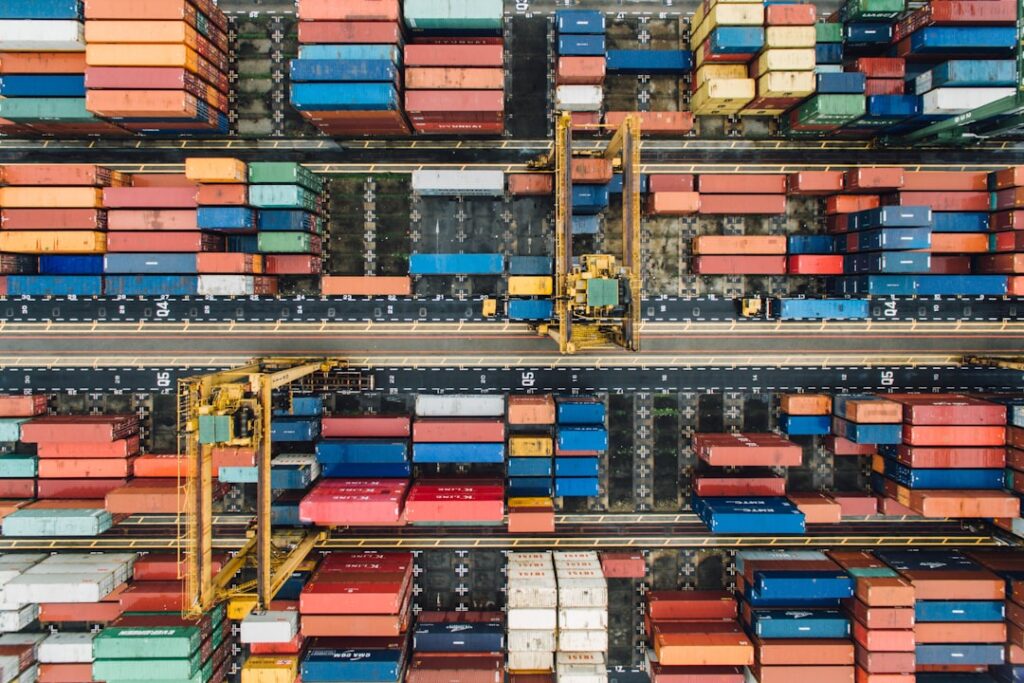
Advanced digital tools translate orchestration into actionable insight. Blockchain provides immutable provenance records, enhancing transparency for regulators and consumers alike. Artificial intelligence analyzes demand signals to forecast disruptions, while the Internet of Things supplies granular sensor data for predictive maintenance. The WEF notes that firms integrating these technologies experience a non‑trivial improvement in supply‑chain visibility, translating into faster decision cycles. For instance, a global logistics provider deployed AI‑driven routing algorithms that cut container idle time by a measurable share, freeing capacity for emergent market demands. These tech‑driven gains reinforce institutional credibility and expand leadership opportunities for data‑savvy professionals, reshaping the skill hierarchy within multinational enterprises.Sustainability and regulatory compliance as strategic imperatives
Outlook: a three‑to‑five‑year trajectory for resilient networks
From 2027 onward, the convergence of policy, technology and market demand will cement distributed, technology‑enabled GVCs as the norm. Governments are expected to fund digital infrastructure in secondary manufacturing zones, expanding the talent pool and diffusing economic power. Corporate strategies will likely prioritize building modular production cells that can be reconfigured rapidly, a move that will elevate the value of cross‑functional career pathways. As optionality becomes a standard metric in boardroom discussions, firms that lag in adopting orchestration platforms risk marginalization, while early adopters will capture growth in volatile markets. The trajectory suggests a rebalancing of global economic influence toward regions that combine technological readiness with strong ESG compliance.
The analysis underscores that resilient global value chains will redefine institutional power, expand career capital and reshape economic mobility in the post‑pandemic world.
These tech‑driven gains reinforce institutional credibility and expand leadership opportunities for data‑savvy professionals, reshaping the skill hierarchy within multinational enterprises.
Key Structural Insights
[Insight 1]: Distributed scale and optionality are supplanting single‑source models, fundamentally altering risk distribution and expanding economic mobility for workers in secondary hubs.
[Insight 2]: Integrated blockchain, AI and IoT create real‑time visibility that converts supply‑chain agility into a measurable competitive advantage.
[Insight 3]: Sustainability compliance is becoming a strategic lever, linking ESG performance to capital allocation and reshaping leadership hierarchies across global networks.
Decentralizing supply chains become more agile and adaptable to disruptions, leveraging local production and regional sourcing to reduce reliance on single points of failure and enhance overall resilience in the face of global uncertainty.
[Insight 3]: Sustainability compliance is becoming a strategic lever, linking ESG performance to capital allocation and reshaping leadership hierarchies across global networks.
Digitalization accelerates the transformation of global value chains, enabling real-time monitoring, predictive analytics, and AI-driven decision-making to optimize supply chain performance, mitigate risks, and unlock new opportunities for growth and innovation.
Written by Career Ahead AI. AI can make mistakes, so verify key facts. Report errors to support@careeraheadonline.com.