No products in the cart.

Google Invests in India’s AI Education and Health Initiatives
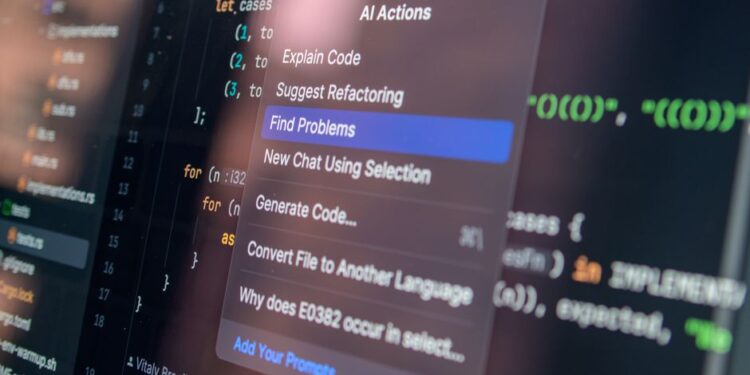
Google's recent AI initiatives in India aim to transform education and healthcare sectors by equipping professionals with advanced AI tools and frameworks. This strategy not only enhances local capabilities but also positions India as a leader in the global AI landscape.

India’s education and healthcare sectors are undergoing a significant transformation thanks to Google’s recent AI initiatives announced on July 14, 2026. The tech giant aims to enhance the capabilities of developers and healthcare professionals by integrating advanced AI tools and frameworks. This move is part of a broader strategy to position India as a leader in the agentic AI era, where AI not only responds to queries but executes complex tasks securely.
Google’s initiatives include a rigorous AI Research Foundations curriculum from Google DeepMind, designed to equip learners with the skills needed to build and fine-tune large language models. This program will be available through the Google Skills platform and is being implemented in collaboration with NASSCOM and IISc Bangalore. By making this curriculum accessible at educational institutions across India, Google is addressing the need for advanced AI skills among future developers. The collaboration with NASSCOM, a key player in the Indian IT ecosystem, ensures that the curriculum is aligned with industry requirements, thus enhancing employability for graduates.
AI-Driven Educational Tools and Their Impact
The educational aspect of Google’s initiative extends to the Google Play Academy curriculum, which aims to train over 10,000 Indian developers and app creators. This curriculum will help participants leverage advances in agentic AI, enabling them to build and scale their app businesses effectively. The partnership with state governments in Rajasthan, Odisha, and Madhya Pradesh illustrates a commitment to widespread educational reform through technology. Furthermore, this initiative is expected to create a ripple effect, inspiring educational institutions to adopt similar AI-driven methodologies, thereby enhancing the overall quality of education in the region.
In addition to formal education, Google is launching the ATL Saathi desktop app, which provides teachers with a Gemini-powered assistant. This tool is designed to enhance the Atal Tinkering Labs’ curriculum, allowing educators to deliver hands-on experiments more effectively. The pilot program will initially roll out in 100 schools, with plans to expand to 10,000 schools across India, significantly impacting how STEM education is delivered. The ATL Saathi app not only supports teachers but also encourages students to engage in innovative projects, fostering a culture of creativity and problem-solving.
Career Ahead’s analysis finds that these educational initiatives not only enhance learning but also create a skilled workforce ready to meet the demands of an AI-driven economy.
You may also like
 Education & University Insights
Leadership Shifts at DES Pune Spark Educational Innovation
Leadership changes at DES Pune University reflect a commitment to innovation in higher education, emphasizing interdisciplinary research and modern curriculum development.
Read More →Career Ahead’s analysis finds that these educational initiatives not only enhance learning but also create a skilled workforce ready to meet the demands of an AI-driven economy. As AI technologies continue to evolve, the need for professionals who understand and can work with these tools will only increase. This shift emphasizes the importance of integrating AI education into the curriculum at an early stage, preparing students for future careers in technology and innovation. Moreover, the emphasis on localized AI solutions, such as the development of India-specific models for healthcare analytics, showcases how education and technology can work hand-in-hand. By equipping students with the necessary skills to utilize these AI tools, Google is fostering a generation of innovators capable of addressing local challenges with global solutions.
Advancements in Healthcare Analytics Through AI
On the healthcare front, Google’s AI initiatives are equally transformative. Researchers at AIIMS Delhi are utilizing multimodal open models, such as MedGemma, to create localized AI solutions for critical health issues, including leprosy and sexual and reproductive health. These models will enable healthcare professionals to identify and manage conditions more effectively through image and text inputs, enhancing patient care. The integration of AI in healthcare analytics is particularly crucial in India, where diverse health challenges require tailored solutions that can adapt to local contexts.
Career Ahead’s research shows that the integration of AI in healthcare analytics is set to revolutionize patient diagnosis and treatment. With the ability to analyze vast amounts of data quickly, healthcare analysts can derive insights that were previously unattainable. This capability is crucial in a country like India, where healthcare resources can be limited, and the need for efficient solutions is paramount. As noted by experts from AIIMS Delhi, the potential for AI to streamline operations and improve patient outcomes is significant, especially in rural areas where access to healthcare professionals is often scarce.
This integration of AI into healthcare analytics presents a unique opportunity for young professionals and innovators in the field.
Furthermore, Google’s launch of the specialized cybersecurity agent, Sec-Gemini v3, is a significant addition to the healthcare sector. This tool will assist healthcare providers in safeguarding sensitive patient data against increasing cybersecurity threats. As healthcare systems become more reliant on digital infrastructure, the importance of robust cybersecurity measures cannot be overstated. The collaboration between Google and healthcare institutions highlights the potential for AI to enhance not only operational efficiencies but also patient outcomes. By leveraging AI tools, healthcare analysts can focus on strategic initiatives that improve healthcare delivery and patient satisfaction.
This integration of AI into healthcare analytics presents a unique opportunity for young professionals and innovators in the field. As the demand for data-driven decision-making grows, those with expertise in AI and data analytics will be well-positioned to lead in this evolving landscape. The World Bank has also emphasized the importance of investing in AI technologies to improve healthcare systems, indicating a broader recognition of the role AI can play in enhancing health outcomes globally.
You may also like
 Education & University Insights
Cornell University Faces Nightlife Challenges After Recent Turmoil
Cornell University is grappling with a significant decline in student nightlife participation following recent events, raising concerns for both student engagement and local businesses.
Read More →As Google’s initiatives take root, there are significant opportunities for startups and innovators in both education and healthcare sectors. The emphasis on developing AI tools tailored to local needs opens the door for new business models and solutions that can address specific challenges faced by Indian consumers and businesses. Startups focusing on educational technology can benefit from Google’s educational resources, such as the Google Play Academy curriculum. By aligning their offerings with these initiatives, they can enhance their value propositions and attract a broader user base. Additionally, the collaboration with state governments provides a unique platform for startups to pilot their solutions in real-world settings, gaining valuable feedback and exposure.
In healthcare, startups that develop AI-driven solutions for diagnostics, patient management, or data security will find a receptive market. The partnership with AIIMS Delhi and the focus on localized healthcare models indicate a willingness to adopt innovative solutions that can improve patient care. This trend is likely to accelerate as more healthcare institutions recognize the benefits of integrating AI into their operations. Career Ahead’s analysis indicates that the convergence of education and healthcare through AI will create a ripple effect across various sectors. As more professionals gain AI skills, the potential for interdisciplinary collaboration increases, leading to innovative solutions that can transform industries beyond just education and healthcare.
As India embraces this agentic AI era, the landscape for developers, healthcare analysts, and entrepreneurs is rapidly evolving. The next few years will be critical in determining how effectively these initiatives can be implemented and scaled, shaping the future of work in India. The ongoing developments in Google’s AI strategy will be pivotal in defining the trajectory of both education and healthcare sectors in India. As these initiatives unfold, stakeholders will need to remain agile and responsive to the changing landscape, ensuring that they are prepared to leverage the opportunities that arise.
These tools will enhance learning and prepare students for careers in AI and technology.
Frequently Asked Questions
What AI tools is Google introducing for education in India?
Google is introducing the AI Research Foundations curriculum and the Google Play Academy curriculum, aimed at training over 10,000 developers and app creators. These tools will enhance learning and prepare students for careers in AI and technology.
How can healthcare analysts leverage Google’s new AI initiatives?
Healthcare analysts can utilize Google’s AI tools, such as the MedGemma models, to improve diagnostics and patient management. These tools will allow for more efficient data analysis and better patient outcomes.

What should education technology innovators do to adapt to Google’s AI push?
Education technology innovators should align their offerings with Google’s initiatives, utilizing resources like the Google Play Academy curriculum to enhance their solutions. Collaborating with state governments for pilot programs can provide valuable insights and exposure.
You may also like
 Education & University Insights
Haryana Colleges Join National Digital Library Push
This push for NDLI registration is important for students in Haryana. It is especially beneficial for those preparing for tough exams like JEE, NEET, and…
Read More →