No products in the cart.

Google’s Data Center Power Playbook: A Renewable Revolution

Explore Google's innovative data center strategy focusing on renewable energy, grid management, and economic impact in local markets.

“`html
Harnessing Renewable Power: Google’s New Data Center Strategy
Google’s partnership with Michigan utility DTE to add 2.7 gigawatts of power in suburban Detroit marks a significant shift in how the company sources electricity. This strategy mirrors a recent deal with Xcel Energy in Minnesota, creating a model that combines large-scale renewable energy, advanced storage, and flexible demand-response capabilities.
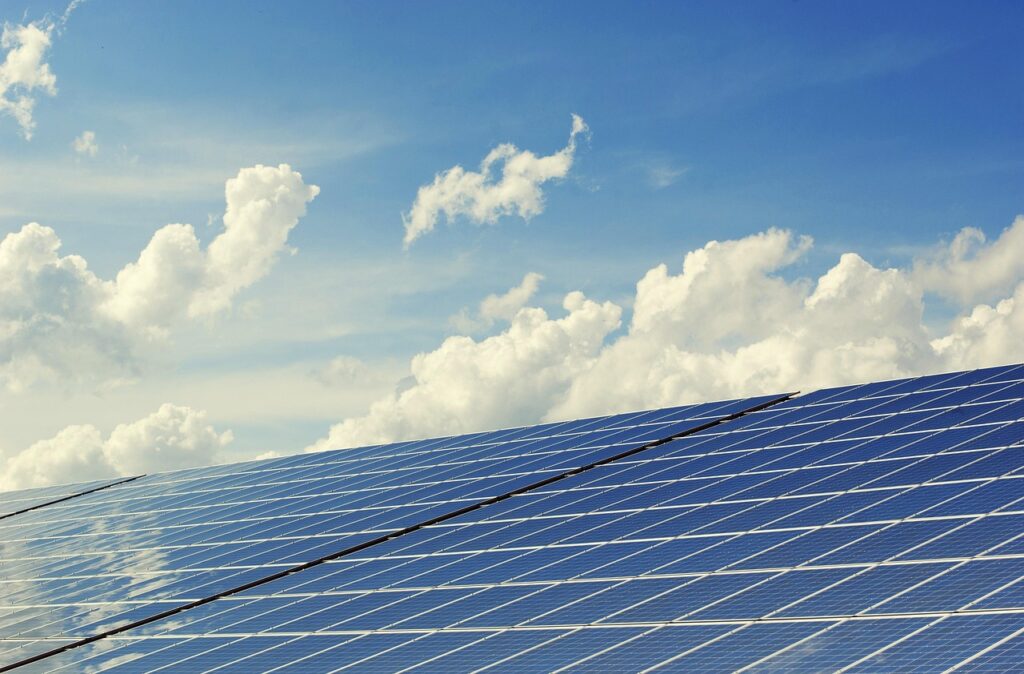
The Michigan agreement focuses on a diverse clean-energy mix. Google plans to use 1.6 GW of solar power, enough to supply around 300,000 homes. This will be supported by 400 MW of short-term energy storage and 50 MW of long-duration storage, which can provide power for days. The remaining 300 MW will come from unspecified additional clean resources, which may include wind, hydro, or nuclear energy.
Importantly, 350 MW of the total capacity will come from demand response. This means Google or its partners can reduce power use during peak times, helping to stabilize the grid. It remains unclear if Google will manage this internally or through third parties, but this shift indicates a move toward active grid management.
Central to this strategy is Google’s “Clean Transition Tariff,” a pricing model developed over the past year. Unlike traditional power-purchase agreements, this tariff allows Google to pay extra for specific clean-energy features, encouraging utilities to incorporate these resources into their long-term plans. This approach helps utilities invest in renewable and storage projects while aligning corporate needs with public grid development.
This approach helps utilities invest in renewable and storage projects while aligning corporate needs with public grid development.
The Economic Impact on Local Real Estate Markets
Data-center construction significantly impacts local economies. In Detroit’s suburbs, the addition of 2.7 GW of power is expected to spur development of industrial parks, logistics hubs, and office spaces to support the data center. Analysts predict this will lead to increased demand for commercial leases, higher property tax revenues, and more local construction jobs.
Additionally, Google’s $10 million Energy Impact Fund aims to lower utility bills through initiatives like home insulation and community efficiency upgrades. While this amount may seem small compared to the energy commitments, it serves as a public-private tool to enhance building efficiency and raise property values in surrounding neighborhoods.
You may also like
 Government & Policy
California AG Targets OpenAI Over Cybersecurity Risks
California AG Rob Bonta has issued a subpoena to OpenAI as part of an investigation into cybersecurity risks associated with its AI technology.
Read More →The Clean Transition Tariff also reduces risks for developers. By ensuring a premium price for clean resources, it lowers financing uncertainties for renewable projects, potentially opening up new land for solar and storage development and prompting municipalities to rezone areas for green infrastructure.
Job creation is another key benefit. The construction phase can employ hundreds of skilled workers, while ongoing operations will need staff for facility management, cybersecurity, and energy optimization. The demand-response aspect may also lead to new companies that provide flexibility services, creating a niche sector near the data center.
Future-Proofing Data Centers: A Model for sustainability
Google’s energy plan not only cuts carbon emissions but also strengthens its computing infrastructure. By combining 1.6 GW of solar with 400 MW of short-term and 50 MW of long-duration storage, Google can manage fluctuations in power supply. This reduces reliance on fossil-fuel plants, lowering operational costs and greenhouse gas emissions.
The demand-response feature enhances sustainability. During peak times, like heatwaves, Google can reduce its power use, helping utilities avoid using carbon-heavy generators. This flexibility benefits the grid and allows Google to negotiate better rates under its Clean Transition Tariff, as utilities gain a reliable partner for balancing supply and demand.
The construction phase can employ hundreds of skilled workers, while ongoing operations will need staff for facility management, cybersecurity, and energy optimization.
This strategy offers a model for other companies. Businesses that typically rely on long-term power-purchase agreements can now adopt a hybrid approach, combining contracted renewables with on-site storage and demand-response options. This aligns sustainability goals with economic benefits, as storage can take advantage of price differences and demand response can generate additional revenue.


You may also like
 Government & Policy
Goyal Meets US Trade Representative Greer on Proposed Trade Agreement
India's Commerce Minister Piyush Goyal and US Trade Representative Jamieson Greer held productive discussions on October 2, 2026, focusing on a proposed interim bilateral trade…
Read More →Looking forward, new technologies like hydrogen storage and AI for predicting energy needs could enhance Google’s strategy. The company’s $10 million fund for energy efficiency indicates a desire to influence both energy supply and demand. As U.S. utilities face decarbonization challenges, Google’s approach may set a standard, guiding the data-center industry toward a future where large computing demands align with a clean, resilient grid.
“`