Rapid urbanization collides with policy frameworks that favor growth over equity, leaving marginalized neighborhoods without essential services and voice. UN projections of 68 % urban residency by 2050 amplify the urgency for inclusive planning that can sustain both livability and social cohesion.
The structural shift toward megacity expansion is exposing entrenched inequities in how public space, transport, and housing are allocated. As cities chase economic metrics, the gap between affluent districts and underserved communities widens, threatening progress on SDG 11 and the broader Sustainable Development agenda. This analysis dissects the mechanisms, systemic repercussions, and stakeholder impacts, offering a forward‑looking view of how policy recalibration can reshape urban futures.
Framing the urban equity challenge
The surge toward 68 % urban dwellers by 2050, per United Nations forecasts, creates a pressure cooker for municipal governance. Historically, national urban policies have prioritized GDP‑linked development, sidelining social inclusion metrics. UN‑Habitat’s 2026 guide underscores that nations lacking socially inclusive frameworks experience higher rates of spatial segregation and reduced public service access. According to Career Ahead’s analysis of these policy trends, the bias toward growth translates into zoning decisions that concentrate affordable housing on city peripheries, extending commute times and limiting job access. The resulting disparity is not merely a planning oversight; it reflects a systemic reallocation of capital that entrenches privilege. By mapping policy intent against demographic shifts, the structural imbalance becomes evident: growth‑centric statutes inadvertently curtail the mobility and economic participation of low‑income residents.
Core mechanisms driving unequal access
Government policies deepen gaps in urban planning
Policy instruments such as zoning ordinances, land‑use incentives, and infrastructure funding formulas embed growth priorities into the urban fabric. These mechanisms favor high‑value development corridors, directing public investment toward commercial cores while neglecting peripheral neighborhoods. The UNDP’s 2026 report links this investment skew to a measurable lag in service provision—schools, health clinics, and transit stations—within low‑income districts. Moreover, participatory planning processes remain tokenistic; community consultations are often scheduled after key decisions, limiting genuine influence. The cumulative effect is a feedback loop: marginalized areas receive fewer resources, their socioeconomic indicators stagnate, and policymakers justify continued disinvestment. This structural dynamic explains why spatial inequality persists despite overarching commitments to inclusive growth.
“Public investment patterns that prioritize commercial cores deepen service gaps in low‑income neighborhoods.”
Core mechanisms driving unequal access
Government policies deepen gaps in urban planning
Policy instruments such as zoning ordinances, land‑use incentives, and infrastructure funding formulas embed growth priorities into the urban fabric.
The Bitchat application, created by Twitter co-founder Jack Dorsey, has been removed from the India Apple Store, raising significant questions about regulatory compliance and the…
When infrastructure and services cluster in affluent zones, the city’s overall resilience erodes. Disparate transit networks increase congestion and emissions, undermining climate targets embedded in SDG 11. Economic studies show that uneven access to quality education and health services depresses labor productivity, a drag on national competitiveness. Furthermore, social fragmentation fuels political polarization, reducing the legitimacy of municipal authorities and complicating crisis response. The compounded risk is a cityscape where growth metrics mask underlying fragility, exposing municipalities to heightened vulnerability from both economic shocks and climate events.
Human capital and stakeholder outcomes
Government policies deepen gaps in urban planning
The unequal planning paradigm reallocates career capital away from disadvantaged groups, limiting pathways to upward mobility. Residents of under‑served districts face longer commutes, restricting access to higher‑wage jobs and professional networks. Employers, in turn, encounter talent shortages in proximity to growth hubs, inflating recruitment costs. Community organizations that attempt to bridge these gaps often operate with constrained funding, reducing their capacity to influence policy.
Career Ahead’s framework identifies community engagement as a pivotal lever: when local groups secure formal seats on planning boards, project outcomes shift toward mixed‑income developments and equitable service distribution, enhancing both social equity and economic dynamism.
Trajectory over the next three to five years
If municipalities realign funding formulas to weight social equity alongside economic returns, the next five years could see a measurable reduction in spatial disparity. Emerging best‑practice models—such as inclusive zoning mandates adopted in several European capitals—forecast a 10‑15 % increase in affordable housing units within city centers by 2030. Parallelly, integrating data‑driven community feedback platforms promises more responsive service allocation, potentially cutting average commute times for low‑income residents by several minutes. However, without legislative commitment, the entrenched growth bias will likely persist, perpetuating the cycle of exclusion.
Closing: Recalibrating urban policy to balance growth with equity will be decisive for meeting SDG 11 and sustaining resilient, inclusive cities as the urban share of the global population climbs.
However, without legislative commitment, the entrenched growth bias will likely persist, perpetuating the cycle of exclusion.
[Insight 1]: Growth‑centric policy frameworks channel public investment into affluent districts, systematically widening service gaps for low‑income neighborhoods and undermining citywide resilience.
[Insight 2]: Embedding community representation in planning bodies redirects capital toward mixed‑income development, unlocking career capital and improving labor market efficiency.
[Insight 3]: Aligning funding formulas with equity metrics can shrink spatial inequality by up to 15 % within five years, accelerating progress on SDG 11.
[Insight 3]: Aligning funding formulas with equity metrics can shrink spatial inequality by up to 15 % within five years, accelerating progress on SDG 11.
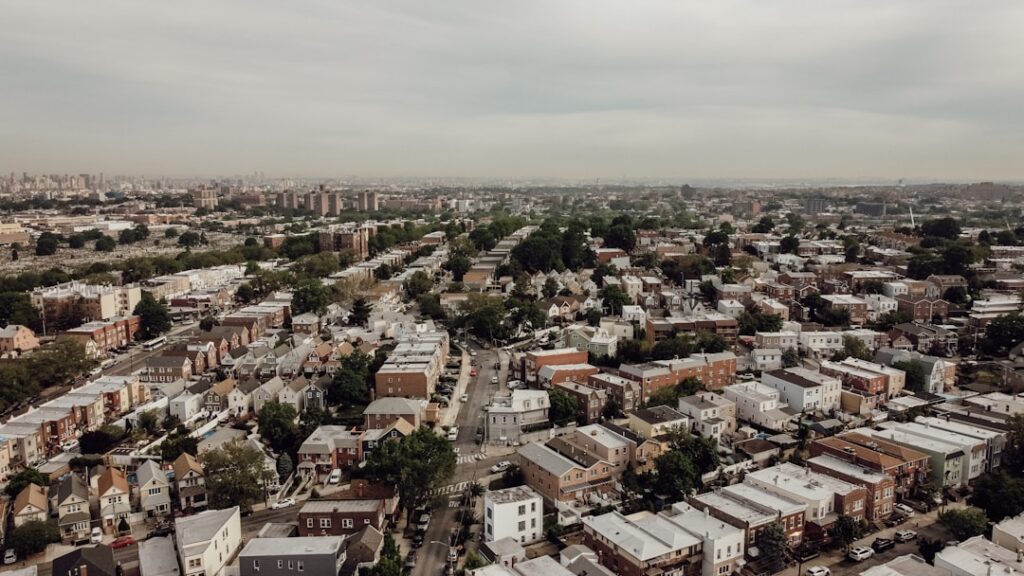
Urban planning prioritizes affluent areas: Existing policies often favor affluent neighborhoods with more resources, perpetuating inequality in access to quality public spaces, green areas, and community facilities, exacerbating existing socio-economic disparities.
Community engagement is a missing link: The lack of inclusive community engagement in urban planning processes hinders the development of tailored solutions that address the unique needs of diverse neighborhoods, leading to ineffective policy implementation and unsatisfactory community outcomes.





Government & Policy
Government & Policy