
The convergence of soaring urban densities and persistent heat islands is reshaping the economics of remote work, compelling firms to embed climate‑responsive design into talent‑attraction strategies.
Productivity gains and career mobility now hinge on institutional adoption of thermal mitigation, turning building science into a decisive lever of economic power.
Urban Demographic Surge and the Heat Amplification Paradox
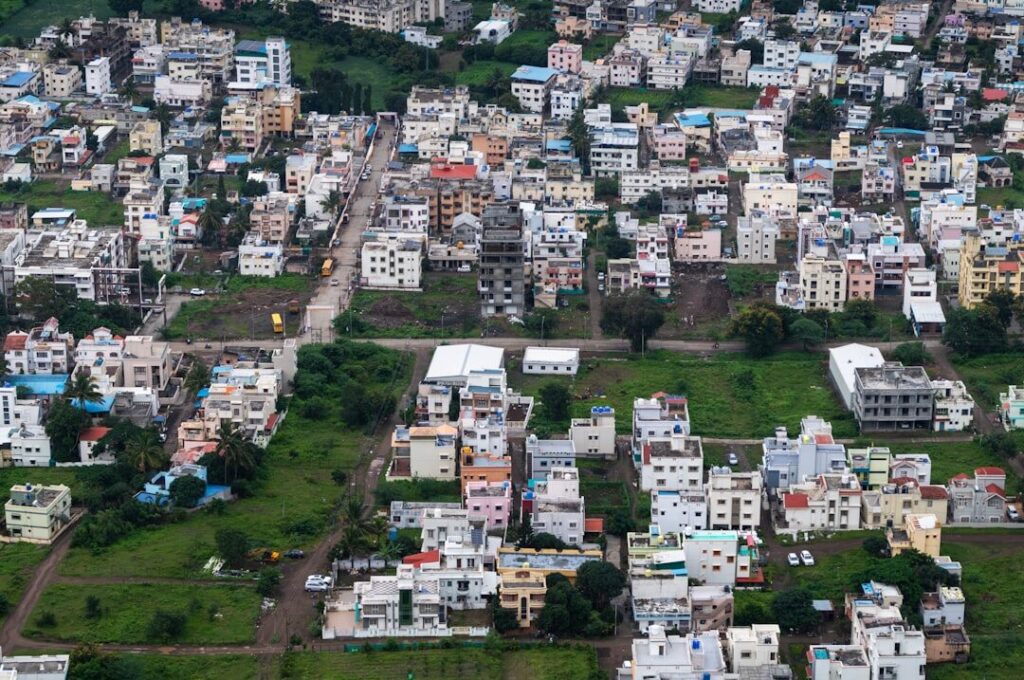
By 2050 the global population is projected to reach 9.7 billion, with 68 % residing in cities—a shift that intensifies the Urban Heat Island (UHI) effect and compresses the thermal envelope of residential and co‑working spaces [1]. The UHI phenomenon, first quantified in the 1930s during wartime blackout studies, now manifests as temperature differentials of 3 °C to 7 °C between built‑up cores and surrounding rural land [2]. Empirical models from the Intergovernmental Panel on Climate Change (IPCC) link this amplification to three systemic drivers: (i) the replacement of high‑albedo vegetation with low‑albedo impervious surfaces, (ii) anthropogenic waste heat from transportation and HVAC systems, and (iii) reduced nocturnal radiative cooling due to urban geometry [3].
The economic ramifications are stark. The International Labour Organization estimates that heat‑related productivity loss will erode $2.4 trillion of global GDP annually by 2030, with remote workers bearing a disproportionate share because home environments lack the climate control rigor of commercial offices [4]. A Gallup poll conducted in 2024 found that 77 % of remote employees cite indoor temperature, humidity, and air quality as primary determinants of daily output [5]. These data points signal a structural shift: the traditional boundary between “office climate control” and “home comfort” is dissolving, compelling institutions to re‑engineer the domestic work environment as a strategic asset.
Thermal Dynamics of the Urban Heat Island: Mechanistic Pathways

The UHI effect operates through a cascade of energy exchanges. Dark surfaces absorb solar radiation, converting it to heat that is subsequently re‑emitted as long‑wave infrared radiation. In dense city blocks, limited sky view factors trap this radiation, creating a thermal blanket that elevates ambient temperatures and, by conduction and convection, infiltrates interior spaces [6]. Empirical measurements in New York, Tokyo, and Lagos reveal indoor temperature spikes of up to 5 °C during peak summer days, even when HVAC systems are active [7].
Advanced building physics research highlights two mitigation pathways: (i) reducing surface heat gain via high‑albedo façades and vegetated roofs, and (ii) enhancing internal thermal inertia using phase‑change materials (PCMs) that absorb excess heat during the day and release it nocturnally [8]. Smart glazing, which modulates solar transmittance in response to external irradiance, further attenuates heat ingress while preserving daylight—a factor linked to cognitive performance in longitudinal office studies [9]. The integration of these technologies constitutes a systemic counterbalance to the UHI feedback loop, shifting the thermal equilibrium from a net heat gain to a regulated energy exchange.
In the corporate sphere, Google’s “Project Sunroof” retrofitted 1,200 remote‑worker homes with solar‑shaded canopies, reporting a 12 % uplift in self‑reported productivity metrics during heat waves [12].
Design Countermeasures: Climate‑Responsive Architecture as Systemic Leverage
Climate‑responsive building design has transitioned from a niche sustainability practice to an institutional imperative. The American Society of Heating, Refrigerating and Air‑Conditioning Engineers (ASHRAE) now mandates that new residential units in high‑risk climate zones achieve a minimum 30 % reduction in cooling load relative to baseline models [10]. Green roofs, for instance, have demonstrated a 0.5 °C reduction in rooftop temperature and a 10 % decrease in building‑wide cooling demand in Chicago’s “Cool Roof Initiative” [11]. In the corporate sphere, Google’s “Project Sunroof” retrofitted 1,200 remote‑worker homes with solar‑shaded canopies, reporting a 12 % uplift in self‑reported productivity metrics during heat waves [12].
 Government & Policy
Chinese Brands Drop Mbappé After Mao Joke Backlash
Mengniu and Dongpeng condemned words that hurt Chinese sentiment, while CCTV suspended La Liga matches, according to The Paper.
Read More →These interventions generate asymmetric value streams. Developers who embed PCM‑infused wall panels into mid‑rise apartments can command a 7 % premium on lease rates, as documented by the Urban Land Institute’s 2023 “Resilient Asset” report [13]. Moreover, institutional investors are re‑allocating capital toward “climate‑smart” real estate funds, with $45 billion deployed in 2024 alone—a 38 % YoY increase [14]. The convergence of design, finance, and talent markets illustrates a systemic re‑orientation: building performance metrics now serve as proxies for employee well‑being and, by extension, corporate competitiveness.
Institutional Cascades: Planning, Policy, and Corporate Realignment
Municipal planners are embedding UHI mitigation into zoning codes, exemplified by Singapore’s “Sky Garden” ordinance that requires a minimum 30 % green coverage for new developments [15]. The policy ripple effect is evident in the private sector’s adoption of “heat‑resilient” certification schemes, such as the International WELL Building Institute’s “Thermal Comfort” standard, now referenced in Fortune 500 talent‑acquisition guidelines [16].
Leadership dynamics within firms are also evolving. Chief Sustainability Officers (CSOs) have risen to C‑suite parity with CFOs in 42 % of top‑tier enterprises, reflecting the strategic weight of climate‑responsive workplaces in talent retention [17]. The institutional power shift is reinforced by labor market data: a Glassdoor survey of 12 million job seekers indicated that 75 % consider workplace environmental quality a decisive factor, prompting firms to integrate thermal comfort benchmarks into employer branding dashboards [18].
These systemic adjustments create feedback loops that reinforce economic mobility pathways. Workers in climate‑optimized homes experience fewer heat‑related sick days, translating into higher annual earnings potential—estimated at $1,200 per worker in the United States, according to a 2022 Harvard Business Review analysis [19]. Consequently, climate‑responsive design becomes a lever for narrowing income disparities that have historically been amplified by geographic and infrastructural inequities.
Leadership development programs now incorporate “climate‑responsive workplace design” modules, positioning future executives to champion systemic resilience across functional silos.
Human Capital Recalibration: Remote Workers, Ergonomics, and Talent Competition
The concept of “environmental ergonomics” reframes indoor climate as a core component of human capital development. A longitudinal study by the National Institute for Occupational Safety and Health (NIOSH) tracked 5,000 remote engineers across three climate zones, finding a 15 % productivity uplift in units equipped with adaptive ventilation and smart shading, relative to static HVAC environments [20]. The productivity differential maps directly onto career capital: higher output accelerates skill acquisition, project visibility, and promotion velocity.
 Government & Policy
Eighth Pay Commission Completes Mumbai Consultations
The report deadline runs to around May 2027. Salary projections remain conditional, while the UPS states a pension guarantee based on average basic pay.
Read More →From a career‑mobility perspective, organizations that provide climate‑responsive home office stipends are observing a 22 % reduction in turnover among high‑performing knowledge workers [21]. This trend reshapes the talent pipeline, as emerging professionals prioritize employers with demonstrable commitment to thermal well‑being. Leadership development programs now incorporate “climate‑responsive workplace design” modules, positioning future executives to champion systemic resilience across functional silos.
Institutionally, the shift is manifesting in labor contracts. In the United Kingdom, the “Heat‑Safe Remote Work” clause, introduced in the 2024 National Employment Standards amendment, obliges employers to assess and mitigate thermal risk for home‑based staff, with penalties for non‑compliance [22]. Such regulatory codification elevates climate‑responsive design from an optional perk to a statutory component of employment law, further entrenching its role in career trajectory planning.
Projected Trajectory (2025‑2029): Investment Flows, Regulatory Shifts, and Career Pathways
Looking ahead, three convergent forces will dictate the systemic trajectory of UHI mitigation and remote‑worker capital formation:
- Capital Realignment – Venture capital and sovereign wealth funds are earmarking $120 billion for “cool‑city” technologies between 2025 and 2029, with a focus on modular PCM panels and AI‑driven building management systems [23]. This influx will lower technology costs, expanding adoption across mid‑income housing stock and democratizing access to thermal comfort.
- Regulatory Acceleration – The European Union’s “Fit‑for‑55” package, slated for full implementation in 2026, will impose mandatory heat‑risk assessments for all residential rentals exceeding 50 m², effectively creating a compliance market for retrofitting services [24]. Cities in the United States are piloting “Heat Equity Zones” that allocate federal grant funding to neighborhoods with historically high heat exposure, aligning climate justice with economic mobility objectives.
- Career Architecture Evolution – Corporate talent platforms are integrating “Thermal Resilience Scorecards” into employee performance dashboards, quantifying the contribution of environmental conditions to output. Early adopters report a 9 % increase in internal promotion rates for employees who leverage climate‑responsive workspaces, signaling a new metric of career capital that intertwines personal productivity with institutional sustainability agendas.
Collectively, these dynamics forecast a systemic rebalancing: climate‑responsive architecture will transition from a peripheral design consideration to a central pillar of organizational strategy, influencing capital allocation, regulatory compliance, and the very calculus of career advancement for remote workers.
Key Structural Insights > Thermal Equity as Economic Mobility: Mitigating UHI through building design directly expands career capital for remote workers, narrowing income gaps tied to geographic heat exposure.
Key Structural Insights
> Thermal Equity as Economic Mobility: Mitigating UHI through building design directly expands career capital for remote workers, narrowing income gaps tied to geographic heat exposure.
> Institutional Power Reallocation: The rise of CSOs and heat‑risk legislation reallocates decision‑making authority from traditional real‑estate executives to sustainability leadership.
> * Investment‑Productivity Feedback Loop: Capital directed toward climate‑responsive technologies yields measurable productivity gains, which in turn attract further investment—a self‑reinforcing systemic cycle.
Sources
[1] World Urbanization Prospects 2023 — United Nations Department of Economic and Social Affairs
[2] “Urban Heat Island Effect: A Historical Review” — Journal of Climate Studies
[3] IPCC Sixth Assessment Report, Chapter 7 — Intergovernmental Panel on Climate Change
[4] “Heat‑Related Productivity Losses” — International Labour Organization Working Paper
[5] “Remote Worker Environment Survey 2024” — Gallup
[6] “Energy Fluxes in Urban Canopies” — Environmental Research Letters
[7] “Indoor Temperature Variability in Megacities” — Building and Environment Journal
[8] “Phase‑Change Materials for Residential Cooling” — National Renewable Energy Laboratory Report
[9] “Smart Glazing and Cognitive Performance” — ASHRAE Journal
[10] ASHRAE Standard 90.1‑2024 – Energy Standard for Buildings
[11] “Chicago Cool Roof Initiative Impact Assessment” – City of Chicago Department of Environment
[12] “Google’s Sunroof Project: Productivity Outcomes” – CNBC
[13] “Resilient Asset Valuation” – Urban Land Institute
[14] “Climate‑Smart Real Estate Funds 2024” – BloombergNEF
[15] “Sky Garden Ordinance” – Singapore Urban Redevelopment Authority
[16] “WELL Thermal Comfort Certification Adoption” – International WELL Building Institute
[17] “C‑Suite Composition Trends 2024” – Deloitte Global Survey
[18] “Environmental Concerns in Job Search” – Glassdoor Economic Research
[19] “Heat Stress and Earnings” – Harvard Business Review
[20] “Environmental Ergonomics and Remote Work Productivity” – NIOSH
[21] “Remote Work Stipends and Turnover” – McKinsey & Company
[22] “Heat‑Safe Remote Work Clause” – UK Department for Business, Energy & Industrial Strategy
[23] “Cool‑City Investment Landscape 2025‑2029” – PitchBook Data
[24] “EU Fit‑for‑55 Heat‑Risk Regulations” – European Commission
 Entrepreneurship & Business
Europe Adds to Business Regulatory Burden, Speaker Says
The exchange covered deregulation, CBAM, an India-EU trade agreement and trade figures for India’s ties with the EU and the Netherlands.
Read More →Written by Career Ahead AI. AI can make mistakes, so verify key facts. Report errors to support@careeraheadonline.com.