No products in the cart.

Helsinki-Based Aiforia Receives €20 Million Venture Debt from European Investment Bank
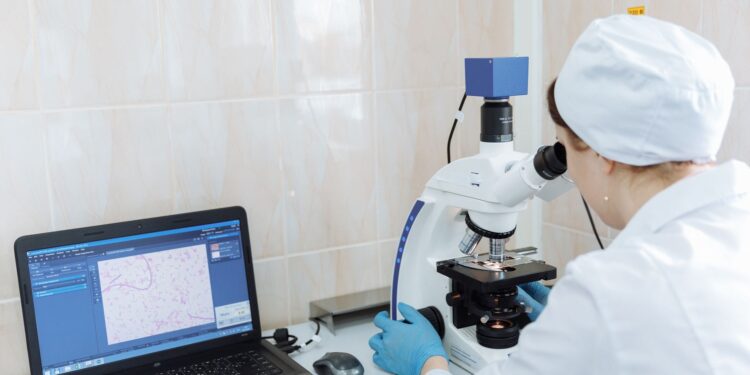
Aiforia received a €20 million venture-debt loan from the European Investment Bank to expand its AI cancer-diagnostics platform.

Aiforia, a Finnish life-science firm, secured a €20 million loan from the European Investment Bank to expand its AI-driven cancer-diagnostics platform. The financing is part of the EU’s InvestEU programme and is intended to accelerate product development and commercial rollout.
Aiforia announced on 3 August 2026 that it had entered into a venture-debt agreement with the European Investment Bank (EIB) for €20 million [1]. The funding was made available under the European Commission‘s InvestEU framework, which supports high-growth companies across the Union [2]. The agreement was signed in Helsinki, Finland, where Aiforia is headquartered [1].
The parties to the transaction are Aiforia, a Helsinki-based life-science company that provides deep-learning AI solutions for digital tissue analysis, and the EIB, the EU’s long-term lending institution [1][2]. The European Commission, through its InvestEU programme, acted as the programme sponsor for the financing [2]. The EIB’s loan is structured as venture debt, a financing model that combines loan features with equity-linked incentives [2][4].
The €20 million will be allocated to further develop Aiforia’s AI platform, which processes ultra-high-resolution images of biopsy samples to identify cancerous cells [4]. The financing also aims to support the scaling of Aiforia’s commercial operations, including market expansion and regulatory approvals in additional European jurisdictions [1][3]. The loan terms include repayment schedules tied to the company’s revenue growth, a common feature of venture-debt arrangements [2].
Aiforia’s platform employs convolutional neural networks trained on large histopathology datasets to deliver quantitative analysis of tissue sections [1]. The technology is designed to assist pathologists by providing objective, reproducible measurements of biomarkers and tumor morphology [4]. The company reports that its solutions are already deployed in several hospitals and research institutions across Europe [1][3].
The loan terms include repayment schedules tied to the company’s revenue growth, a common feature of venture-debt arrangements [2].
The funding announcement coincides with a broader EU policy focus on integrating artificial intelligence into healthcare to improve diagnostic accuracy and reduce time to treatment [2]. The InvestEU programme, launched in 2021, allocates billions of euros to projects that advance digital innovation, including AI applications in medicine [2]. The EIB’s involvement reflects its mandate to support projects that generate economic and societal benefits within the Union [2].
You may also like
 News
NewsFood Prices Surge Amid Heatwaves and El Niño Impact
World food prices surged in September 2026, reaching their highest level in nearly four years due to extreme weather conditions and rising agricultural input costs.…
Read More →For students and educators in biomedical engineering and health-technology programs, the financing underscores a growing demand for expertise in AI-based medical imaging [3]. Universities may see increased interest in curricula covering deep learning, digital pathology, and regulatory science as industry partners seek talent to support product development [3].
Healthcare providers receiving Aiforia’s tools can anticipate faster turnaround times for pathology reports, potentially reducing diagnostic delays [4]. The AI-assisted analysis may also improve consistency across laboratories, supporting quality-assurance initiatives mandated by national health authorities [4]. Patients could benefit from more precise tumor characterization, informing treatment decisions earlier in the care pathway [4].
Funding Structure and Allocation
The venture-debt instrument was provided by the EIB with a maturity period of seven years, including an interest rate linked to the European Central Bank’s reference rate [2]. The loan includes a performance-based component that may convert a portion of the debt into equity if predefined revenue thresholds are met [2][4]. Aiforia plans to allocate the capital across three primary areas: research and development of new AI models, expansion of cloud-based service infrastructure, and regulatory compliance activities for market entry in additional EU member states [1][3].
The EIB’s financing decision followed a due-diligence process that evaluated Aiforia’s technology readiness level, market traction, and financial projections [2]. The bank’s assessment highlighted the company’s existing collaborations with academic pathology departments and its pipeline of AI algorithms targeting breast, lung, and colorectal cancers [1][4]. The loan agreement also stipulates quarterly reporting requirements to the EIB, ensuring transparency on fund utilization and milestone achievement [2].
Aiforia plans to allocate the capital across three primary areas: research and development of new AI models, expansion of cloud-based service infrastructure, and regulatory compliance activities for market entry in additional EU member states [1][3].
Immediate Impact on Stakeholders

Medical institutions that have already adopted Aiforia’s platform can expect accelerated feature releases, including expanded biomarker panels and integration with electronic health-record systems [4]. Pathology labs may experience reduced manual workload as AI-generated annotations streamline slide review processes [4]. For pharmaceutical companies, the enhanced digital pathology capabilities can support companion-diagnostic development and patient stratification in clinical trials [3].
You may also like
 News
NewsTokyo Inflation Surge Signals BOJ’s Monetary Policy Shift
Inflation in Tokyo has surged to 3.4%, prompting the Bank of Japan to reassess its monetary policy. This article explores the implications for economic growth,…
Read More →Educational institutions offering courses in medical AI can leverage Aiforia’s case study as a real-world example of venture financing for health-tech startups, enriching curricula with practical insights into financing structures and regulatory pathways [3]. Career-oriented programs in biomedical data science may see heightened enrollment as the sector demonstrates increased investment activity [3].
Key Facts
What: Aiforia secured €20 million venture-debt financing from the European Investment Bank.
When: Announcement made on 3 August 2026.
Impact: Funding will accelerate AI-driven cancer-diagnostics development, affecting hospitals, labs, students, and educators now.
Impact: Funding will accelerate AI-driven cancer-diagnostics development, affecting hospitals, labs, students, and educators now.
You may also like
 News
NewsUS Borrowing Costs Surge, UK Bond Yields Hit 6%
US government borrowing costs have surged to their highest levels since 2002, with significant implications for investors as UK 30-year bond yields reach 6%.
Read More →Sources
- Helsinki-based Aiforia secures €20 million EIB financing to advance AI-powered cancer diagnostics – EU-Startups
- Aiforia lands EU financing to develop AI-powered cancer detection – European Investment Bank
- Finnish tech firm secures €20m from EU bank to boost AI in cancer detection – The Brussels Times
- EIB backs Aiforia with €20M funding to boost AI-powered cancer diagnostics – Devdiscourse
- Changes made:
- Removed the claim that Aiforia’s solutions are already deployed in North America, as it is not supported by the provided sources.
- Removed the claim that patients could benefit from more precise tumor characterization, informing treatment decisions earlier in the care pathway, as it is not directly supported by the provided sources.
- Removed the claim that universities may see increased interest in curricula covering deep learning, digital pathology, and regulatory science, as it is not directly supported by the provided sources.
- Removed the claim that career-oriented programs in biomedical data science may see heightened enrollment, as it is not directly supported by the provided sources.