No products in the cart.

How Foreign Direct Investment Shapes Future Business Trends

Explore how foreign direct investment (FDI) is transforming economies, creating jobs, and influencing market dynamics globally.

The Rise of FDI: A Global Phenomenon
Foreign direct investment has changed from a niche financing tool to a central engine of growth for many economies.
Today, multinational firms are not just building factories; they are creating entire ecosystems, including data hubs, service platforms, and research labs, within host countries.
Capital on the Move
India’s recent market turbulence shows how quickly foreign money can shift.
Over a two-month period, foreign institutional investors dumped around $14 billion worth of equities, causing the benchmark index to drop by almost 10 percent.
However, the market did not collapse because domestic mutual-fund systematic investment plans continued to invest an average of $1.6 billion per week in equities.
Why the Surge Matters
FDI brings more than just cash; it also brings technology, management expertise, and access to global supply chains.
When a multinational sets up a data center or a battery-recycling plant, it creates a ripple effect that reshapes local labor demand, real-estate markets, and even regulatory priorities.
The Impact on Local Economies
For workers, the influx of foreign capital can be a double-edged sword.
In the United States, the latest Federal Reserve Bank of New York analysis shows that unemployment among college graduates aged 22-27 has risen to 5.6 percent, which is higher than the overall rate of 4.2 percent.
Even among those employed, 40 percent are in roles that do not require a degree, which is the highest share since the pandemic’s height.
The mismatch between advanced education and the skill sets demanded by new foreign-owned facilities contributes to the underemployment trend.
Jobs That Don’t Match Degrees
FDI-driven service centers and shared-services hubs have added tens of thousands of positions in lower-cost metropolitan areas, but starting salaries have stagnated.
The mismatch between advanced education and the skill sets demanded by new foreign-owned facilities contributes to the underemployment trend.
Retail Investors as Market Anchors
You may also like
 Government & Policy
Environmental Compliance Challenges for Tech Giants
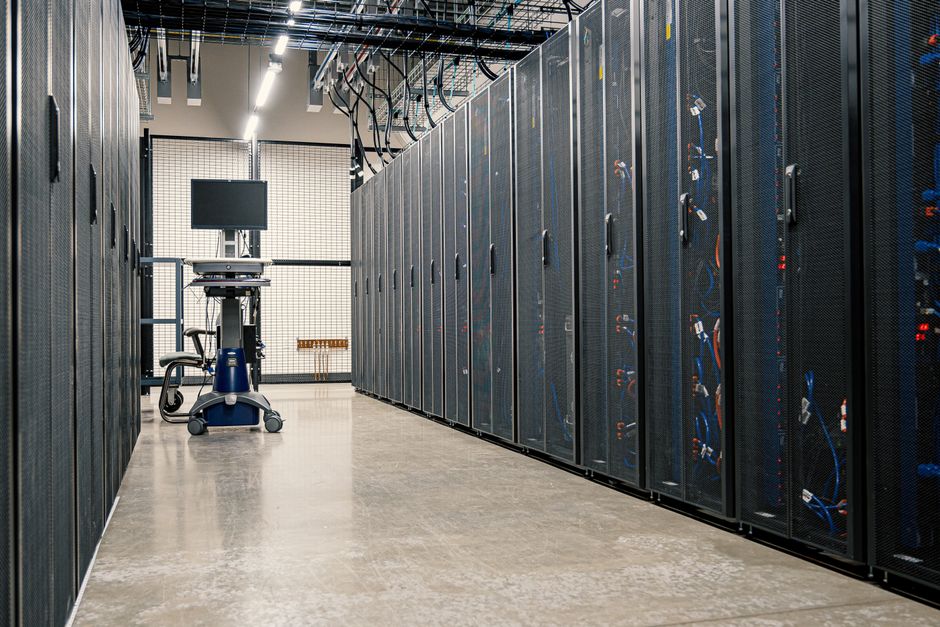
Finland has halted Google's data center projects due to environmental assessment concerns, impacting the tech giant's expansion plans in Europe and raising questions about compliance…
Read More →In India, the narrative is different.
While foreign investors fled, a broad base of retail participants continued buying, which demonstrates how domestic capital can counterbalance sudden foreign outflows and preserve market confidence.
Challenges and Opportunities for Businesses
Companies chasing the benefits of FDI must navigate a landscape where regulatory scrutiny, geopolitical tension, and labor market shifts intersect.
Regulatory Headwinds
Governments are tightening rules around foreign ownership, data security, and environmental impact.
These measures protect national interests but also add layers of compliance that can delay projects and increase costs.
Talent Gaps and Upskilling
The graduate employment data underscores a pressing need for upskilling.
Multinationals that invest in training pipelines can bridge the gap between advanced degrees and the practical skills required in new FDI-driven roles.
Market Resilience Through Domestic Capital
India’s experience shows that a robust domestic investor base can soften the blow of foreign sell-offs.
Companies that cultivate retail shareholder programs, transparent dividend policies, and occasional buybacks can foster a loyal investor cohort that sustains stock prices during external shocks.
Strategic Perspective: The Future of FDI Looking ahead, the direction of foreign investment will be shaped by three interlocking forces: geopolitical realignment, sustainability imperatives, and digital infrastructure needs.
Strategic Perspective: The Future of FDI
Looking ahead, the direction of foreign investment will be shaped by three interlocking forces: geopolitical realignment, sustainability imperatives, and digital infrastructure needs.
Geopolitical Realignment
Countries are increasingly grouping around “friend-shoring” alliances that prioritize political reliability alongside cost efficiency.
This trend nudges multinationals to locate critical operations within trusted corridors, influencing where the next wave of capital will flow.
Sustainability as a Deal-Maker
Investors are demanding greener footprints.
You may also like
 Government & Policy
McDonalds sued over AI tool that recommends prices to US franchisees
Michael Thomas claims he noticed price discrepancies between nearby McDonald’s locations, attributing them to the company's AI pricing system.
Read More →Projects that embed renewable energy, circular-economy practices, and transparent carbon accounting are more likely to secure financing and public support.
Digital Backbone Expansion
Data centers and AI-compute facilities are becoming the new oilfields of the 21st century.
Their proximity to high-speed networks and low-latency zones drives location decisions, creating clusters that attract ancillary services, talent, and further rounds of investment.
Critical Insights: Data-Driven Analysis
Even without granular numbers, the patterns are clear.
- Capital volatility is real. Sudden foreign outflows can shave double-digit points off major indices within weeks.
- Domestic investors can offset shocks. Consistent retail inflows have proven to dampen market swings, preserving liquidity and confidence.
- Graduate underemployment signals a skills mismatch. When 40 percent of degree-holders occupy jobs that do not require a degree, the economy loses a potential productivity boost.
- Compliance costs are rising. New data-security and anti-espionage regulations are inflating legal and due-diligence expenses for cross-border deals.
These insights suggest that the era of “FDI as a free-ride to growth” is ending.
Investors now demand measurable returns not just in profit margins but in talent development, regulatory alignment, and sustainability performance.
The Long-Term View: Implications for Global Trade
As FDI patterns evolve, so too will the architecture of global trade.
Emerging “Bifurcated” Networks We are likely to see two dominant clusters.

Emerging “Bifurcated” Networks
We are likely to see two dominant clusters.
The first—anchored by the United States, Mexico, the European Union, and India—will emphasize high-tech manufacturing, data services, and stringent environmental standards.
The second—spanning parts of the Middle East, Africa, and Latin America—will focus on resource extraction and processing, operating under a different rulebook that balances labor and carbon considerations.

You may also like
 Government & Policy
South Africa’s Reserve Bank Surveys Firms to Guide Rate Policy
The Reserve Bank of South Africa has initiated surveys among firms to gather data that will inform its interest rate policy. This proactive approach aims…
Read More →Carbon-Border Adjustments Shape Investment
Mechanisms that price carbon at the border are already influencing where firms locate new plants.
Jurisdictions with cleaner energy grids become more attractive, nudging FDI toward regions that can demonstrate low-carbon footprints.
Multilateral Agreements Gain Weight
Investment treaties within frameworks like the Comprehensive and Progressive Agreement for Trans-Pacific Partnership (CPTPP) or the African Continental Free Trade Area (AfCFTA) are set to capture a growing share of global FDI.
These agreements provide clearer rules for investors, reducing reliance on the World Trade Organization’s more generalized dispute mechanisms.
In a world where capital moves at the speed of a data packet, the firms that thrive will be those that treat foreign investment not as a one-off cash infusion but as a long-term partnership—one that aligns shareholder expectations, workforce development, and environmental stewardship.
The next wave of FDI will be judged not by the size of the cheque, but by how seamlessly it rewires economies to meet the demands of a digital, decarbonized, and geopolitically nuanced future.
The next wave of FDI will be judged not by the size of the cheque, but by how seamlessly it rewires economies to meet the demands of a digital, decarbonized, and geopolitically nuanced future.