No products in the cart.

Human-AI Collaboration Redefines Workplace Dynamics

Explore practical strategies for aligning tasks, governance, metrics, risk mitigation, and skill development to maximize human‑AI collaboration while safeguarding ethical standards.

Why does it matter now? In 2026 the conversation has shifted from “Will machines replace human workers?” to how we can weave artificial intelligence into everyday decision‑making without eroding the very strengths that make humans indispensable. Leaders who grasp this transition can unlock productivity gains while safeguarding ethical standards, and the questions that follow cut to the heart of that challenge.
How should leaders decide which tasks belong to AI versus humans?
The first step is to map work onto the Augmentation‑Automation Continuum (AAC). Routine, high‑volume operations—data entry, basic triage, inventory reconciliation—sit at the automation end, where AI can outperform humans in speed and consistency. Tasks that demand judgment, empathy, or creative synthesis—client negotiations, strategic scenario planning, crisis communication—remain on the human side of the spectrum. By positioning each activity along this continuum, leaders create a clear visual of where AI adds value and where human expertise must lead.
A practical way to apply this mapping is to conduct a “symbiosis audit” of existing workflows. Teams list every step of a process, then annotate whether the step is rule‑based, data‑intensive, or value‑driven. Steps flagged as rule‑based become candidates for AI augmentation; those marked value‑driven stay human‑centric. This audit surfaces hidden dependencies and prevents the common mistake of automating a step that later proves to require nuanced interpretation.
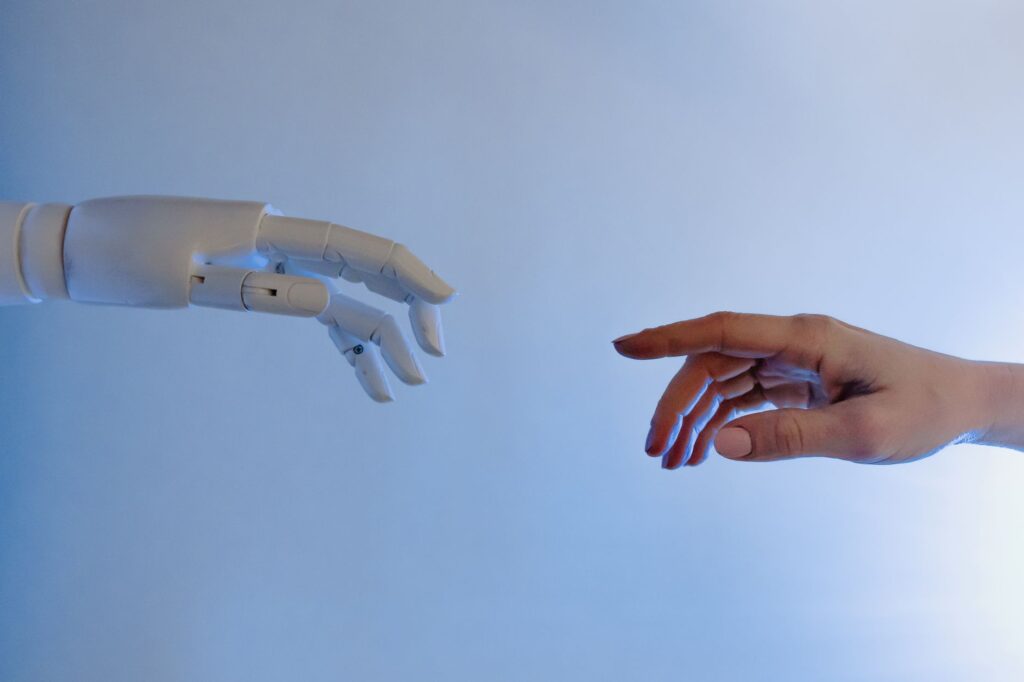
Our view is that the decision is no longer binary. It is about designing a partnership where AI handles the “how” and humans steer the “why.” As Gerald Martinetz notes, “But in 2026, that narrative is no longer relevant.” The next era of enterprise performance isn’t AI or humans. It’s humans + AI, working in symbiosis. Human‑AI symbiosis is not about delegating everything to a machine, but about collaboration.
What governance practices keep AI decisions transparent and accountable?
Transparency begins with explainable models. When an AI recommendation surfaces—say, a credit‑risk score—there must be a concise rationale that a non‑technical manager can read. Embedding model‑explainability dashboards into everyday tools ensures that the decision trail is visible at the point of action, not buried in a data‑science notebook.
When an AI recommendation surfaces—say, a credit‑risk score—there must be a concise rationale that a non‑technical manager can read.
Accountability is reinforced through the Human‑AI Symbiosis Model (HASM). HASM defines three layers of oversight: (1) algorithmic validation, where data scientists test for bias and drift; (2) operational review, where line managers certify that AI outputs align with business policies; and (3) ethical audit, where an independent board evaluates long‑term societal impact. By institutionalizing these layers, organizations create a safety net that catches both technical errors and value misalignments before they affect customers or employees.
Our view is that governance cannot be an afterthought. In our analysis, firms that embed explainability into the design phase see a reduction in post‑deployment compliance incidents.
Which metrics actually capture the value of a human‑AI partnership?
Traditional productivity metrics—units per hour, cost per transaction—miss the nuanced benefits of collaboration. Instead, we recommend a blended scorecard that combines efficiency gains with human‑centric outcomes. Two concrete measures have proven insightful: (a) the Augmented Output Ratio, which compares the volume of work completed with AI assistance to the same work done unaided; and (b) the Decision Quality Index, which surveys stakeholder confidence in AI‑augmented decisions.
When we examined AI implementations, the Augmented Output Ratio indicated a boost in throughput. Meanwhile, organizations that tracked the Decision Quality Index reported an increase in stakeholder satisfaction after introducing transparent AI cues.
How can organizations mitigate bias and displacement risks while embracing AI?
Bias mitigation starts with diverse training data and rigorous bias‑testing pipelines. Teams should adopt a “bias‑first” checklist that flags protected attributes before model training begins, and then run counterfactual simulations to ensure equitable outcomes across demographic groups. The process must be documented and revisited regularly, as data drift can reintroduce hidden biases over time.
Displacement concerns are best addressed through a reskilling roadmap anchored in the Collaborative Intelligence Maturity (CIM) framework. CIM outlines a path for employees to evolve alongside AI. By aligning learning investments with the stage an employee occupies, firms preserve morale and turn potential job loss into an opportunity for higher‑order contribution.
Teams should adopt a “bias‑first” checklist that flags protected attributes before model training begins, and then run counterfactual simulations to ensure equitable outcomes across demographic groups.
What skills will professionals need to thrive in a symbiotic environment?
The emerging talent profile blends technical fluency with human‑centered design. Core competencies include prompt engineering, data‑interpretation literacy, and the ability to translate AI outputs into strategic narratives. Equally critical are soft skills: empathy, ethical reasoning, and the capacity to question algorithmic recommendations. Professionals who can navigate both domains become the “bridge builders” that sustain the Human‑AI Symbiosis Model.
To cultivate these bridge builders, organizations should embed interdisciplinary project teams that pair data scientists with domain experts from day one. This structure not only accelerates learning but also embeds a culture where AI is seen as a teammate rather than a tool.
Human‑AI collaboration is no longer a futuristic experiment; it is the operational reality reshaping every sector. By answering these questions—task allocation, governance, measurement, risk mitigation, and skill development—leaders can steer their organizations toward a future where humans and machines amplify each other’s strengths. The real challenge now is not whether AI will be part of the workplace, but how thoughtfully we will design that partnership. As Vidya Plainfield notes, “We are moving from a period of AI-powered automation to augmentation, from replacement to enhancement and from mechanization to collaboration.” And, “Human‑AI symbiosis is not about delegating everything to a machine, but about collaboration.”
Written by Career Ahead AI. AI can make mistakes, so verify key facts. Report errors to support@careeraheadonline.com.