


Influencers who blend manual artistry with AI-driven tools are reshaping institutional pathways to career capital, turning hobbyist followings into scalable professional assets.
The Institutionalization of Influencer Economies
Over the past decade, the influencer market has transitioned from a peripheral advertising channel to a core component of corporate media budgets. eMarketer estimates global influencer spend reached $15.5 billion in 2025, a 10% YoY increase driven largely by Fortune 500 firms reallocating traditional media dollars to creator-led campaigns【1】. This shift reflects a structural realignment: brands now view creators as intermediate institutions that mediate consumer sentiment, data insights, and product distribution.
The evolution mirrors the 1990s emergence of music-video networks, where MTV turned niche musicians into cultural gatekeepers, compelling record labels to restructure promotion strategies around televised content. Today, platforms such as TikTok, Instagram Reels, and YouTube Shorts serve as the “broadcast” layer, while creators function as decentralized media firms with their own revenue streams, contractual obligations, and compliance frameworks.
The rise of “hybrid creators” – individuals who pair handcrafted visual storytelling with AI-generated captions, editing, and audience analytics – marks the next inflection point. Forbes’ 2025 council report notes that 68% of top-tier creators now rely on at least one AI-assisted workflow, a figure that doubled from 2022【2】. Institutional investors have responded: venture capital allocated $1.4 billion to creator-technology startups in 2024 alone, underscoring the perception of hybrid creation as a scalable, asset-backed business model.
Hybrid Workflow Architecture: Manual Creativity Meets AI Orchestration
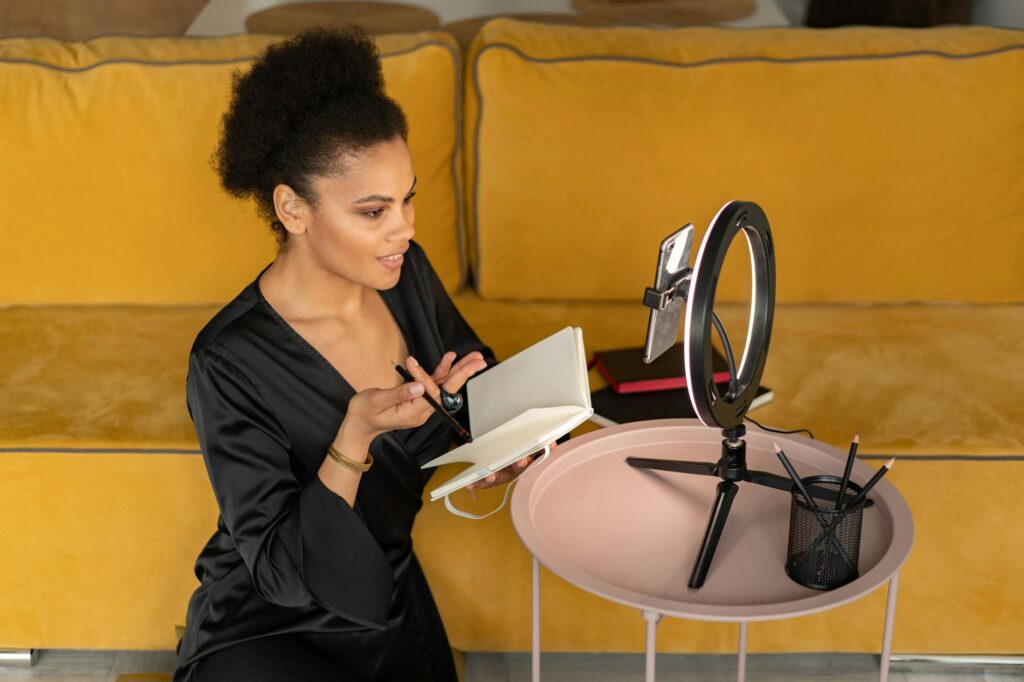
The core mechanism enabling the hobbyist-to-professional transition is the integration of AI modules into the content production pipeline. A typical hybrid workflow comprises three layers:
A typical hybrid workflow comprises three layers:
- Ideation Augmentation – Generative language models suggest caption hooks and trending hashtags based on real-time trend graphs.
- Production Optimization – Vision-AI tools automate color grading, background removal, and subtitle generation, reducing post-production time by 30% on average according to a 2026 GetRella benchmark study【3】.
- Performance Analytics Loop – Predictive models forecast engagement curves, allowing creators to schedule posts during algorithmic “high-visibility windows.”
Case in point: Maya Patel, a fashion micro-influencer who grew from 12k to 2M followers between 2022 and 2025, attributes her acceleration to a proprietary AI-assisted editorial calendar. By feeding audience sentiment data into a transformer-based scheduler, Patel reduced content lag from weekly to 48 hours, increasing brand-partner ROAS (return on ad spend) from 3.2× to 7.8× within eight months【2】.
 AI & Technology
Universities Face Calls to Prepare Students for Creator-Economy Jobs
The creator economy spans entertainment, education, advertising, gaming, e-commerce, media and technology, with work built through collaboration.
Read More →The hybrid model also redefines labor inputs. Traditional influencer labor involved high-touch content creation, often limiting output volume. AI integration shifts the labor elasticity curve, enabling creators to scale output without proportional increases in human hours. This asymmetry generates surplus capacity that can be monetized through agency-level services—such as white-label campaign execution for mid-size brands—thereby converting personal brand equity into institutional revenue streams.
Systemic Realignments in Brand-Consumer Power Structures
The diffusion of hybrid creators precipitates systemic ripples across marketing, talent management, and regulatory domains.
Brand Partnership Architecture – Companies are moving from one-off sponsorships to long-term creator-in-residence contracts, akin to the “talent-as-service” model seen in software consulting. A 2025 Deloitte survey found that 54% of C-suite marketers plan to allocate a dedicated budget line for creator-owned product lines by 2027, reflecting an institutional commitment to creator-driven brand equity【4】.
Talent Aggregation Platforms – Influencer agencies are consolidating into multi-creator collectives that pool AI tools, legal services, and data dashboards. The “Creator Cooperative” model, pioneered by the United States-based CollectiveX in 2023, now commands $350 million in managed assets, providing members with shared bargaining power against platform algorithm changes.
Regulatory Oversight – As creator revenue becomes a measurable economic sector, the FTC has expanded disclosure guidelines to encompass AI-generated content. The 2024 “AI Disclosure Rule” requires creators to label algorithm-assisted captions, creating a compliance layer that mirrors financial reporting standards. Early adopters, such as the “Transparent Creator” badge program on Instagram, report 12% higher trust scores among surveyed consumers, suggesting that institutionalized transparency can become a competitive differentiator.
These dynamics echo the rise of programmatic advertising in the early 2010s, where algorithmic buying displaced manual media planning, prompting new industry standards (IAB protocols) and reshaping the balance of power between advertisers and publishers. Hybrid creators are now the programmatic nodes of cultural influence, demanding comparable institutional scaffolding.
These pathways illustrate a systemic shift from gig-based income volatility to structured, asset-backed career trajectories, aligning creator work with traditional professional ladders.
Capital Accumulation Pathways for Emerging Creators

For young achievers, the hybrid paradigm opens multiple vectors of career capital beyond follower counts.
- Equity Participation in Creator-Tech Startups – Early-stage influencers who co-found AI-tool platforms can secure founder equity, converting personal brand traction into venture capital stakes. The 2025 “Creator-Founders Fund” allocated $200 million across 42 creator-led startups, with an average founder equity of 12%【5】.
- Intellectual Property (IP) Monetization – AI-enhanced design pipelines enable creators to generate licensed asset libraries (e.g., music loops, graphic packs) that can be sold on marketplaces such as Adobe Stock. A 2024 case study of the “SoundScape” collective showed a 30% revenue uplift after integrating AI-generated sample packs into their licensing model.
- Institutional Credentialing – Universities and professional bodies are introducing micro-credential programs in “Digital Influence Management.” Graduates receive recognized certificates that translate creator experience into formal career capital, facilitating transitions into corporate roles such as “Brand Community Director.”
- Hybrid Agency Employment – Agencies now hire “Creator Strategists” who blend editorial judgment with AI analytics. Compensation packages combine base salary with performance-linked equity, reflecting the dual nature of the role. The median total compensation for such positions reached $120k in 2025, a 20% increase from 2022, according to a LinkedIn Talent Insights report【6】.
 AI & Technology
HR‑Driven Salary Negotiation Frameworks Redefine Talent Value
A 2026 study finds workers who never negotiate sacrifice up to $1 million in lifetime earnings, prompting firms to formalise seven robust frameworks.
Read More →These pathways illustrate a systemic shift from gig-based income volatility to structured, asset-backed career trajectories, aligning creator work with traditional professional ladders.
Projected Trajectory of Hybrid Influencer Labor Markets (2027-2031)
Looking ahead, three interlocking trends will define the next five years:
AI Tool Saturation and Differentiation – By 2029, 80% of active creators will employ at least one AI module for content generation, prompting a market shift toward proprietary AI pipelines as a source of competitive advantage. Creators who develop custom models will command premium agency fees, analogous to boutique data-science consultancies in the 2010s.
Institutionalization of Creator-Owned Brands – Forecasts from McKinsey project that creator-owned product lines will capture $10 billion of consumer goods revenue by 2031, up from $3 billion in 2025. This growth will be powered by hybrid creators who can rapidly iterate product concepts using AI-driven design and market testing.
Regulatory Standardization and Market Consolidation – Anticipated EU “Digital Influence Act” (effective 2028) will enforce audit trails for AI-generated content, incentivizing larger collectives that can absorb compliance costs. Smaller creators may be compelled to join cooperatives or face prohibitive compliance overhead, accelerating consolidation.
Overall, the hybrid creator cohort is poised to become a structural pillar of the digital economy, with career capital increasingly measured by algorithmic efficiency, IP portfolios, and institutional affiliations rather than raw follower metrics.
Key Structural Insights > [Insight 1]: Hybrid workflows convert creative labor into scalable, AI-augmented assets, reshaping the elasticity of influencer output.
Key Structural Insights
> [Insight 1]: Hybrid workflows convert creative labor into scalable, AI-augmented assets, reshaping the elasticity of influencer output.
> [Insight 2]: Institutional mechanisms—contracts, cooperatives, and regulatory frameworks—are evolving to embed creators within formal economic structures.
> * [Insight 3]: The next five years will see creator-owned brands and proprietary AI pipelines become primary drivers of career capital and market consolidation.
Sources
Hybrid Creators Are Changing The Game—Is Your Brand Ready? — Forbes
The Influencer Divide: Hobbyists vs. Professionals in the Competitive World of Social Media — Medium
2026 Hybrid Workflows: Manual Creativity + AI Support in Social Media — GetRella
Influencer Marketing 2026 Predictions [265 Expert Insights] — Influencer Marketing Hub
2025 Global Influencer Marketing Spend – eMarketer — eMarketer
LinkedIn Talent Insights Report 2025 – LinkedIn — LinkedIn
 AI & Technology
AI and Solo Ventures Redefine Global Entrepreneurship
The convergence of digital ecosystems and lean team structures is reshaping capital allocation across the entrepreneurship landscape.
Read More →Written by Career Ahead AI. AI can make mistakes, so verify key facts. Report errors to support@careeraheadonline.com.





