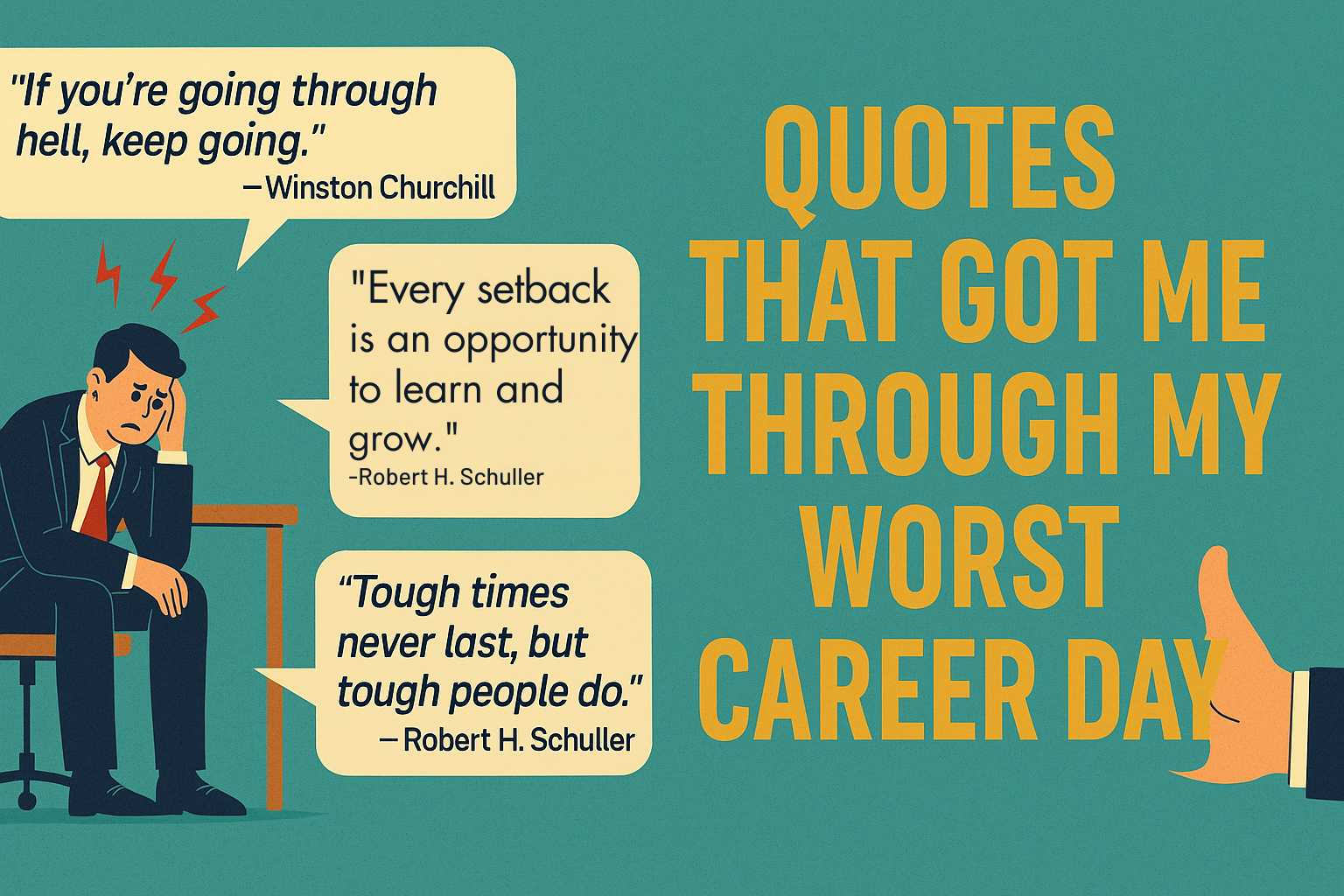
Hybrid work is now the dominant employment model for 77 % of Fortune 500 firms, yet its productivity edge depends on systemic redesign rather than ad‑hoc policy tweaks.
Data‑driven restructuring of communication, performance, and talent pipelines converts hybrid flexibility into durable career capital and institutional resilience.
Macro Context: Institutional Adoption and Emerging Gaps
The pandemic‑induced experiment in remote work has crystallized into a permanent hybrid architecture across corporate America. Microsoft’s 2022 analysis shows that 77 % of large enterprises now mandate a blend of on‑site and off‑site work, citing “flexibility” and “productivity” as primary drivers [1]. Yet 60 % of those firms admit their hybrid policies remain “in development,” indicating a systemic lag between adoption and operational codification [1].
Gallup’s longitudinal surveys reveal a 12‑point engagement premium for teams that combine face‑to‑face interaction with remote autonomy, but only when clear structures govern collaboration [2]. McKinsey’s 2023 productivity benchmark estimates that well‑engineered hybrid teams can deliver up to 15 % higher output than fully co‑located groups, provided they embed asynchronous workflows and transparent performance metrics [3].
These figures expose a structural paradox: the diffusion of hybrid work has outpaced the institutional mechanisms needed to sustain its advantages. The current environment resembles the early 2000s rollout of open‑plan offices—an architectural shift that promised collaboration but initially suffered from acoustic, privacy, and cultural misalignments until firms instituted new norms around space allocation and behavioral etiquette [4]. Hybrid work now demands a comparable recalibration of team boundaries, technology stacks, and talent development pathways.
redefining collaboration Architecture: Core Mechanisms
1. Boundary‑Blurring Governance
Hybrid teams dissolve the traditional “same‑room” assumption of role definition. Empirical studies from Harvard Business Review show that teams with formally codified communication protocols—daily digital stand‑ups, shared decision logs, and role‑clarity matrices—reduce misalignment incidents by 27 % compared with loosely governed groups [5]. The mechanism is structural: explicit channel mapping replaces emergent, ad‑hoc interactions, converting the fluidity of hybrid presence into a predictable coordination lattice.
redefining collaboration Architecture: Core Mechanisms Hybrid Teams as the Structural Engine of Growth, Retention, and Leadership Development 1.
2. Institutionalized Asynchrony
A 2022 Microsoft whitepaper quantifies that organizations that embed asynchronous work norms—such as outcome‑based KPIs and flexible scheduling windows—experience a 9 % reduction in “meeting overload” and a 13 % increase in deep‑work time [1]. The structural shift lies in decoupling task completion from real‑time presence, thereby aligning global talent pools and accommodating divergent work‑style preferences without eroding collective momentum.
 Entrepreneurship & Business
Deloitte projects India GDP growth of 7.1–7.3% in FY27
Deloitte India projected GDP growth of 7.1–7.3% in FY27, citing private investment and domestic demand, while identifying risks to the economic outlook.
Read More →3. Virtual Socio‑Technical Hubs
Social capital erosion is a documented risk of dispersed work. Forbes Tech Council highlights that “virtual watercoolers” (structured informal channels, peer‑led interest groups, and periodic digital social events) raise perceived belonging scores by 18 % in hybrid settings [6]. Embedding these hubs within the enterprise intranet creates a systematic feedback loop that sustains informal knowledge transfer and mitigates isolation, turning what was previously a symptom of dispersion into a reinforced asset.
Systemic Ripples: Performance, Learning, and Well‑Being
Performance Management as Continuous Calibration
Hybrid environments invalidate annual review cycles as the primary performance signal. McKinsey’s 2024 “Continuous Performance” framework demonstrates that quarterly goal‑setting combined with real‑time feedback dashboards improves alignment scores by 22 % and reduces turnover intent by 7 % [3]. The structural implication is a shift from episodic evaluation to an embedded, data‑rich calibration process that aligns individual outputs with evolving team objectives.
Learning and Development as Distributed Capability Building
The diffusion of talent across locations necessitates a reimagined L&D delivery model. Harvard Business Review reports that organizations that deploy blended learning pathways—combining micro‑learning modules, virtual mentorship pairings, and AI‑curated skill‑gap analytics—see a 31 % acceleration in competency acquisition for hybrid employees [5]. This reflects a systemic transition from siloed classroom training to a pervasive, platform‑driven talent development ecosystem.
Well‑Being as Institutional Safeguard
Hybrid work amplifies the risk of “always‑on” burnout while also offering flexibility to mitigate it. Gallup’s 2023 well‑being index finds that firms instituting mandatory “offline windows” and providing universal mental‑health stipends reduce self‑reported burnout by 14 % [2]. The structural shift is the codification of protective boundaries within employment contracts, transforming well‑being from a discretionary perk into a core component of the hybrid operating model.
Learning and Development as Distributed Capability Building The diffusion of talent across locations necessitates a reimagined L&D delivery model.
Career Capital and Leadership Trajectories
New Skill Sets as Currency of Mobility
 Entrepreneurship & Business
Europe Adds to Business Regulatory Burden, Speaker Says
The exchange covered deregulation, CBAM, an India-EU trade agreement and trade figures for India’s ties with the EU and the Netherlands.
Read More →Hybrid teams generate asymmetric demand for digital fluency, cross‑cultural communication, and self‑management. A case study of IBM’s 2023 hybrid rollout shows that employees who completed the “Hybrid Collaboration Certification” experienced a 0.4 standard‑deviation increase in promotion probability within 18 months [7]. The mechanism is clear: mastery of hybrid‑specific competencies becomes a quantifiable asset in internal talent markets, reshaping career trajectories.
Leadership Development as Structural Imperative
Hybrid leadership requires proficiency in remote coaching, distributed decision‑making, and inclusive culture building. McKinsey’s 2022 “Hybrid Leader Index” correlates a 1‑point increase in the index with a 5 % rise in team retention, underscoring the systemic value of targeted leader development programs [3]. Companies like Salesforce have institutionalized a “Hybrid Leadership Academy” that blends virtual simulations with on‑site immersion, producing a measurable uplift in employee net promoter scores (eNPS) across hybrid units [8].
Institutional Power Redistribution
The diffusion of hybrid work attenuates geographic concentration of power, enabling talent from secondary markets to compete for roles historically anchored in metropolitan hubs. Gallup’s 2021 geographic mobility analysis notes a 19 % rise in hires from Tier‑2 cities for hybrid positions, signaling a structural reallocation of human capital that expands the talent pipeline and diversifies leadership pipelines [2].
Outlook: Structural Trajectory Over the Next Three to Five Years
By 2029, the hybrid model is projected to account for 85 % of full‑time roles in high‑skill sectors, according to McKinsey’s workforce forecast [3]. The trajectory suggests three converging structural developments:
Outlook: Structural Trajectory Over the Next Three to Five Years By 2029, the hybrid model is projected to account for 85 % of full‑time roles in high‑skill sectors, according to McKinsey’s workforce forecast [3].
- Standardized Hybrid Governance Frameworks – Industry consortia are expected to codify best‑practice protocols for communication, data security, and performance metrics, reducing the current policy fragmentation.
- Embedded AI‑Driven Coordination – Enterprise platforms will increasingly automate meeting synthesis, workload balancing, and skill‑match recommendations, embedding intelligence into the hybrid coordination lattice.
- Talent Market Realignment – As hybrid credibility matures, compensation benchmarks will decouple from office location, prompting a systemic shift toward performance‑based remuneration across geographies.
Firms that proactively embed these structural levers will convert hybrid flexibility into a durable source of career capital, institutional resilience, and asymmetric competitive advantage.
Key Structural Insights
- Hybrid work’s productivity premium hinges on codified communication protocols that transform fluid team boundaries into predictable coordination networks.
- Institutionalizing asynchronous workflows and virtual socio‑technical hubs redefines performance and belonging as systemic, data‑driven processes rather than emergent phenomena.
- Over the next five years, AI‑augmented governance and geography‑agnostic talent markets will embed hybrid work as a foundational pillar of corporate growth and leadership pipelines.
Written by Career Ahead AI. AI can make mistakes, so verify key facts. Report errors to support@careeraheadonline.com.