
Hybrid work is forcing a structural reallocation of career capital, compressing commuter flows and prompting municipal leaders to redesign fiscal and spatial policies.
Hybrid Work as a Structural Pivot in Urban Economies
The pandemic‑era acceleration of remote collaboration has moved from a contingency to a durable institutional arrangement. Across the United States, office‑space utilization fell by an average of 27% between 2021 and 2024, with Manhattan’s Class A vacancy rate climbing to 31%—the highest level since the 2008 financial crisis [1]. In Europe, London’s “prime” office vacancy breached 28% in Q3 2024, a shift that mirrors the de‑industrial contraction of the 1970s when manufacturing floors were abandoned for service‑sector offices [2].
These vacancy trends are not isolated market corrections; they reflect a systemic redefinition of where economic activity is generated and captured. A 2025 survey by the Global Workforce Institute found that 62% of employees now prefer a hybrid schedule that blends three days in‑office with two days remote [3]. The preference is not a cultural fad but a response to digital infrastructure that has lowered the marginal cost of collaboration to near‑zero, thereby decoupling productivity from geographic concentration.
For municipal planners, the macro‑level implication is a re‑balancing of the “city‑center” as a singular node of economic power. The shift challenges the historical rent‑capture model that underpinned urban fiscal regimes for decades. As office taxes decline, cities must confront a widening revenue gap while simultaneously addressing the social costs of underutilized real estate—blight, safety concerns, and lost ancillary commerce.
Mechanics of Digital Collaboration and Office Utilization

The core mechanism behind hybrid adoption is the diffusion of cloud‑based productivity suites, AI‑augmented meeting platforms, and secure remote‑access networks. According to the International Data Corporation, enterprise adoption of unified communications platforms rose from 48% in 2019 to 84% in 2024 [4]. This technology diffusion has produced a measurable productivity uplift: 78% of respondents in the 2024 Deloitte Remote Work Index reported higher output when working from a personal environment, citing fewer interruptions and better time‑zone alignment [5].
At the same time, the elasticity of office space demand is being exercised. Companies are renegotiating leases, consolidating footprints, and adopting “hub‑and‑spoke” models where a central anchor office supports satellite coworking nodes. Real‑estate firm CBRE reported that 41% of Fortune 500 firms have reduced their primary office square footage by at least 20% while expanding memberships in third‑party coworking providers [6].
Companies are renegotiating leases, consolidating footprints, and adopting “hub‑and‑spoke” models where a central anchor office supports satellite coworking nodes.
These operational choices generate a feedback loop: reduced density lowers fixed costs, which in turn raises the marginal benefit of remote work, reinforcing the hybrid equilibrium. The loop also pressures landlords to re‑configure legacy office blocks into mixed‑use developments—adding residential units, cultural venues, and health‑care services—to sustain cash flow. The process is reminiscent of the post‑World War II conversion of manufacturing lofts into artist studios and later into high‑end residential lofts, a structural re‑use that altered the socioeconomic fabric of neighborhoods.
 Entrepreneurship & Business
Taiwan’s Foreign Minister Strengthens Economic Relations with Arizona
The visit comes at a time when both regions are looking to expand their economic horizons. Taiwan has been a global leader in technology and…
Read More →Systemic Ripple Effects on Transportation, Housing, and Fiscal Regimes
Transportation Networks
Hybrid schedules compress peak‑hour demand. The Metropolitan Transportation Authority (MTA) recorded a 22% reduction in weekday subway ridership between 2022 and 2024, with the most pronounced declines on lines serving central business districts [7]. The elasticity of demand is prompting agencies to shift capital allocation from expanding capacity to enhancing flexible, on‑demand micro‑mobility services. In Seattle, the city’s “FlexTransit” pilot reallocates 12% of bus fleet hours to dynamic routing, reducing operational costs by $18 million annually while maintaining service coverage for dispersed commuters [8].
Housing Markets
The decoupling of work location from office proximity fuels a “spatial rebalancing” of residential demand. Zillow’s 2024 market analysis shows a 15% price appreciation in ex‑urban counties within a 30‑mile radius of major metros, contrasted with a 7% stagnation in inner‑city median home values [9]. This mirrors the 1950s suburban boom, where automobile proliferation enabled workers to relocate away from dense cores, reshaping land‑use patterns and generating new tax bases. However, the contemporary shift is mediated by broadband availability rather than car ownership, creating a digital‑infrastructure gradient that determines economic mobility.
Municipal Fiscal Structures
Cities historically relied on commercial property taxes to fund infrastructure and public services. The contraction of office tax bases forces a re‑evaluation of revenue models. Chicago’s 2025 “Hybrid Revenue Act” proposes a blended tax that captures a portion of remote‑worker income based on state‑level payroll data, aiming to offset a projected $2.3 billion shortfall in commercial tax receipts by 2028 [10]. Early projections suggest the hybrid tax could recover 40% of the anticipated deficit, but it also raises questions about jurisdictional authority and the administrative capacity of tax agencies.
These fiscal experiments illustrate an emerging institutional power shift: local governments are moving from a land‑value capture paradigm to a more nuanced, data‑driven revenue framework that aligns tax incidence with the actual location of economic activity.
Capital Reallocation and Career Trajectories in a Hybrid Landscape Hybrid Workspaces Reshape Urban Systems: From Office Vacancies to New Economic Geographies The reallocation of physical capital is mirrored by a reallocation of human capital.
Capital Reallocation and Career Trajectories in a Hybrid Landscape
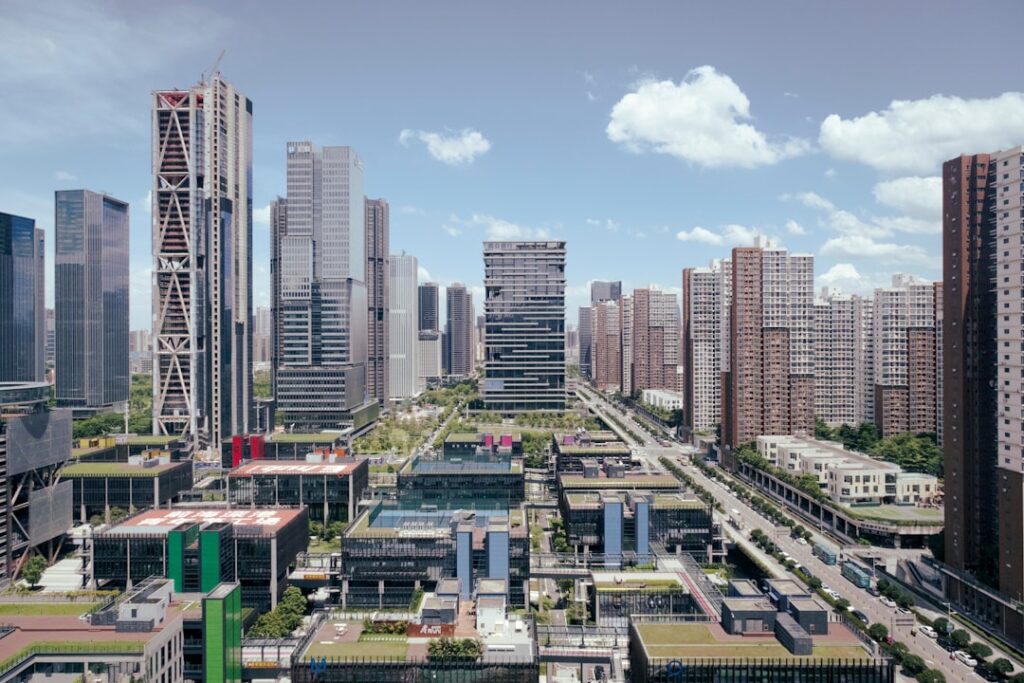
The reallocation of physical capital is mirrored by a reallocation of human capital. Hybrid work expands the geographic labor pool, intensifying competition for high‑skill positions while simultaneously opening pathways for workers in previously peripheral regions. The Economic Policy Institute’s 2024 “Mobility Index” shows a 12% increase in cross‑metro job matches facilitated by remote hiring platforms, indicating a diffusion of career capital away from traditional urban hubs [11].
 Entrepreneurship & Business
Teen Banned from ChatGPT Launches AI Startup | Career Outlook
At 17, Navya Tuteja launched Raaha, an AI startup designed to assist neurodivergent job seekers in evaluating job listings, turning a school ban on ChatGPT…
Read More →Employers are responding by investing in digital upskilling programs. IBM’s “SkillsBuild” initiative, launched in 2023, allocated $1.2 billion to certify 250,000 employees in cloud and AI competencies, explicitly targeting remote‑work readiness [12]. This capital infusion accelerates the asymmetry between workers who possess digitally portable skills and those whose expertise remains location‑bound.
Entrepreneurial ecosystems are also adapting. The rise of “flex‑incubators”—shared spaces that combine coworking desks with virtual mentorship platforms—has accelerated startup formation in secondary cities. Austin’s “Hybrid Hub” reported a 34% year‑over‑year increase in seed‑stage funding for companies that operate primarily remote, underscoring a shift in venture‑capital risk assessment toward network‑agnostic business models [13].
Collectively, these trends suggest a structural re‑distribution of career capital: institutional actors (universities, corporate training divisions, and public‑private partnerships) become gatekeepers of the new skill set, while geographic proximity to traditional economic centers loses its primacy as a predictor of upward mobility.
Projected Trajectory Through 2030
Forecasts from the McKinsey Global Institute indicate that by 2027, 70% of large enterprises will institutionalize hybrid work as the default model, with an average office footprint reduction of 30% [1]. The ensuing urban trajectory can be outlined in three interlocking phases:
Projected Trajectory Through 2030 Forecasts from the McKinsey Global Institute indicate that by 2027, 70% of large enterprises will institutionalize hybrid work as the default model, with an average office footprint reduction of 30% [1].
- Spatial Re‑mixing (2025‑2027): Accelerated conversion of underutilized office towers into mixed‑use precincts, driven by zoning reforms and public‑private redevelopment incentives. Cities that streamline permitting processes—such as Denver’s “Fast‑Track Adaptive Reuse” program—are likely to capture 15% more private investment in redevelopment than peers.
- Fiscal Realignment (2027‑2029): Wider adoption of hybrid‑tax mechanisms and data‑sharing agreements between state revenue agencies and private payroll processors. Early adopters (Chicago, Seattle, and Boston) will demonstrate the administrative feasibility, prompting a potential federal guideline on remote‑work tax attribution.
- Human‑Capital Convergence (2029‑2030): Nationally coordinated upskilling pipelines, anchored by community colleges and industry consortia, will reduce the skill gap for remote‑compatible occupations by an estimated 18%, according to the National Skills Council [14]. This convergence will mitigate the risk of “digital deserts” and reinforce inclusive economic mobility.
The structural shift will not be uniform. Metropolitan areas with entrenched financial districts (e.g., New York, London) will experience a slower transition due to legacy lease structures and concentrated institutional inertia. Conversely, polycentric regions—such as the San Francisco Bay Area’s “Silicon Valley‑to‑Silicon Coast” corridor—will likely see a more rapid diffusion of hybrid‑driven economic activity, reshaping regional power balances.
—
Key Structural Insights
- Hybrid work forces a systemic reallocation of career capital, decoupling productivity from geographic concentration and reshaping urban fiscal foundations.
- The decline in office occupancy triggers a feedback loop of mixed‑use redevelopment, on‑demand transit, and hybrid tax models that redefines municipal revenue streams.
- Over the next five years, coordinated upskilling and data‑driven fiscal policies will determine whether hybrid work expands economic mobility or entrenches new digital divides.
Written by Career Ahead AI. AI can make mistakes, so verify key facts. Report errors to support@careeraheadonline.com.