

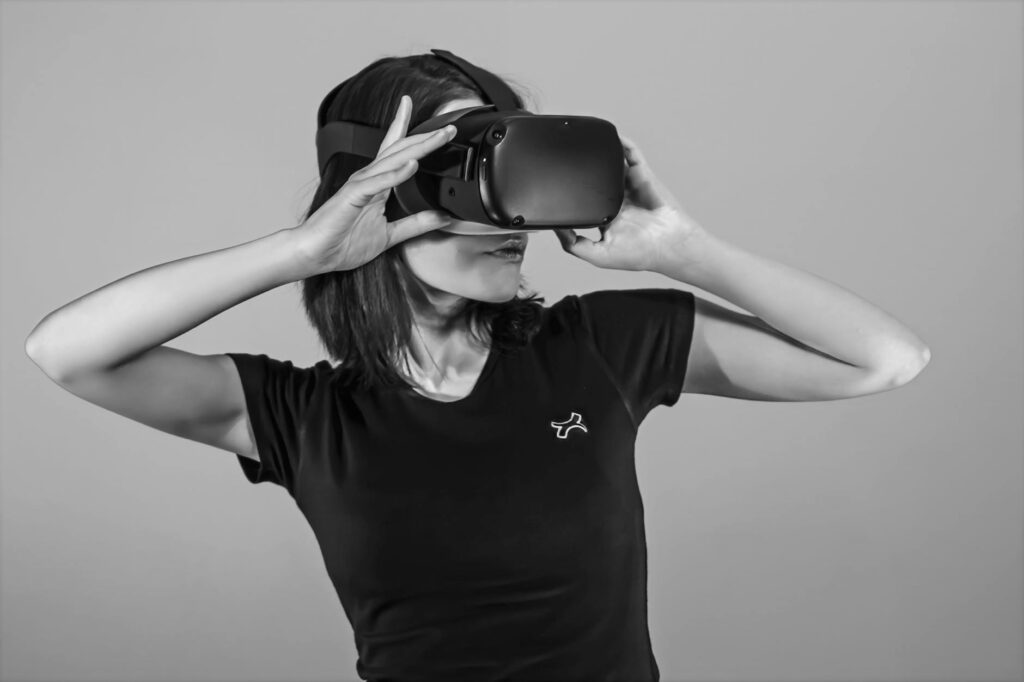
Designers are confronting a systemic transition from flat screens to spatial experiences, a shift that reshapes career capital, institutional hierarchies, and the economics of digital product creation.
—
The Structural Shift Toward Spatial Interfaces
The UX/UI discipline is entering a phase comparable to the desktop‑to‑mobile migration of the early 2010s. A 2025 industry survey reports that 71 % of designers anticipate virtual reality (VR) will materially alter design practice within five years, while 62 % cite an urgent need for new tooling to support immersive workflows [1]. Simultaneously, the global VR market is projected to surpass $1.4 billion by 2025, driven by corporate R&D spend from Meta, Google, and Apple that collectively exceeds $12 billion annually [2].
Affordability is the primary catalyst. The average price of a consumer‑grade VR headset fell by 30 % between 2023 and 2024, compressing the cost barrier that previously confined immersive development to niche studios [1]. This price compression expands the addressable user base: 75 % of surveyed users report higher engagement with VR interfaces than with traditional screen‑based counterparts [2]. The resulting demand for spatial interaction patterns—gaze, hand‑tracking, and haptic feedback—forces designers to internalize three‑dimensional cognition as a core competency rather than an auxiliary skill.
Institutionally, design curricula at leading universities (e.g., MIT Media Lab, Stanford d.school) have integrated VR prototyping modules into their core courses, a move that mirrors the 2007 pivot of business schools toward digital entrepreneurship [3]. The convergence of academic endorsement and corporate investment creates a feedback loop that accelerates the diffusion of immersive design standards across the industry.
—
Systemic Ripples Across the Design Ecosystem Immersive Interfaces Redefine the Design Profession’s Power Structure The adoption of immersive technologies triggers a cascade of structural adjustments within the broader product development pipeline.
Systemic Ripples Across the Design Ecosystem
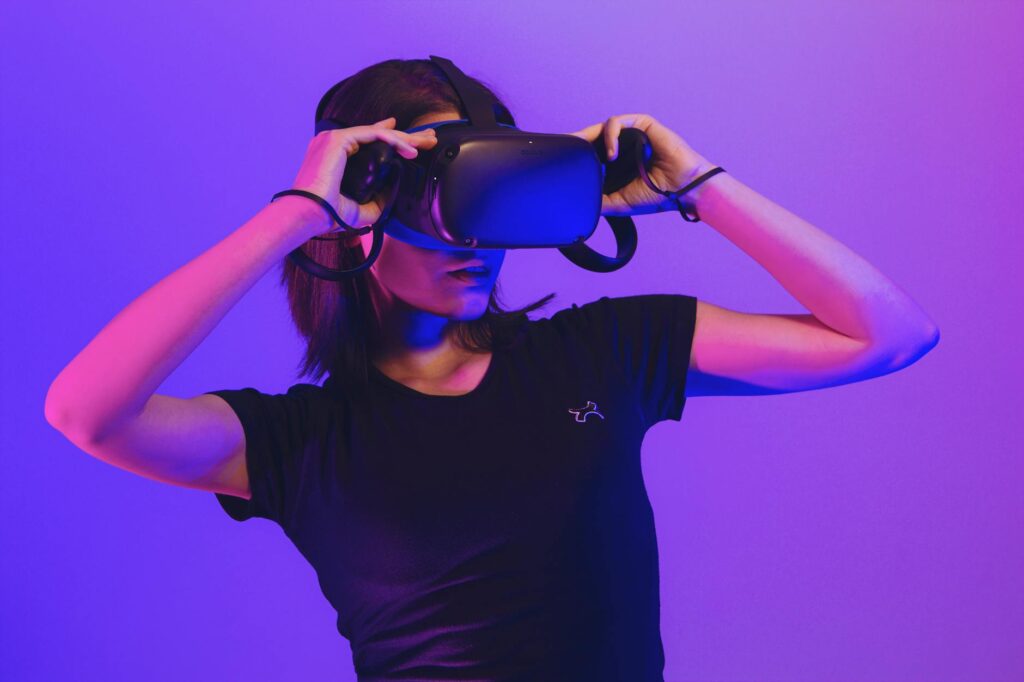
The adoption of immersive technologies triggers a cascade of structural adjustments within the broader product development pipeline. First, workflow orchestration is being reengineered. Traditional design hand‑offs—wireframes to developers—are supplanted by shared VR workspaces where designers, engineers, and product managers co‑habit a virtual prototype in real time. Platforms such as Unity’s “Design Collaboration Hub” and Adobe’s “Substance 3D” suite have reported a 42 % reduction in iteration cycles for spatial projects compared with legacy screen‑based processes [2].
Second, the tooling ecosystem is consolidating around a small set of vendors, amplifying their institutional power. The dominance of Unity and Unreal Engine in VR content creation mirrors the early 2000s concentration of web development around Flash, a dynamic that subsequently reshaped licensing models and talent demand. This concentration raises entry barriers for independent studios lacking access to enterprise licenses, thereby reinforcing the market position of large tech conglomerates.
Third, the user expectations landscape is evolving. A 2024 consumer sentiment analysis indicates that 60 % of users anticipate routine VR interactions for shopping, education, and remote collaboration within the next five years, while 40 % project a comparable rise in AR experiences [4]. This anticipatory shift pressures enterprises to embed immersive touchpoints into legacy digital services, prompting a reallocation of budget from traditional UI redesigns to spatial experience engineering.
Collectively, these dynamics reconfigure the institutional architecture of product development: design leadership must now command cross‑disciplinary fluency in 3D graphics, motion capture, and psychophysiological ergonomics, while procurement and legal functions grapple with new licensing regimes and data‑privacy considerations unique to sensor‑rich environments.
—
Human Capital Realignment in Immersive Design The structural transformation of UX/UI design translates directly into altered career capital.
Human Capital Realignment in Immersive Design
The structural transformation of UX/UI design translates directly into altered career capital. Wage data from the Bureau of Labor Statistics (BLS) shows that senior UX designers in the United States command an average salary of $115,000, whereas those with verified VR/AR expertise earn a median premium of 18 %—approximately $136,000 [5]. This premium is amplified in firms that have institutionalized immersive product lines; Meta’s “Reality Labs” division reports that 80 % of its design hires in 2023 possessed a portfolio of spatial prototypes, and the division’s average compensation exceeds the corporate baseline by 22 % [6].
Economic mobility is also at stake. Community‑based “boot‑camp” programs—such as the Immersive Design Initiative (IDI) in Detroit—have leveraged publicly funded grants to provide VR design training to underrepresented populations. Early cohort outcomes reveal a 35 % placement rate into junior immersive design roles within six months, a figure that surpasses the 22 % placement rate for traditional UI boot‑camps in the same regions [7]. This suggests that the emergent demand for spatial skill sets can serve as a lever for upward mobility, provided that institutional pathways are deliberately constructed.
Leadership pathways are shifting as well. The role of “Design Lead” is evolving into “Spatial Experience Lead,” a title that now carries authority over cross‑functional roadmaps encompassing hardware ergonomics, sensor data pipelines, and narrative storytelling. Companies such as Apple have institutionalized this hierarchy; the appointment of a “Head of Spatial Interaction” in 2023 signaled a formal acknowledgment that immersive design decisions influence product strategy at the same level as hardware engineering [8].
Conversely, designers anchored solely in 2D screen paradigms face a risk of skill obsolescence. Longitudinal surveys indicate that 27 % of mid‑career designers who have not upskilled in VR/AR report reduced project allocations over the past two years, a trend that mirrors the displacement observed during the early mobile UI transition [3]. The asymmetry in skill adoption thus creates a bifurcated labor market, with institutional power gravitating toward those who can navigate the spatial dimension.
—
Projected Trajectory to 2030

Looking ahead, three interlocking forces will shape the immersive design landscape over the next five years.
Compliance requirements will institutionalize dedicated privacy engineering roles within design teams, further stratifying the skill hierarchy and reinforcing the power of firms that can internalize these capabilities.
- Hardware Convergence: By 2028, the average consumer device will integrate mixed‑reality (MR) capabilities—transparent displays, eye‑tracking, and haptic gloves—within a single form factor, reducing the distinction between VR and AR platforms [9]. This convergence will standardize interaction vocabularies, prompting the emergence of a universal “spatial design language” codified by industry consortia such as the Khronos Group.
- Regulatory Formalization: Anticipated data‑privacy regulations (e.g., the EU’s “Digital Immersive Services Act”) will impose strict governance on biometric data captured in immersive environments. Compliance requirements will institutionalize dedicated privacy engineering roles within design teams, further stratifying the skill hierarchy and reinforcing the power of firms that can internalize these capabilities.
- Talent Pipeline Institutionalization: Universities and vocational schools will embed immersive design modules into accreditation standards, while major tech firms will expand apprenticeship pipelines focused on spatial interaction. The resulting credentialing ecosystem will create a de‑facto gatekeeping mechanism, shaping career trajectories and economic mobility at the systemic level.
In aggregate, these trends suggest that immersive design will transition from a peripheral specialty to a core structural component of product strategy. Designers who acquire spatial fluency will command disproportionate influence over organizational direction, while institutions that fail to integrate immersive capabilities risk marginalization in both market share and talent attraction.
—
Key Structural Insights
[Insight 1]: The price erosion of VR hardware is a catalyst that expands the addressable market, compelling a systemic reallocation of design resources toward spatial experiences.
[Insight 2]: Concentration of immersive tooling in a few platforms amplifies the institutional power of dominant vendors, reshaping procurement dynamics and entry barriers for smaller firms.
- [Insight 3]: Emerging credentialing pathways for VR/AR design create a new axis of career capital, influencing economic mobility and redefining leadership hierarchies across the tech sector.
Written by Career Ahead AI. AI can make mistakes, so verify key facts. Report errors to support@careeraheadonline.com.





