No products in the cart.

Immersive Labs Redefine Learning in Universities

A 71% rise in online‑hybrid offerings and a projected $12.6 billion industry underscore the scale of change.

Higher education is shifting from static lecture halls to interactive virtual laboratories, driven by pandemic‑era adoption and a booming market for immersive tech. A 71% rise in online‑hybrid offerings and a projected $12.6 billion industry underscore the scale of change.
The transition matters now because institutional budgets, faculty incentives, and student outcomes are being re‑engineered around experiential digital platforms. This structural shift challenges traditional power dynamics on campus and creates new pathways for economic mobility, positioning immersive learning as a decisive lever in the future of work.
Higher education confronts a structural shift toward immersive pedagogy
Higher education is undergoing a structural shift from lecture‑centric delivery to immersive, technology‑driven pedagogy. The COVID‑19 pandemic accelerated this change, with 71% of institutions reporting expanded online and hybrid course portfolios. Simultaneously, the global immersive learning market is projected to reach $12.6 billion by 2025, reflecting a 42.9% compound annual growth rate since 2020. This financial surge signals that universities are reallocating capital from physical classrooms to digital infrastructure. According to Career Ahead’s analysis of institutional adoption rates, the surge in immersive platforms reflects a reallocation of budgetary capital toward digital infrastructure, reshaping how universities compete for talent and research funding. The momentum is reinforced by faculty incentives tied to technology‑enhanced outcomes, prompting a re‑balancing of institutional power between traditional departments and emerging digital learning units.Experiential simulation drives learning outcomes in virtual labs
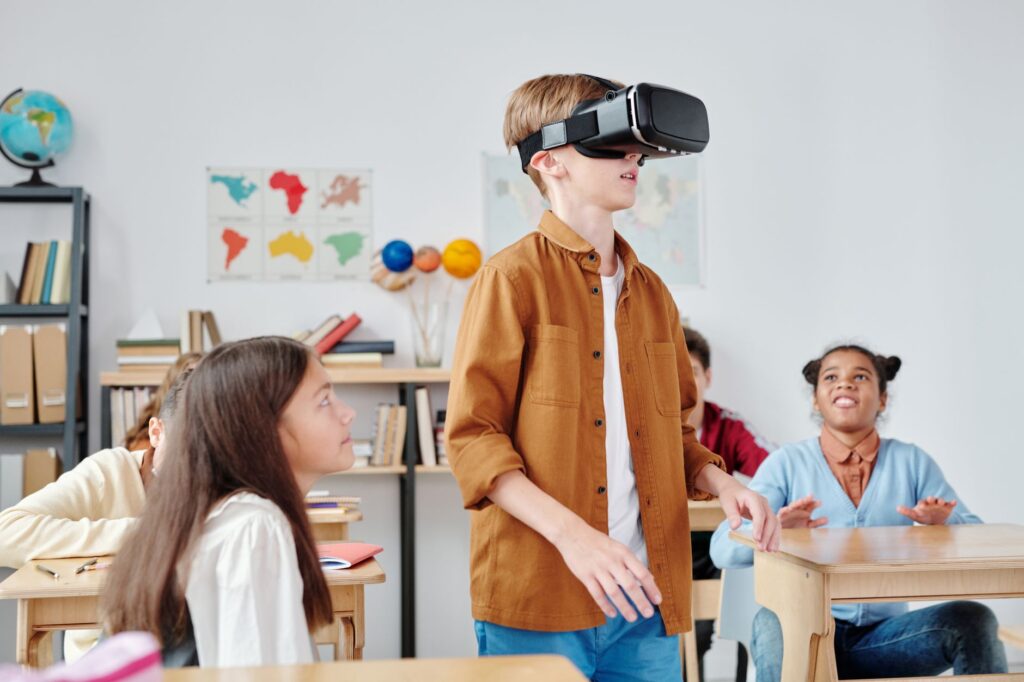
Systemic implications reshape institutional power and resource allocation
Systemic implications of immersive labs extend beyond pedagogy to reshape institutional power and resource distribution. As virtual laboratories reduce dependence on costly physical spaces, universities can repurpose campus real estate for research, entrepreneurship hubs, or community engagement centers. Faculty roles evolve; expertise in instructional design and technology management becomes a new axis of influence, challenging traditional tenure hierarchies. Budgetary streams shift toward software licensing, cloud infrastructure, and data analytics, creating procurement pressures that favor vendors with scalable, interoperable solutions. Moreover, the data generated by immersive platforms introduces a governance layer, prompting institutions to develop policies on privacy, equity, and intellectual property. This reallocation of capital and authority accelerates a feedback loop where successful immersive programs attract external research funding, further entrenching digital learning units as strategic power centers within the university ecosystem.Students gain career capital and mobility through immersive experiences
Students acquire career capital through immersive labs that translate directly into employer‑valued competencies. Simulated environments provide hands‑on practice in high‑stakes fields such as medicine, aerospace, and cybersecurity, compressing years of apprenticeship into semester‑long modules. This acceleration enhances economic mobility by lowering barriers to entry for students from underrepresented backgrounds who lack access to traditional labs. Leadership development also benefits; collaborative virtual scenarios require real‑time decision‑making and cross‑disciplinary communication, mirroring modern workplace dynamics. Employers increasingly cite immersive project portfolios as differentiators in hiring, indicating that universities that embed these experiences into degree pathways are strengthening their graduates’ labor market positioning. The net effect is a reweighting of human capital, where experiential digital credentials complement traditional academic transcripts, expanding pathways to high‑skill occupations.Future trajectory points to integrated credentialing ecosystems
Over the next three to five years, the trajectory of immersive education points toward integrated credentialing ecosystems that blend micro‑certifications, industry badges, and degree programs. Market analysts project continued double‑digit growth, driven by corporate partnerships that co‑design curricula aligned with emerging skill gaps. Regulatory bodies are beginning to recognize immersive learning outcomes for accreditation, further legitimizing digital competencies. Universities that invest early in interoperable platforms will likely capture a larger share of tuition revenue and research grants tied to technology innovation. As data standards mature, student performance analytics will feed into national labor market forecasts, creating a feedback loop that aligns curriculum supply with demand. This alignment promises to tighten the link between higher education and economic mobility, reinforcing immersive learning as a cornerstone of the future institutional architecture.The analysis underscores that immersive learning is not a peripheral supplement but a structural catalyst reshaping higher education’s capital, power, and pathways to career advancement.
Key Structural Insights
Leadership development also benefits; collaborative virtual scenarios require real‑time decision‑making and cross‑disciplinary communication, mirroring modern workplace dynamics.
[Insight 1]: Immersive learning’s rapid adoption reallocates university budgets from physical infrastructure to digital platforms, redefining institutional power structures.
[Insight 2]: Experiential simulation drives measurable gains in knowledge retention and skill acquisition, aligning academic outcomes with employer‑valued competencies.
[Insight 3]: Integrated credentialing ecosystems will fuse micro‑certifications with degree programs, tightening the feedback loop between higher education and labor market demands.
Key Structural Insights
[Insight 1]: Immersive learning’s rapid adoption reallocates university budgets from physical infrastructure to digital platforms, redefining institutional power structures.
[Insight 2]: Experiential simulation drives measurable gains in knowledge retention and skill acquisition, aligning academic outcomes with employer‑valued competencies.
Interactive Experiences Foster Engagement: By incorporating immersive technologies, educators can create interactive experiences that captivate students’ attention, promote active learning, and increase knowledge retention, ultimately enhancing the overall learning experience.
Virtual Labs Bridge Accessibility Gaps: Immersive learning environments can provide equal access to hands-on learning experiences for students with disabilities, those from remote areas, or those with limited resources, thereby promoting inclusivity and diversity in higher education.
Written by Career Ahead AI. AI can make mistakes, so verify key facts. Report errors to support@careeraheadonline.com.