South Korea is considering full tuition support for incoming students at national universities outside the Seoul metropolitan area.
The proposal covers Korean freshmen first
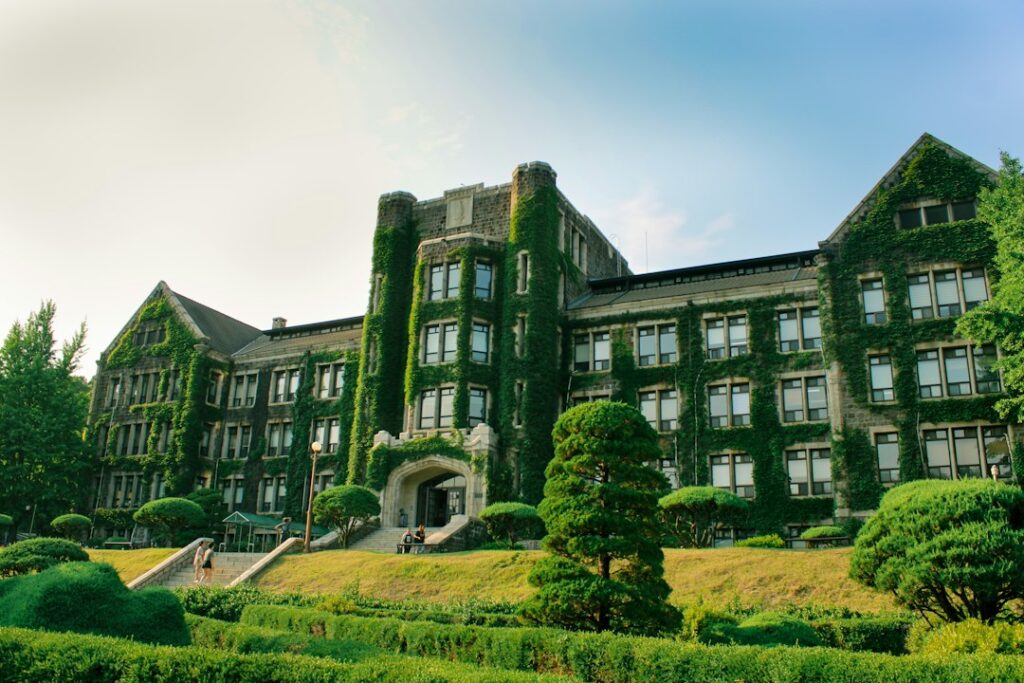
The Ministry of Education is considering full-tuition scholarships for some sixty-four thousand freshmen at thirty national universities outside the Seoul metropolitan area, beginning in the 2027 academic year. The plan covers new Korean students; international students are not included for now. That distinction sets the limits of the proposal for international recruitment: it does not directly offer those students tuition support.¹²³⁴
President Lee Jae-myung was briefed on the proposal by the Education Ministry on August 5 during a meeting on the 2026 second-half work plan. The proposed coverage would widen to all undergraduate cohorts by 2030. The government also proposes increasing new recipients of regional scholarships at private universities from four thousand to ten thousand, extending financial support beyond the national-university plan.¹²³⁴
President Lee Jae-myung was briefed on the proposal by the Education Ministry on August 5 during a meeting on the 2026 second-half work plan.
Public and private universities face different pressures
South Korea has a national target of three hundred thousand international students. The tuition proposal does not include them, while private universities—which account for eighty per cent of higher education in the country—remain outside the national-university tuition waiver. Average annual tuition is 4.3 million won at public universities and 8.2 million won at private institutions, a gap that gives the proposal a clear cost advantage for eligible students at public campuses.¹²³⁴
 Education & University Insights
Algorithmic Admissions: How Elite Universities Are Replacing Meritocracy With Legacy AI
Sixty percent of Ivy League admits now come from the top 1% of U.S.
Read More →The government estimates an additional cost of 100 billion won in the first year, rising by roughly 100 billion won each year as more students qualify. Annual spending is estimated to reach about 400 billion won by 2030. A separate estimate puts the annual cost of covering every eligible student at 200 billion won, with about half already paid through existing national scholarships. The Education Ministry’s 2026 package provides 544.8 billion won for flagship national universities.¹²³⁴

Private-university groups challenge the approach
The Korean Professors Union said the proposal selectively favors regional national universities and offers no broader vision for the country’s higher education system. Hwang In-sung, Secretary General of the Korean Council for Private University Presidents, called the initiative a populist measure. He said: “Students are not unable to attend university due to a lack of money. This policy is a populist measure unrelated to the qualitative improvement of national universities or the enhancement of global competitiveness.”¹²³⁴
Private universities have also faced seventeen years of frozen tuition and regulations on tuition increases. That financial pressure is central to their opposition: the proposed full-tuition support targets regional national universities, while the private sector represents most of South Korea’s higher education system and is contending with restrictions on raising fees.¹²³⁴
Regional education gains do not match employment flows
Busan was the only South Korean province or metropolitan city in 2025 to record a net inflow of residents for education alongside a net outflow for employment. Education-related moves brought 3,479 more residents into the city than they took out, while employment-related moves left Busan with a net loss of 9,063. The figures show opposing directions in the city’s education and employment migration balances.¹²³⁴
Busan gained 927 residents aged twenty to twenty-four, then lost 5,437 among those aged twenty-five to twenty-nine, its largest net outflow for any five-year age group. Employment-related moves had also produced net losses of 9,939 in 2023 and 9,259 in 2024. Daejeon’s employment balance and its balance among residents aged twenty-five to twenty-nine both turned positive in 2025, a different pattern from Busan’s.³
 Education & University Insights
International Universities Face a Value Test in India
A mapping counted 13 international universities admitting students across 14 Indian campuses in 2026/27, as surveys indicate interest in India-based programs.
Read More →Regional education gains do not match employment flows Busan was the only South Korean province or metropolitan city in 2025 to record a net inflow of residents for education alongside a net outflow for employment.
Weigh Regional Study Against Job Flows
If you are weighing a South Korean public university outside Seoul, the tuition gap is decisive: public tuition averages 4.3 million won versus 8.2 million at private institutions. The plan covers new Korean freshmen at 30 national universities from 2027, expanding to all cohorts by 2030. That makes a regional national seat a cost-effective choice, but only if you accept the employment reality. Busan's education inflow of 3,479 residents in 2025 was offset by an employment outflow of 9,063, and the city lost 5,437 people aged 25 to 29. Your degree may not keep you in the region.¹²³⁴
For international students, the proposal offers no direct tuition support, so factor that into any application. Private universities, which host 80 percent of higher education, remain outside the waiver and face 17 years of frozen tuition, so their financial pressure may shape program quality or fees. If you are choosing between a regional national and a private institution, compare the 4.3 million versus 8.2 million won gap against the risk of weaker local job markets. Daejeon's positive employment and age 25-to-29 balances in 2025 suggest some regions do retain graduates, so research city-level flows before committing.¹²³⁴
Sources
- thepienews.com — https://thepienews.com/south-koreas-free-tuition-plan-could-reshape-international-student-recruitment/
- koreatimes.co.kr — https://www.koreatimes.co.kr/southkorea/education/20260807/private-schools-push-back-against-koreas-free-tuition-plan-for-natl-universities
- breezeinflow.com — https://breezeinflow.com/national-news/one-tuition-plan-four-regional-tests-across-south-korea
- ajupress.com — https://www.ajupress.com/view/20260806181670511
Written by Career Ahead AI. AI can make mistakes, so verify key facts. Report errors to support@careeraheadonline.com