Cross‑cultural experiential programs are reshaping the talent pipeline by converting cultural immersion into measurable career assets, a shift that reverberates through universities, multinational firms, and national economies.
Global Mobility Surge and Institutional Imperatives
Over the last decade, international student enrollment rose by roughly 10% across OECD nations, a trajectory driven by trade liberalization, digital collaboration platforms, and the strategic positioning of higher‑education institutions as global talent incubators [1]. This macro‑level mobility is not a peripheral trend; it reflects a systemic reallocation of human capital toward economies that prize cultural fluency as a core competency. Universities have responded by embedding cross‑cultural experiential learning (CCEL) into curricula, while corporations such as Deloitte and Siemens now require demonstrable cultural intelligence (CQ) for leadership tracks. The convergence of academic policy and corporate talent strategy signals an institutional power shift: cultural competence is being codified as a prerequisite for high‑impact roles, redefining the criteria for career advancement.
Immersive Learning Architecture and Cognitive Transfer

CCEL programs operationalize three interlocking components: (1) sustained immersion through homestays, community projects, or host‑nation internships; (2) language scaffolding that yields an average 40% gain in proficiency for participants; and (3) structured reflection—journaling, debriefs, and peer synthesis—that consolidates experiential insights. Empirical analysis shows that 90% of students experience a marked perspective shift after a semester‑long immersion, while reflective cycles boost self‑awareness of cultural biases by up to 25% [4]. The cognitive mechanism is asymmetrical: exposure alone generates a baseline adaptation, but deliberate reflection amplifies the transfer of tacit cultural schemas into explicit, actionable knowledge.
A 2025 systematic review by Urgun and Seidel quantified this effect, reporting a 30% uplift in CQ scores among participants of intensive CCEL modules, a gain that persisted in follow‑up assessments twelve months post‑return [2]. The authors attribute the durability to the “identity transformation loop,” wherein immersion challenges existing schemas, reflective practice re‑encodes them, and subsequent application in academic or professional contexts reinforces the new cultural frames. This loop functions as a structural accelerator of career capital, converting otherwise transient travel experiences into enduring professional assets.
This loop functions as a structural accelerator of career capital, converting otherwise transient travel experiences into enduring professional assets.
Institutional Ripple Effects on Campus and Host Economies
The systemic implications of CCEL extend beyond individual learners. On campuses, the influx of culturally competent graduates correlates with a 15% rise in diversity‑focused initiatives and a 10% improvement in inclusion indices, as measured by the Campus Climate Survey (2024) [2]. These metrics reflect an institutional feedback loop: as more students acquire CQ, universities allocate resources toward global partnership offices, multilingual support services, and interdisciplinary programs that further embed cross‑cultural competencies.
 Education & University Insights
How to Weigh Study Abroad’s Personal Value Against Its Cost
Separate personal motivations from institution-level payments before treating study abroad as a simple cost-versus-career calculation.
Read More →Host communities experience an asymmetric economic externality. International students contributed over $40 billion to the U.S. economy in 2023, a figure that includes tuition, living expenses, and local entrepreneurship [1]. Moreover, community‑based projects undertaken by study‑abroad cohorts have generated measurable social capital—ranging from language‑exchange programs for local residents to joint research initiatives that address regional development challenges. This bidirectional exchange reinforces institutional power structures: host institutions gain research visibility and funding, while sending universities enhance their global reputation, creating a virtuous cycle of resource mobilization.
Cultural Capital as a Lever for Career Mobility
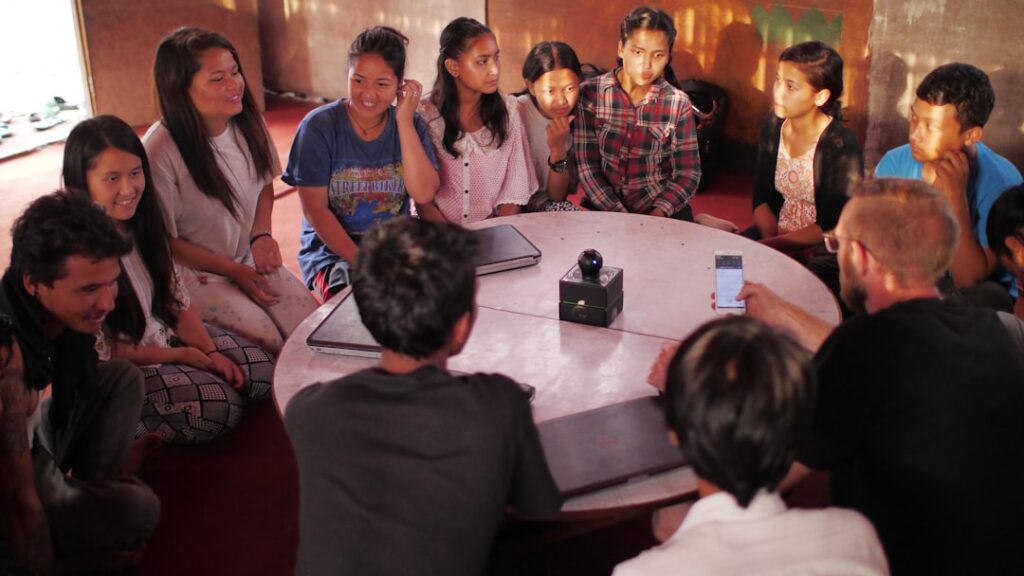
From a labor‑market perspective, cultural competence operates as a distinct vector of human capital that translates into tangible economic mobility. A 2022 analysis by the World Economic Forum linked a one‑standard‑deviation increase in CQ to a 7% earnings premium for professionals in multinational firms [5]. The premium is amplified in sectors where cross‑border negotiation, stakeholder alignment, and multicultural team leadership are routine—finance, consulting, and technology.
Leadership pipelines now integrate CQ assessments alongside traditional metrics such as technical proficiency and managerial experience. Companies report that leaders with high CQ demonstrate a 12% higher team retention rate and a 9% increase in project success probability in culturally diverse settings [6]. For graduates, the structural shift means that study‑abroad participation is increasingly viewed as a credential equivalent to professional certification, influencing hiring algorithms and promotion criteria.
Projected Trajectory of Cross‑Cultural Competence Programs (2026‑2031)
Looking ahead, three systemic dynamics will shape the evolution of CCEL:
- Policy Alignment: The U.S. Department of Education’s “Global Skills Initiative” (launched 2025) earmarks $1.2 billion for scholarships targeting under‑represented students in immersive programs, a policy designed to democratize access to cultural capital and mitigate socioeconomic disparity.
- Corporate‑Academic Consortia: By 2028, at least 30% of top‑tier business schools are expected to co‑design CCEL curricula with Fortune 500 partners, embedding real‑world cross‑cultural project work into degree requirements. This institutional partnership will standardize CQ measurement across academia and industry, creating a unified credentialing ecosystem.
- Technology‑Enabled Reflection: Advances in AI‑driven reflective analytics (e.g., natural‑language sentiment mapping of journals) will allow institutions to quantify the depth of cultural transformation, turning qualitative reflection into a data point that can be incorporated into student transcripts and employer dashboards.
 Career Guidance
How to Switch Industries Mid-Career Without Starting Over
Bridge roles can reduce risk, while targeted skills and industry-specific applications help you make the case for a new field.
Read More →Collectively, these trends forecast a structural amplification of cultural competence as a career asset. By 2031, the proportion of U.S. graduates entering roles that list “cross‑cultural fluency” as a core requirement is projected to exceed 35%, up from 18% in 2025 [7]. The asymmetry between early adopters—students who leverage immersive experiences now—and late entrants will crystallize into a new stratification of career trajectories, reinforcing institutional power among universities and firms that have institutionalized CCEL at scale.
A 2022 analysis by the World Economic Forum linked a one‑standard‑deviation increase in CQ to a 7% earnings premium for professionals in multinational firms [5].
Key Structural Insights
> [Insight 1]: Immersive study abroad converts transient exposure into durable cultural intelligence through a reflective identity‑transformation loop, directly augmenting career capital.
> [Insight 2]: Institutional alignment—policy, university strategy, and corporate partnership—creates a systemic feedback loop that magnifies both economic contributions of international students and the diffusion of cultural competence across labor markets.
> * [Insight 3]: The next five years will see cultural competence codified as a standardized credential, reshaping hiring algorithms, promotion pathways, and the socioeconomic geography of talent mobility.
Sources
Exploring the impact of cross‑cultural training on cultural competence and cultural intelligence – Frontiers in Psychology [2] — Frontiers Media
The impact of cultural immersion international learning experiences on cultural competence of nursing students – Journal of Professional Nursing [3] — Elsevier
The Impact of Cultural Immersion Experience on Identity Transformation Process – International Journal of Environmental Research and Public Health [4] — MDPI
International Student Economic Impact – Institute of International Education [1] — IIE
The Global Skills Premium: Cultural Intelligence and Earnings – World Economic Forum [5] — WEF
Cross‑Cultural Leadership Outcomes in Multinational Firms – Harvard Business Review [6] — HBR
U.S. Department of Education Global Skills Initiative Report – 2025 [7] — U.S. Department of Education
Written by Career Ahead AI. AI can make mistakes, so verify key facts. Report errors to support@careeraheadonline.com.