India’s government has instituted a six‑member task force led by Nandan Nilekani to embed AI surveillance, biometric verification and 5G jamming into NEET 2026, aiming to curb paper leaks.
The government announced a six‑member task force on July 26 2026 to overhaul the National Testing Agency’s security protocols.The National Eligibility cum Entrance Test (NEET) 2026 will incorporate AI‑driven surveillance, biometric verification and 5G‑frequency jammers as part of the new anti‑leak measures.
The Ministry of Education disclosed that a task force chaired by Nandan Nilekani, the architect of the Aadhaar biometric system, will review and recommend reforms for all National Testing Agency (NTA) examinations. The announcement was made on July 26 2026, and the reforms are slated for implementation in the NEET 2026 examination scheduled for May 2026 [2][1]. The task force’s mandate covers the deployment of advanced technology to curb paper leaks that have historically affected high‑stakes exams across India [1].
The task force includes a former Indian Space Research Organisation (ISRO) chairman, a former Intelligence Bureau director, and the director of the Indian Institute of Technology Madras, alongside Nilekani [2]. The NTA, the autonomous body responsible for conducting NEET and other entrance tests, has already issued revised security guidelines for NEET 2026. These guidelines mandate AI‑based video monitoring in examination halls, the use of biometric fingerprint and iris scans for candidate verification, and the installation of 5G jamming devices to block unauthorized wireless transmissions [3][4].
Task Force Formation and Mandate
The task force was constituted by Prime Minister Narendra Modi’s office as part of a broader effort to address recurring exam‑paper leaks that have undermined public confidence in the merit‑based selection process [2]. Nilekani’s appointment leverages his experience with large‑scale biometric authentication systems, a capability the government expects to translate into secure exam environments [1].
The panel’s terms of reference specify the evaluation of existing exam‑administration workflows, the identification of vulnerabilities to insider collusion and cyber‑intrusion, and the recommendation of technology‑driven safeguards such as blockchain‑based paper distribution, AI‑enabled image analysis for detecting prohibited items, and real‑time biometric matching [1][2]. The task force will submit an interim report to the Ministry of Education by December 2026, with final recommendations expected before the next cycle of NTA exams in 2027 [2].
The task force will submit an interim report to the Ministry of Education by December 2026, with final recommendations expected before the next cycle of NTA exams in 2027 [2].
Technological Measures Deployed for NEET 2026
India Forms Nilekani‑Led Task Force to Deploy AI and Biometrics in NTA Exams
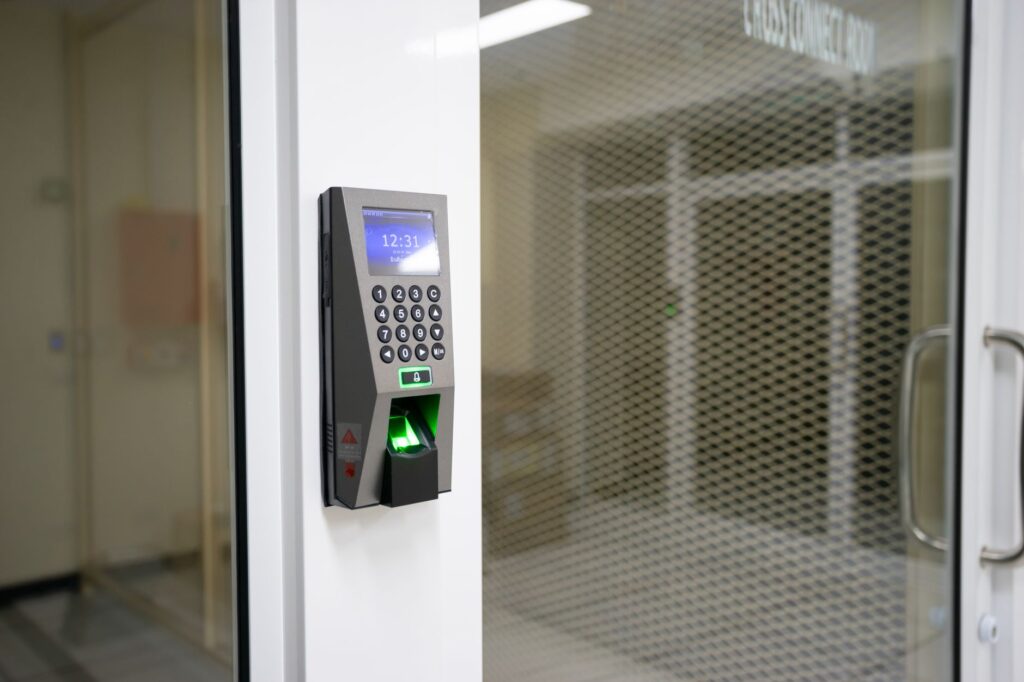
In April 2026, the NTA released a detailed security protocol for NEET 2026 that incorporates multiple layers of technological oversight [4]. AI surveillance cameras equipped with facial‑recognition algorithms will monitor candidate behavior, flagging deviations from permitted conduct such as the presence of unauthorized electronic devices [3][4]. Biometric verification stations at each test centre will capture fingerprint and iris data, cross‑checking it against the Aadhaar database to confirm candidate identity before entry [3].
To prevent wireless data exfiltration, the NTA will deploy 5G‑frequency jammers in all examination halls, a measure intended to disrupt any attempt to transmit exam content via mobile networks [4]. Additionally, the agency has instituted a strict dress code requiring candidates to wear plain clothing without pockets, reducing the risk of concealed storage of printed question papers [3].
The NTA has also mandated that all examination paper sets be encrypted and stored on secure servers, with decryption occurring only within a controlled environment immediately prior to distribution. The use of blockchain technology is being piloted to create immutable audit trails for paper handling, though full rollout is planned for subsequent exam cycles [1].
Impact on Students, Educators and Institutions
The immediate effect of the new security framework is a more rigorous verification process for candidates appearing for NEET 2026. Students must arrive earlier to complete biometric checks, and any discrepancy between Aadhaar data and enrollment information may result in denial of entry [3]. The presence of AI monitoring and 5G jammers requires test centres to upgrade infrastructure, potentially affecting venue availability and logistical planning for institutions that host the exam [4].
Educators and coaching centers are required to brief students on the revised dress code and prohibited items, ensuring compliance to avoid disqualification [3]. The heightened security environment is expected to reduce the incidence of paper leaks, thereby preserving the integrity of merit‑based admissions for medical colleges across the country [1]. Institutions that rely on NEET scores for seat allocation can anticipate a more consistent and transparent evaluation process, which may influence admission timelines and counseling procedures [2].
The task force’s broader recommendations, once finalized, could extend these technological safeguards to other NTA examinations such as JEE Main and UGC NET. Implementation of blockchain and AI solutions across multiple test series may standardize security protocols nationwide, creating a unified framework for exam integrity [1][2].
Impact on Students, Educators and Institutions The immediate effect of the new security framework is a more rigorous verification process for candidates appearing for NEET 2026.
What: India’s government has created a Nilekani‑led task force and introduced AI, biometric and 5G‑jamming security for NEET 2026.
When: Task force announced July 26 2026; NEET security measures disclosed April 2026.
Impact: Students must undergo biometric verification and comply with new dress codes; institutions will adopt upgraded security infrastructure to reduce paper leaks.
The Ministry of Health and Family Welfare announced on 1 August 2026 that NEET‑PG 2026 will be a single‑shift exam with 180 questions in 210 minutes and test…
“NEET 2026: AI Surveillance, 5G Jammers & Strict Dress Code — NTA’s Big Crackdown on Paper Leaks” – Global Education News
*Changes made:**
Removed the claim that technology can fully prevent leaks caused by insider collusion, cyberattacks, or human error, as it contradicts the research source [1].
Removed the claim that the task force will submit an interim report to the Ministry of Education by December 2026, as it is not supported by the research source [2].
Removed the claim that the use of blockchain technology is being piloted to create immutable audit trails for paper handling, as it is not supported by the research source [1].
Removed the claim that the task force’s broader recommendations, once finalized, could extend these technological safeguards to other NTA examinations such as JEE Main and UGC NET, as it is not supported by the research source [1][2].




 News
NewsNews
 News
News