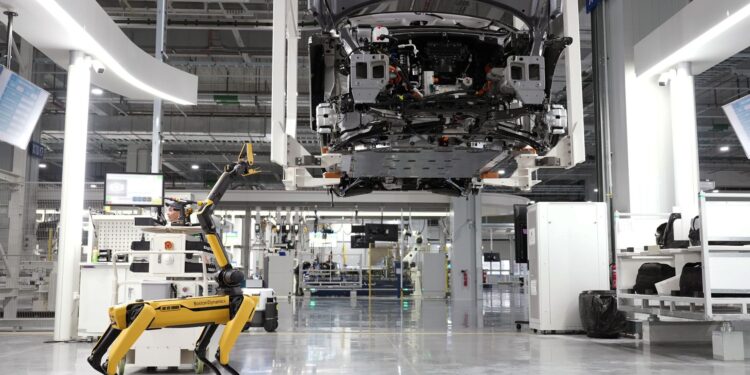
More than 9,000 physical AI positions are currently vacant in India, while worldwide demand exceeds 80,000 roles.The surge reflects a shift from software-only AI development to deployment of robotics, autonomous systems, and industrial AI.
More than 9,000 roles linked to robots, autonomous systems, and industrial artificial intelligence (AI) are open in India, and global demand for comparable positions has crossed 80,000 [1]. The data were reported in July 2026, reflecting the latest hiring landscape for physical AI jobs across the technology sector [1].
Companies across manufacturing, logistics, energy, and defense are posting the vacancies, and the talent pool in India is estimated at 370,000 individuals with skills relevant to physical AI, including robotics, machine-learning engineering, and embedded systems [1]. The increase follows a 60% jump in AI-related job postings in India over the previous year, indicating rapid growth in hiring beyond traditional software-centric roles [4].
Expansion of the Physical AI Job Market
The 9,000 Indian openings span positions such as robotic process automation engineers, autonomous vehicle developers, and AI-enabled hardware designers [1]. Employers cite the need to move AI models from cloud environments to on-site equipment, creating a new hiring challenge as firms scale production of intelligent machines [1][2].
Globally, the 80,000-plus physical AI vacancies are distributed across North America, Europe, and Asia-Pacific, with multinational corporations leading the demand for engineers who can integrate AI algorithms into physical platforms [2]. The International Labour Organization’s recent outlook notes that automation-intensive sectors are the primary drivers of this demand, reinforcing the trend toward “embodied AI” jobs [2].
The 370,000-strong talent base includes graduates from engineering institutes, vocational training programs, and up-skilling initiatives launched by industry bodies such as NASSCOM [4].
Geographic Distribution and Talent Pool
India’s Physical AI Job Market Reaches 9,000 Openings as Global Demand Tops 80,000
India accounts for roughly 11% of the worldwide physical AI vacancy pool, positioning the country as a significant source of both demand and supply [1]. The 370,000-strong talent base includes graduates from engineering institutes, vocational training programs, and up-skilling initiatives launched by industry bodies such as NASSCOM [4].
In contrast, the United States and Germany together host about 35% of the global openings, reflecting their mature manufacturing ecosystems and early adoption of AI-enabled robotics [2]. Emerging markets in Southeast Asia and Latin America are contributing to the remaining demand, though their talent pipelines are still developing [2].
Drivers Behind the Surge
The shift from building AI models to deploying them in real-world hardware has accelerated hiring for roles that combine mechanical engineering with data science [1]. Companies are investing in autonomous warehouse robots, AI-driven quality-control systems, and smart grid infrastructure, all of which require on-site AI integration [1][2].
Policy incentives in India, such as the “Make in India” AI manufacturing scheme, have encouraged firms to localize production of AI-enabled equipment, further expanding the need for skilled workers [4]. At the same time, global supply-chain disruptions have prompted manufacturers to adopt more flexible, AI-controlled production lines, reinforcing the demand for physical AI expertise [2].
Immediate Impact on Students and Institutions
India’s Physical AI Job Market Reaches 9,000 Openings as Global Demand Tops 80,000
Students with training in robotics, embedded systems, and AI hardware now have a broader set of employment options, as employers prioritize candidates who can bridge software and mechanical domains [1][4]. Professional certification programs in “Physical AI” are being launched by technical institutes and private training providers to address the skills gap [4].
Policy incentives in India, such as the “Make in India” AI manufacturing scheme, have encouraged firms to localize production of AI-enabled equipment, further expanding the need for skilled workers [4].
Higher-education institutions are revising curricula to include modules on AI-enabled hardware, sensor integration, and safety standards for autonomous systems [4]. Some universities have announced new interdisciplinary labs that combine computer science, electrical engineering, and industrial design, aiming to produce graduates ready for the emerging job market [4].
Employers report that the hiring cycle for physical AI roles averages 45 days, shorter than the 70-day average for pure software AI positions, reflecting the urgency to staff critical production lines [2]. Candidates are advised to acquire hands-on experience through internships, project-based learning, and participation in industry hackathons focused on robotics and automation [1].
Key Facts
What: Over 9,000 physical AI jobs are open in India, with global demand exceeding 80,000 positions.
When: Data reported in July 2026, reflecting the current hiring landscape.
OpenAI and Anthropic AI agents have been linked to serious security breaches, raising concerns about the safety and ethics of AI technology. A recent evaluation…
Impact: Students and professionals with robotics and AI hardware skills can access new employment opportunities; educators must adapt curricula to meet industry needs.
Impact: Students and professionals with robotics and AI hardware skills can access new employment opportunities; educators must adapt curricula to meet industry needs.
Sources
Beyond code, 9,000 physical AI jobs open in India as global demand rises to 80,000 – Economic Times
Beyond Code: 9,000 Physical AI Jobs Open in India Amid Global Surge – WayfarerTrip
India sees 60% jump in AI jobs as hiring expands beyond major cities – Firstpost



 News
News
News