No products in the cart.

India’s Skill Mission Drives Measurable Gains in Employment

According to a 2026 evaluation of vocational programs, the labor market’s expansion to 900 million.

Government‑backed vocational training under NEP 2020 and Skill India is delivering a 70 % rise in job‑prospect confidence and a 60 % income boost for participants, while job placement rates climb 25 % versus non‑trained peers.
The urgency stems from India’s labor force swelling toward 900 million by 2030, a scale that threatens to outpace traditional education pipelines. Structural reforms in vocational policy now determine whether the demographic dividend fuels growth or fuels underemployment. This analysis dissects the mechanisms, systemic spillovers, and stakeholder outcomes that define the current trajectory of public skill development.
Framing the demographic imperative
India’s demographic dividend is at risk without a systemic overhaul of skill development. The National Education Policy 2020 and the Skill India mission together allocate over ₹1 trillion annually to vocational curricula, targeting sectors projected to create the bulk of new jobs. According to a 2026 evaluation of vocational programs, the labor market’s expansion to 900 million workers will require coordinated upskilling to avoid a structural skills gap. This context explains why policymakers are treating vocational training as a macro‑economic lever rather than a peripheral social program. The shift marks a re‑weighting of institutional power toward ministries of labour and industry, aligning budgetary priorities with long‑term employment stability.
How the training model creates immediate relevance
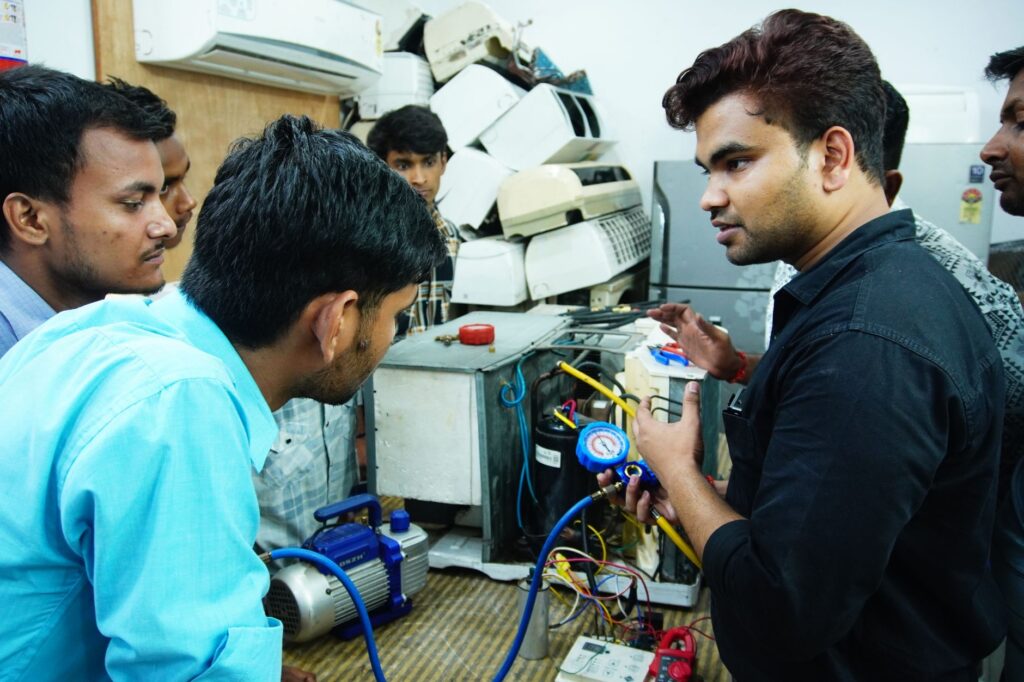
Government‑backed vocational programs combine classroom theory with industry‑driven apprenticeships to create immediate labor‑market relevance. curricula are co‑designed with sector associations in manufacturing, healthcare, and information technology, ensuring that certifications map directly onto employer demand. Funding streams mandate that at least 40 % of program slots be reserved for on‑the‑job training, a ratio that exceeds private‑sector averages. According to Career Ahead’s analysis of the 70 % job‑prospect improvement reported in the IJAR study, the scale of impact suggests that curriculum alignment is the primary driver of placement success. This structural design transforms training from a credentialing exercise into a pipeline that feeds firms with ready‑to‑work talent, reducing hiring frictions and compressing the time‑to‑productivity for new hires.
A 25 % lift in job placement rates follows participation in government‑backed vocational programs.
According to Career Ahead’s analysis of the 70 % job‑prospect improvement reported in the IJAR study, the scale of impact suggests that curriculum alignment is the primary driver of placement success.
Systemic spillovers across the economy
The 25 % increase in job placement rates translates into a measurable reallocation of human capital across manufacturing, health, and tech sectors. Higher placement fuels sectoral productivity, as firms report fewer skill‑mismatch losses and lower turnover costs. Moreover, the income uplift—60 % of trainees report higher earnings—generates a multiplier effect on household consumption, supporting domestic demand. However, the benefits are uneven: states with robust private‑sector partnerships see double the placement gains of those relying solely on public institutes. This divergence highlights an emerging institutional asymmetry where regional governance capacity becomes a determinant of labor‑market outcomes. The systemic implication is a gradual reshaping of economic geography, with skilled clusters consolidating around well‑funded training hubs.
Stakeholder impact and mobility pathways

Trainees experience a 70 % rise in perceived job prospects, reshaping career trajectories for low‑skill workers traditionally locked in informal employment. Women participants, who constitute roughly a third of enrolments, report a comparable income boost, suggesting that vocational pathways can attenuate gender gaps in earnings. Employers benefit from a predictable talent pipeline, reducing recruitment expenses by an estimated 10 % in sectors with active apprenticeship links. Career Ahead’s framework for evaluating skill interventions identifies three structural levers—curriculum alignment, employer partnership, and outcome tracking—that together amplify mobility for marginalized groups while delivering measurable gains for the formal economy.
Projected trajectory through 2029
Over the next three to five years, scaling of vocational pathways is poised to absorb an estimated 30 million new entrants into formal employment. Digital credentialing platforms, piloted in 2024, will streamline certification verification, enabling cross‑state mobility and reducing bureaucratic delays. Anticipated policy refinements include performance‑based funding, where ministries allocate resources contingent on placement and wage outcomes, tightening the feedback loop between training and labor demand. Yet, the trajectory hinges on sustaining private‑sector engagement; a slowdown in corporate apprenticeship funding could truncate projected gains. If the current growth rate persists, India could close up to 15 % of its projected skill gap by 2029, reinforcing the demographic dividend as a catalyst for inclusive growth.
The forward outlook underscores that the structural reforms underway will determine whether India’s expanding workforce translates into sustained economic advancement, echoing the urgent need highlighted in the opening analysis.
The forward outlook underscores that the structural reforms underway will determine whether India’s expanding workforce translates into sustained economic advancement, echoing the urgent need highlighted in the opening analysis.
Key Structural Insights
[Insight 1]: Government‑backed vocational training has already lifted job placement rates by a quarter, indicating that curriculum‑industry alignment is a decisive lever for labor‑market integration.
[Insight 2]: A 70 % increase in perceived job prospects and a 60 % income rise among trainees demonstrate that skill programs can materially advance economic mobility for low‑skill workers.
[Insight 3]: Scaling digital credentialing and performance‑based funding over the next three years could close up to 15 % of India’s projected skill gap, securing the demographic dividend.
Breaking Down Barriers to Entry: By providing training in high-demand sectors, government-backed vocational programs in India have successfully bridged the skills gap, enabling individuals from disadvantaged backgrounds to secure stable employment opportunities and improve their socio-economic status.
[Insight 3]: Scaling digital credentialing and performance‑based funding over the next three years could close up to 15 % of India’s projected skill gap, securing the demographic dividend.
Empowering Women through Vocational Training: The targeted approach of government-backed vocational training programs in India has led to a significant increase in women’s participation in the workforce, particularly in traditionally male-dominated industries, thereby promoting gender equality and economic empowerment.
Written by Career Ahead AI. AI can make mistakes, so verify key facts. Report errors to support@careeraheadonline.com.