No products in the cart.

Industrial heritage fuels regional economic resurgence

The shift from manufacturing to service‑ and knowledge‑based economies has left a dense lattice of abandoned factories and mills.

Industrial relics across post‑industrial regions are being re‑imagined as cultural hubs, tourism magnets, and innovation districts, delivering new streams of capital and jobs while anchoring community identity.
The shift from manufacturing to service‑ and knowledge‑based economies has left a dense lattice of abandoned factories and mills. As policymakers grapple with uneven growth, repurposing these sites offers a concrete lever to stimulate lagging regions. The analysis draws on recent GIS mapping of northeast China’s heritage clusters and case studies of urban redevelopment, showing how spatial concentration and cultural cachet translate into measurable economic uplift.
Framing the structural shift in regional capital
The concentration of industrial heritage sites creates a geographic asset base that can be mobilized for place‑based development. GIS data reveal dense clusters in former heavy‑industry corridors, a pattern that enables coordinated investment rather than isolated projects. According to Career Ahead’s analysis of these spatial dynamics, the proximity of multiple sites amplifies the potential for cross‑site tourism circuits and shared infrastructure, reducing per‑project costs. This structural lever reshapes how capital flows into peripheral economies, moving from ad‑hoc subsidies to strategic, heritage‑anchored growth engines.Core mechanism: adaptive reuse as economic catalyst
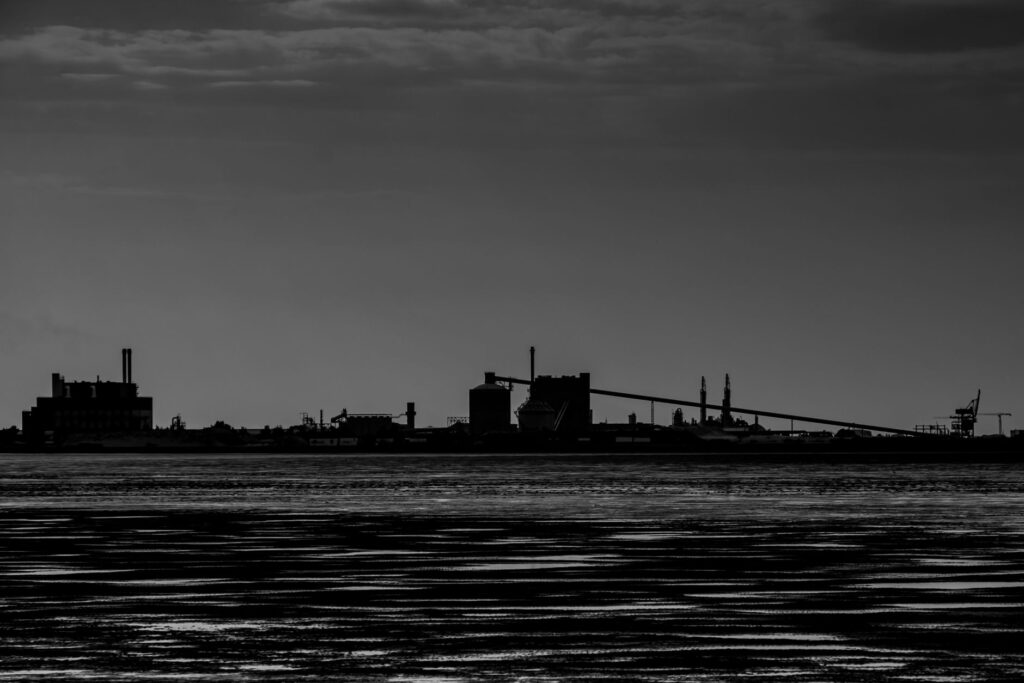
Industrial heritage sites generate a measurable share of tourism revenue in repurposed districts, catalyzing both short‑term construction jobs and long‑term service employment.
Systemic ripples across the regional ecosystem
When a heritage site is revitalized, the impact radiates through housing markets, public finance, and social cohesion. Property values adjacent to redeveloped sites typically rise, expanding the tax base that funds schools and infrastructure. Enhanced public spaces improve quality of life, fostering higher civic participation and reinforcing trust in local institutions—a factor highlighted in recent research linking heritage projects to increased public confidence. The ripple effect also includes supply‑chain activation: local contractors, material suppliers, and logistics firms experience heightened demand, reinforcing the regional economic fabric beyond the immediate site.Human capital and stakeholder outcomes

Trajectory for the next three to five years
In the coming half‑decade, the convergence of heritage‑led urban planning and green recovery initiatives is expected to accelerate. Government stimulus packages earmarked for sustainable redevelopment are likely to prioritize projects that demonstrate both cultural preservation and carbon‑reduction metrics. As financing models evolve—blending public grants, impact‑investor capital, and community equity—the scale of heritage conversions should expand, extending benefits to secondary cities and rural districts with dormant industrial assets. The cumulative effect will be a more balanced regional growth pattern, where economic mobility is anchored in place‑based cultural capital.The forward‑looking outlook underscores that heritage‑driven revitalization is not a niche strategy but a scalable model for reshaping regional economies, aligning cultural preservation with the demands of a knowledge‑centric future.
Human capital and stakeholder outcomes Industrial heritage fuels regional economic resurgence The redevelopment of industrial heritage reshapes the skill profile of local labor markets.
Key Structural Insights
[Insight 1]: Concentrated clusters of industrial heritage sites enable coordinated investment, lowering per‑project costs and amplifying tourism‑driven revenue streams across regions.
[Insight 2]: Adaptive reuse generates both immediate construction employment and sustained service‑sector jobs, while preserving embodied carbon and reducing new‑build expenditures.
[Insight 3]: Heritage‑led redevelopment expands local tax bases, boosts public trust, and cultivates hybrid skill sets, fostering long‑term economic mobility in formerly declining areas.
Revitalizing Local Identity: By preserving and repurposing industrial heritage sites, regions can reclaim their unique cultural narratives, fostering a stronger sense of community and local pride, which in turn drives economic growth and innovation.
[Insight 3]: Heritage‑led redevelopment expands local tax bases, boosts public trust, and cultivates hybrid skill sets, fostering long‑term economic mobility in formerly declining areas.
Tourism and Investment: Industrial heritage sites can become lucrative tourist attractions, drawing visitors and investors alike, and creating new revenue streams for regional economies, while also promoting sustainable development and environmental stewardship.
Related Articles
Written by Career Ahead AI. AI can make mistakes, so verify key facts. Report errors to support@careeraheadonline.com.