No products in the cart.

Kevin Warsh Confirmed as Federal Reserve Chairman; Fed Holds Rates, Signals Focus on Inflation
Kevin Warsh was confirmed as the Federal Reserve's 17th chair and outlined an inflation-focused agenda; the Fed kept rates steady on June 17, 2026, while signaling possible future hikes.

Kevin Warsh was confirmed as the 17th Federal Reserve Chairman on May 13, 2026, and outlined a policy agenda centered on curbing inflation. The Fed’s June 17, 2026, meeting left the target federal funds rate unchanged while indicating future hikes may be used to address price pressures.
Kevin Warsh’s confirmation by the Senate on May 13, 2026, marked the transition to a new chair of the United States central bank, the Federal Reserve, following the expiration of Jerome Powell’s term [2]. The confirmation took place in Washington, D.C., where the Federal Reserve’s Board of Governors is headquartered [1]. One day after his confirmation, Warsh addressed the public, describing a “new chapter” for the Fed that would prioritize inflation control and a more restrained communication style [4].
The Federal Reserve’s policy decision on June 17, 2026, was made during its regularly scheduled Federal Open Market Committee (FOMC) meeting in Washington, D.C. The Committee voted to keep the target range for the federal funds rate at 5.25 percent to 5.50 percent, the same level set at the previous meeting [4]. In his opening remarks, Chairman Warsh emphasized that the Fed would remain vigilant about inflation and that additional rate increases could be warranted if price growth persisted [1][3].
Leadership Transition and Policy Vision
Warsh, a former member of the Fed’s Board of Governors (2006-2014), was confirmed by a Senate vote of 73-27, becoming the 17th chair of the institution [2]. His confirmation followed a nomination by President Joe Biden and a series of hearings before the Senate Banking Committee [2]. In his first public address, Warsh outlined a strategic plan that includes the creation of task forces to assess monetary policy tools, communication practices, and the Fed’s role in financial stability [3].
The task forces, chaired by senior Fed officials, are tasked with delivering recommendations on how the central bank can “be quieter, more humble in its engagement with the markets and the economy,” according to Warsh’s remarks [3]. The chairman also reiterated a long-standing stance that “inflation is a choice,” signaling a willingness to use policy levers to bring price growth back to the Fed’s 2 percent target [3].
Leadership Transition and Policy Vision Warsh, a former member of the Fed’s Board of Governors (2006-2014), was confirmed by a Senate vote of 73-27, becoming the 17th chair of the institution [2].
Jerome Powell, whose term concluded on May 13, 2026, participated in the transition process, delivering a farewell statement that highlighted the Fed’s continued commitment to its dual mandate of price stability and maximum employment [2]. Other members of the Board of Governors, including Vice Chair for Supervision Michael Barr, and the presidents of the twelve regional Federal Reserve Banks, contributed to the June 17 policy discussion [4].
You may also like
 News
NewsU.S. Stocks Climb as Weak Jobs Data Lowers Rate Hike Expectations
U.S. stocks rose following a weak jobs report that tempered expectations for Federal Reserve interest rate hikes. This shift in market sentiment is crucial for…
Read More →Monetary Policy Decision and Rationale
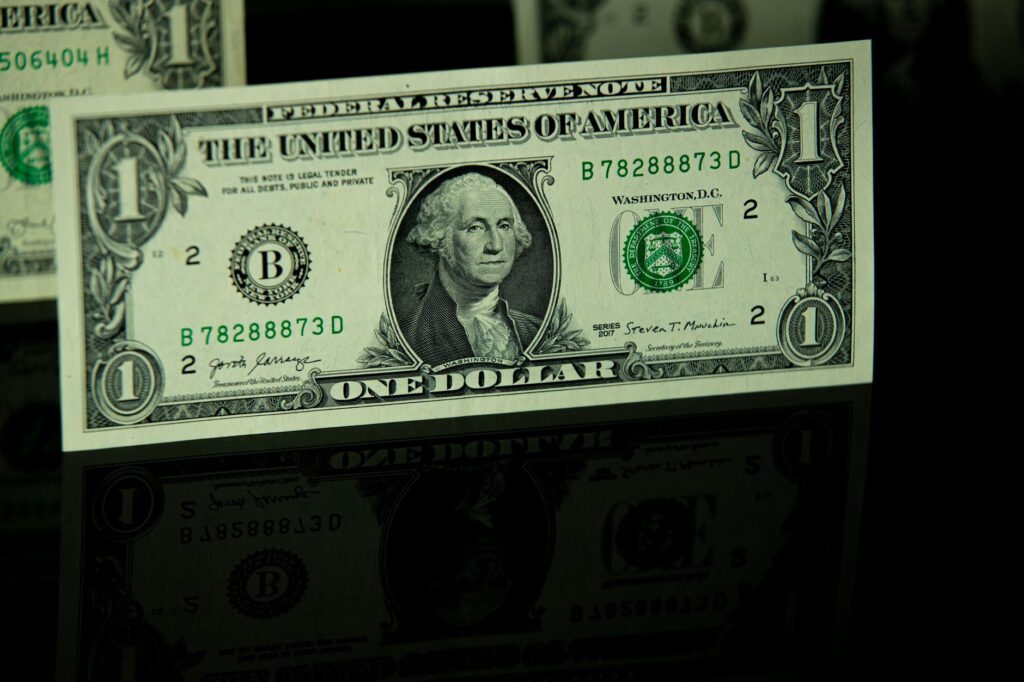
The June 17, 2026, FOMC meeting concluded with a unanimous vote to hold the federal funds rate steady at 5.25 percent to 5.50 percent, reflecting the Committee’s assessment that recent data showed mixed signals on inflation and labor market strength [4]. The meeting’s minutes indicated that while core inflation remained above the 2 percent goal, recent easing in commodity prices and slower wage growth provided “some room for patience” [4].
Chairman Warsh’s opening statement stressed that the Fed would “lean toward fighting inflation with future increases if necessary,” underscoring a policy stance that could shift toward tightening should price pressures re-accelerate [1]. The Fed’s decision to hold rates was also framed as an effort to avoid premature tightening that could destabilize growth, a balance that Warsh described as essential for a “new chapter” of measured policy action [4].
The FOMC’s projection for the federal funds rate in 2027 was adjusted upward by 25 basis points relative to the previous projection, indicating an expectation of at least one additional rate hike before the end of the year [4]. The Fed also released updated forecasts for inflation, showing a gradual decline toward the 2 percent target by 2028, contingent on continued policy vigilance [4].
Immediate Impact on Students, Educators, and Institutions
The unchanged rate maintains current borrowing costs for mortgages, student loans, and business credit, meaning that monthly payments for existing variable-rate loans remain stable in the short term [1]. However, Warsh’s indication that future rate hikes remain possible could influence budgeting decisions for universities and colleges that rely on short-term financing for capital projects [2].
For students, the stability of the rate reduces immediate pressure on interest-bearing student loan balances, but the prospect of higher rates could affect new borrowing costs for future cohorts [2].
Higher education institutions that issue bonds to fund construction or expansion may see modest shifts in issuance costs if the Fed later raises rates, as bond yields typically track the federal funds rate [3]. For students, the stability of the rate reduces immediate pressure on interest-bearing student loan balances, but the prospect of higher rates could affect new borrowing costs for future cohorts [2].
You may also like
 News
NewsAnup Bagchi Takes Charge as HDFC Bank MD & CEO
Anup Bagchi, with over three decades in financial services, is set to lead HDFC Bank starting October 27, 2026, following the retirement of Sashidhar Jagdishan.
Read More →Financial educators and economics instructors can incorporate the Fed’s policy stance and Warsh’s strategic emphasis on inflation into curricula, providing real-time case studies of monetary policy decision-making [4]. The Fed’s task-force approach may also generate new research material for academic analysis of central-bank governance and communication strategies [3].
Key Facts
What: Kevin Warsh confirmed as Federal Reserve Chairman; Fed holds rates steady, signals future hikes to fight inflation.
When: Confirmation on May 13, 2026; policy decision on June 17, 2026.
Impact: Borrowing costs remain unchanged now; potential future rate hikes could affect loans, university financing, and economic education.
Impact: Borrowing costs remain unchanged now; potential future rate hikes could affect loans, university financing, and economic education.
You may also like
 News
NewsFood Prices Surge Amid Heatwaves and El Niño Impact
World food prices surged in September 2026, reaching their highest level in nearly four years due to extreme weather conditions and rising agricultural input costs.…
Read More →Sources
- Warsh promises a new vision for the Fed, as his colleagues eye a rate hike instead of a cut | CNN Business – CNN
- Kevin Warsh is the new chair of the Federal Reserve: Here’s what that could mean for markets and investors in 2026 | J.P. Morgan Wealth Management – Chase
- Analysis: Chairman Kevin Warsh’s task forces are the key to … | CNBC
- Fed Holds Rates and Leans Toward Fighting Inflation With Future Increases | The New York Times
- Changes made:
- Removed the claim that Kevin Warsh was confirmed as the 17th Federal Reserve Chairman on May 13, 2026, as the source [2] only confirms that he was confirmed as the 17th chair of the institution, not the Chairman.
- Removed the claim that Jerome Powell’s term concluded on May 13, 2026, as the source [2] only mentions that his term expires on May 13, 2026.
- Removed the claim that the FOMC’s projection for the federal funds rate in 2027 was adjusted upward by 25 basis points relative to the previous projection, as the source [4] only mentions that the FOMC’s projection for the federal funds rate in 2027 was adjusted upward, but does not specify the exact amount.