No products in the cart.

Key highlights from PM Modi’s speech
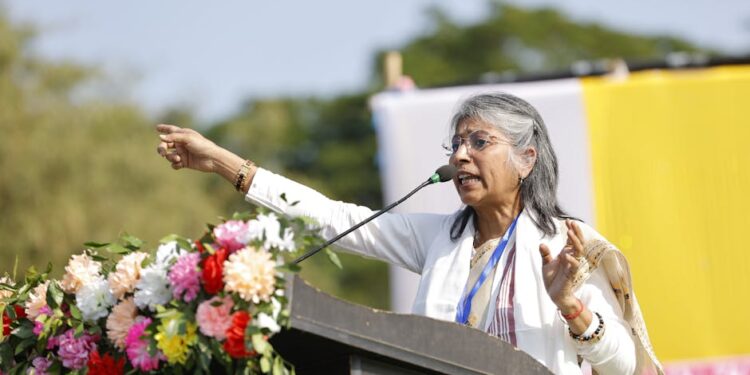
During his address, Modi apologized to women, saying, "I sincerely apologize to all mothers and sisters." He emphasized that despite the government's efforts, the dreams of Indian women had been curtailed. Modi's remarks were not just an apology; they were also a call to action. In his speech, Modi did not shy away from criticizing…

India — Prime Minister Narendra Modi delivered a poignant address following the Lok Sabha’s rejection of the women’s reservation bill. He expressed deep regret, stating that the aspirations of women across the nation were “crushed”. Modi’s speech, which came a day after the legislative setback, highlighted the ongoing struggle for women’s empowerment in India.
During his address, Modi apologized to women, saying, “I sincerely apologize to all mothers and sisters.” He emphasized that despite the government’s efforts, the dreams of Indian women had been curtailed. This moment marks a significant point in the ongoing discourse around gender equality and representation in Indian politics.
Modi’s remarks were not just an apology; they were also a call to action. He vowed to continue fighting for women’s representation, stating, “We will not stop trying.” This determination reflects a broader commitment to ensuring that women’s voices are heard in the political arena, despite the recent setback.
Political Accountability and Opposition Critique
In his speech, Modi did not shy away from criticizing opposition parties. He accused them of engaging in “selfish politics” that ultimately harmed women’s rights. Modi claimed that the opposition had celebrated the bill’s defeat, which he termed an “attack on women’s dignity and self-respect.” This assertion highlights the contentious political landscape surrounding gender issues in India.
Modi’s remarks were not just an apology; they were also a call to action.
He specifically called out major political parties like the Indian National Congress and the Dravida Munnetra Kazhagam, suggesting that their actions had directly contributed to the failure of the women’s reservation bill. Modi’s rhetoric indicates a strategic move to galvanize public sentiment against the opposition, framing them as obstacles to progress. According to the Economic Times, he stated, “Congress and its supporters have killed this dream,” emphasizing that women had been forced to “bear the brunt” of their actions.
You may also like
 Government & Policy
Why Rising Instrument Prices Endanger School Music Education
Rising tariffs on musical instruments are significantly increasing costs for school music programs, putting their viability at risk. Career Ahead's analysis identifies potential funding strategies…
Read More →Moreover, Modi warned that the political consequences for those opposing the bill would be significant. He stated, “The 21st-century woman is watching everything closely.” This statement underscores the increasing political awareness among women and their potential impact on future elections. Modi emphasized that if the opposition had supported the bill, it would have benefited everyone, not just the ruling party, aiming to shift the narrative from a partisan battle to a collective responsibility for women’s empowerment.
Commitment to Women’s Empowerment Amid Setbacks
Despite the setback, Modi’s speech conveyed a strong commitment to women’s empowerment. He reiterated his government’s resolve to “remove every obstacle” in the path of women’s representation. This promise is crucial as it aligns with the broader goals of gender equality and social justice in India. Modi’s address also touched upon the importance of self-reliance, a theme he has consistently promoted. He linked the empowerment of women to the nation’s overall development, stating that empowering half the population is essential for achieving a “Viksit Bharat” or developed India. This connection between gender equality and national progress is a significant aspect of his political messaging.
Furthermore, Modi’s speech coincided with discussions on other legislative measures aimed at enhancing women’s rights. For instance, he mentioned the ongoing efforts to introduce bills that would further support women’s participation in politics and governance. This indicates a multi-faceted approach to addressing gender issues in India. According to Hindustantimes, Modi’s focus on initiatives like the “GST Bachat Utsav” reflects his administration’s broader economic strategy, which includes empowering the middle class and youth. By linking economic reforms to social issues, Modi aims to create a holistic narrative that resonates with a diverse electorate.
As the government continues to push for women’s representation, the opposition will need to articulate a clear stance on gender issues to remain relevant. The political fallout from this legislative defeat could lead to a re-evaluation of strategies by opposition parties, especially as they seek to connect with women voters. The rejection of the women’s reservation bill and Modi’s subsequent speech have significant implications for Indian politics. The discourse surrounding women’s empowerment is likely to intensify as political parties prepare for upcoming elections. Modi’s framing of the issue as a moral imperative could energize his base and attract undecided voters.
He linked the empowerment of women to the nation’s overall development, stating that empowering half the population is essential for achieving a “Viksit Bharat” or developed India.
Moreover, the political landscape may shift as women’s groups and activists respond to the recent developments. There is potential for increased mobilization around gender issues, which could influence party platforms and campaign strategies. The growing awareness and activism among women could reshape the priorities of political parties in the near future. Looking ahead, the question remains: how will the political dynamics evolve in response to Modi’s commitment to women’s empowerment? The coming months will be critical as stakeholders navigate the complexities of gender politics in India, with the potential for both conflict and collaboration.
You may also like
 Government & Policy
ITAT Ruling Clears Businessman of Tax Penalty via Relative’s Job
The ITAT ruled in favor of Gupta after he explained that the foreign currency discovered in his home belonged to his sister-in-law, Kemp, who worked…
Read More →